Yazılar

Oil Prices Drop 6% on Reduced Middle East Tensions

Oil prices experienced a significant 6% drop on Monday, shedding more than $4 per barrel, following Israel’s weekend airstrike on Iranian military targets that strategically avoided oil and nuclear sites, easing supply disruption fears. The Brent crude benchmark settled at $71.42 per barrel, a decline of $4.63 or 6.09%, while West Texas Intermediate (WTI) U.S. crude finished at $67.38 per barrel, down $4.40 or 6.13%. This drop marked the lowest levels since early October for both oil benchmarks.

Phil Flynn, senior analyst at Price Futures Group, noted the reaction as “a headline-driven market,” emphasizing that ongoing geopolitical risks still pose potential volatility. Oil prices had increased by 4% last week amidst market uncertainty ahead of the U.S. election and expectations for Israel’s response to Iran’s October 1 missile attack.

Eased Concerns over Broader Conflict

The recent Israeli strikes, which primarily targeted Iranian missile facilities rather than oil or nuclear sites, helped allay concerns that a wider regional conflict might disrupt oil supply lines. Analysts at Citi, including Max Layton, adjusted their Brent price forecast down to $70 per barrel from $74 for the next three months, citing a diminished risk premium.

Outlook and OPEC+ Dynamics

With oil prices stabilizing, OPEC and its allies (OPEC+) maintained their current output policy last month, with plans to gradually increase production beginning in December. The next meeting for OPEC+ is scheduled for December 1, when the organization will review its policies ahead of a full assembly.

Matt Portillo, an analyst at Tudor, Pickering Holt, commented that WTI could see further declines in the coming years. “Without a significant flare-up in the Middle East, we anticipate WTI prices around $65 per barrel in 2025, potentially lower if OPEC+ doesn’t impose strict volume controls,” Portillo stated.

Regional Tensions Remain

Despite Monday’s price dip, tensions remain high. Iran signaled its intent to respond to the Israeli airstrikes, with Iranian Foreign Ministry spokesperson Esmaeil Baghaei stating that Iran would employ “all available tools” in its response. While the immediate supply threat appears mitigated, geopolitical developments in the region continue to weigh on the oil market.

 

Goldman Sachs Predicts Crude Oil Spike Amid Potential Iran-Israel Conflict

Goldman Sachs has warned that oil prices could rise by as much as $20 per barrel if Iranian oil production is hit due to Israeli retaliation for Iran’s recent missile attack. Oil prices are already on the rise, with U.S. crude futures climbing by 5% on Thursday and continuing to increase on Friday. The market is reacting to fears of disruptions to Iran’s significant oil output amid escalating tensions between Iran and Israel.

Daan Struyven, Goldman Sachs’ co-head of global commodities research, estimated that a sustained reduction of 1 million barrels per day in Iranian production could push oil prices up by about $20 per barrel next year, assuming that OPEC+ does not increase production to compensate. If major OPEC+ members like Saudi Arabia and UAE step in to offset the shortfall, the price rise could be closer to $10 per barrel.

Since the Israel-Hamas conflict began in October 2023, the oil market had remained stable due to increased U.S. production and low demand from China. However, the recent missile attacks by Iran have reignited concerns about supply disruptions. Iran produces about 4 million barrels of oil per day, accounting for roughly 4% of global supply, making it a key player in the global oil market.

Saul Kavonic, an energy analyst at MST Marquee, raised the possibility that Kharg Island, responsible for 90% of Iran’s crude exports, could become a target for Israeli strikes. This would significantly impact Iran’s ability to export oil, adding further pressure to the global market.

Another major concern is the Strait of Hormuz, a crucial channel through which nearly 20% of the world’s daily oil production flows. Any conflict that disrupts transit through this region could lead to even more dramatic spikes in oil prices.

Fitch Solutions issued a note stating that in the event of a full-scale war, Brent crude could rise above $100 per barrel, and any closure of the Strait of Hormuz could push prices to $150 per barrel or higher. While the probability of a full-scale war is seen as relatively low, the risk of miscalculation or escalation is now elevated.

Although some analysts believe that OPEC+ has enough spare capacity to cover any shortfall in Iranian oil, most of this capacity is concentrated in the Middle East, which could itself be drawn into a broader conflict if tensions worsen.


Israel Strikes Central Beirut, Killing Six Amid Escalating Conflict with Hezbollah

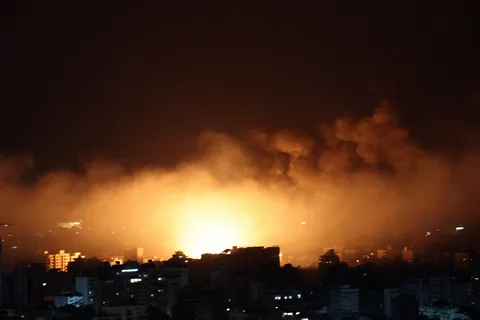
Early on Thursday, Israeli airstrikes targeted central Beirut, killing at least six people, as tensions between Israel and Hezbollah reached new heights. The strike hit a building in the Bachoura district, close to Lebanon’s parliament, marking the closest Israeli attack to central Beirut in the ongoing conflict. Lebanese health officials confirmed the casualties, and additional reports suggested multiple injuries from the attack.

Israel’s military said the airstrike was a precise operation against Hezbollah-related targets, following the loss of eight Israeli soldiers in ground combat in southern Lebanon. In response, Hezbollah has engaged Israeli forces near the border, destroying three Israeli tanks. This marked the first major ground confrontation since Israeli troops entered Lebanon earlier in the week.

The Israel Defense Forces (IDF) continued issuing evacuation orders for Lebanese villages near the border, as Israeli air raids on Hezbollah strongholds in Beirut’s southern suburb of Dahiyeh also resumed. Three missiles targeted the area where Hezbollah leader Hassan Nasrallah was killed last week.

The conflict is drawing increasing international concern. U.S. President Joe Biden urged Israel to respond proportionally, despite Iran’s massive missile strike on Israel earlier this week, which Israel said involved over 180 missiles. G7 leaders and China have called for diplomacy, urging the United Nations Security Council to intervene to de-escalate the situation. Meanwhile, Western nations are preparing contingency evacuation plans for citizens in Lebanon as the violence intensifies.

The death toll from almost a year of cross-border clashes has surpassed 1,900, with over 9,000 wounded, according to Lebanese officials. The conflict has displaced around 1.2 million people within Lebanon.