
Yazılar

Japan and India Startups Collaborate on Laser-Equipped Satellite for Space Debris Removal

Startups from Japan and India have announced a partnership to explore the potential of using laser-equipped satellites to address the growing problem of space debris. The collaboration, revealed on Tuesday, involves Orbital Lasers, a Tokyo-based company, and InspeCity, an Indian robotics firm. Their goal is to develop innovative in-space services, including the de-orbiting of defunct satellites and extending the operational lifespan of spacecraft.

Innovative Approach to Space Debris

Orbital Lasers, spun off from the Japanese satellite company SKY Perfect JSAT earlier this year, is working on a technology that uses laser energy to neutralize space junk. The system will vaporize small sections of debris’ surfaces, causing it to stop rotating and making it easier for servicing spacecraft to capture and de-orbit it. The companies aim to test this system in space and make it available for operators after 2027, according to Aditya Baraskar, the global business lead at Orbital Lasers. If regulatory approvals are granted in both India and Japan, the laser system could be mounted on InspeCity’s satellites.

Business Potential and Strategic Collaboration

The partnership was formalized with a preliminary agreement, marking the start of a feasibility study into the commercial potential of these space debris mitigation technologies. InspeCity, founded in 2022, secured $1.5 million in funding last year, while Orbital Lasers has raised 900 million yen (approximately $5.8 million) since its inception in January.

Growing Space Traffic and the Need for Action

The initiative comes as orbital congestion becomes an urgent issue. A United Nations panel on space traffic management highlighted the growing need to track and manage objects in low Earth orbit (LEO) due to the rising number of satellites and space debris. With over 100 companies already involved in space servicing, including satellite constellations and debris mitigation, the market is rapidly expanding. Nobu Okada, CEO of Astroscale, a Japanese leader in debris mitigation, emphasized the necessity of addressing this challenge to ensure the sustainability of space activities.

Expanding India-Japan Space Collaboration

This project represents another milestone in the ongoing India-Japan space collaboration. Both countries are working together on the Lunar Polar Exploration (LUPEX) mission, with a possible launch by 2026. Additionally, Skyroot, an Indian rocket manufacturer, and HEX20, a satellite builder, are collaborating with ispace, a Japanese lunar exploration company, on a lunar orbiter mission.

Strengthening Commercial Ties

The growing commercial ties between Japan and India also reflect efforts to expand space cooperation beyond traditional areas. Masayasu Ishida, CEO of SPACETIDE, a Tokyo-based nonprofit hosting space business conferences, explained that the two countries’ collaborations, such as using Japanese satellite data for India’s disaster management and agriculture, have the potential to broaden into other sectors, including manufacturing. This is in line with India’s “Make in India” initiative, which promotes local production and manufacturing.

 

Study Links Climate Change to Decreased Rice Quality in East Asia

A recent study published in Geophysical Research Letters has linked climate change to a significant decline in rice quality across East Asia, a region where rice is a crucial dietary staple. Led by Dr. Xianfeng Liu of Shaanxi Normal University in China, the research examines how rising temperatures, particularly during critical growth stages, affect the “head rice rate” (HRR)—a key indicator of rice quality that measures the proportion of intact grains after milling. The study used 35 years of data from Japan and China to analyze how climate factors have impacted HRR, revealing a concerning trend for rice production in the region.

The study identified nighttime warming as the primary factor behind the observed decline in rice quality. In Japan, the HRR began to decline when nighttime temperatures surpassed 12°C, while in China, the threshold was slightly higher at 18°C. During the flowering and grain development stages, elevated nighttime temperatures were found to hinder the rice plants’ ability to perform essential processes such as photosynthesis and starch accumulation. This disruption leads to weaker grains, making them more likely to break during milling, ultimately affecting the overall quality of the rice.

In addition to nighttime warming, the study also found that solar radiation played a significant role in reducing rice quality. Increased solar radiation was linked to lower HRR, suggesting that the intensity of sunlight during key growth phases may stress the rice plants, impacting grain development. Other factors, such as reduced precipitation and an increased vapor pressure deficit (VPD) during the day, were also found to contribute to HRR decline. Specifically, HRR decreased when the daytime VPD exceeded 0.5–1 kPa, further exacerbating the negative effects of climate change on rice quality.

The findings of this study highlight the vulnerability of rice production to climate change, which could have far-reaching implications for food security in East Asia, where millions of people rely on rice as a primary food source. The researchers stress the importance of understanding these climate factors to develop adaptive strategies that could help mitigate the impact of warming temperatures on rice crops. As the region continues to grapple with climate change, efforts to safeguard rice quality will be essential for maintaining the sustainability of this vital crop

Asian Chip Stocks Mostly Rise Despite New U.S. Semiconductor Export Curbs on China

INTRODUCTION

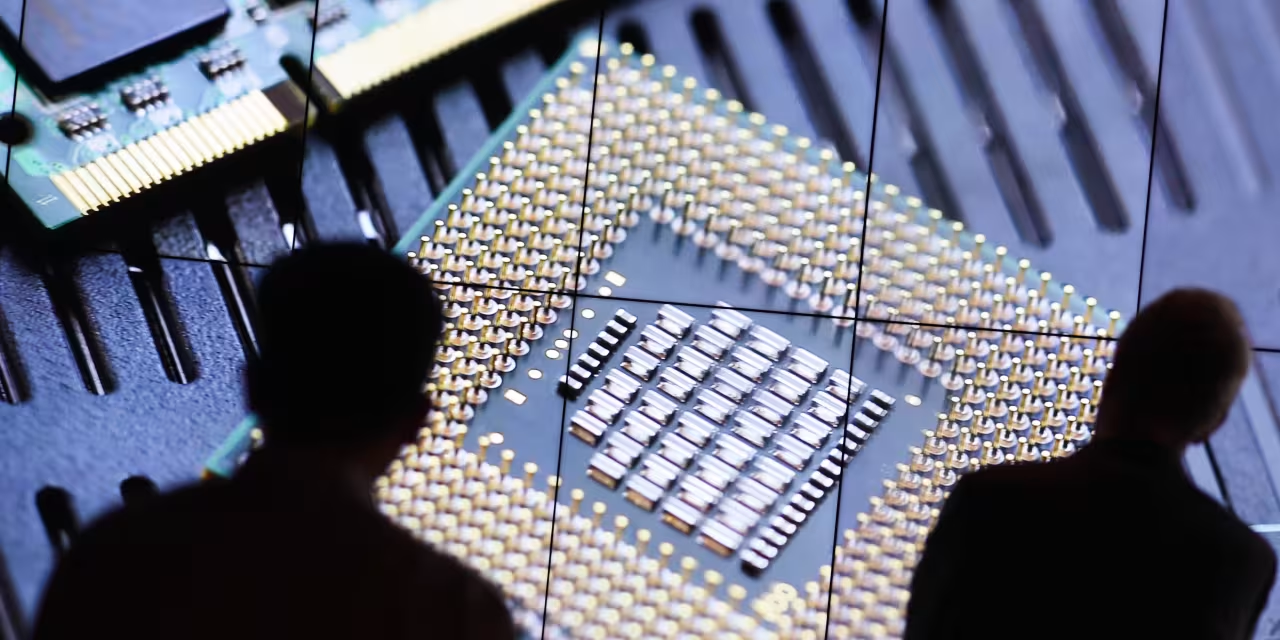
On Tuesday, major Asian chip stocks, excluding those in China, saw positive gains despite the announcement of a new round of U.S. semiconductor export restrictions targeting China’s chip production capabilities. The Biden administration’s latest move aims to hinder China’s access to advanced semiconductor technology that could potentially aid its military advancements.


KEY POINTS

Performance of Asian Chip Stocks

  • Taiwan Semiconductor Manufacturing Company (TSMC):
    The world’s largest contract chip supplier saw a 2.4% increase in its stock price.
  • Japanese Chip Stocks:
    Several Japanese chip-related companies experienced gains:

    • Tokyo Electron rose 4.7%.
    • Lasertec climbed 6.7%.
    • Advantest gained 3.9%.
    • Renesas Electronics advanced 2.2%.
  • Softbank:
    Softbank, which holds a stake in the British chip designer Arm, saw its shares rise by 3.6%.

Impact on South Korean Chip Makers

  • Samsung and SK Hynix:
    Despite the new U.S. restrictions, shares of Samsung Electronics rose by 0.9%, and SK Hynix saw an increase of 1.8%.

    • Derrick Irwin, portfolio manager at Allspring Global Investments, stated that the impact on high-bandwidth memory chips from South Korean players would be limited. He believes that these companies could shift demand to markets like the U.S., minimizing the effect of the curbs.

Details of U.S. Export Restrictions

  • Targeted Companies:
    The U.S. Department of Commerce imposed restrictions on 140 new companies, including major Chinese firms like Naura Technology Group, Piotech, and ACM Research. These companies are now on the U.S. export control list.

    • In China, Naura Technology’s shares fell 3%, while ACM Research dropped by 1%. Piotech, however, saw a 1% rise.
    • Semiconductor Manufacturing International Corporation (SMIC), China’s largest chipmaker, saw a 1.5% drop in Hong Kong.
  • Scope of Restrictions:
    The new U.S. controls also include restrictions on 24 types of manufacturing equipment and three types of software tools essential for semiconductor production.

    • Reason for Restrictions: U.S. Secretary of Commerce Gina Raimondo emphasized that these measures were designed to impair China’s ability to produce advanced technologies that pose a national security risk to the U.S.

Concerns and Compliance Issues

  • Huawei and TSMC:
    A report last month raised questions about the effectiveness of U.S. chip restrictions after a TSMC-made chip was found in a Huawei product.

    • In response, the U.S. has implemented new “red flag guidance” to address compliance concerns and introduced several regulatory changes to enhance the effectiveness of its semiconductor controls.

CONCLUSION

Despite the recent U.S. export curbs targeting China’s semiconductor sector, major Asian chip stocks largely rose, with companies like TSMC and key Japanese players leading the charge. While the new restrictions may impact Chinese companies and South Korean chipmakers to some extent, analysts suggest that the overall effect on the broader market could be limited, as companies pivot to other markets.