Yazılar

Nokia and AT&T Sign Multi-Year Expansion Deal for Voice and 5G Automation

Nokia and AT&T have signed a multi-year expansion agreement aimed at enhancing AT&T’s voice services and automating its 5G network in the U.S. This deal, announced on Tuesday, marks a significant step for Nokia, which follows a setback in 2023 when AT&T selected Swedish rival Ericsson for a major telecoms contract. Despite losing out on that $14 billion contract, which will cover 70% of AT&T’s wireless traffic by 2026, Nokia secured a smaller deal in September to build a fiber network in the U.S. and now has locked in this second agreement for cloud-based voice core applications and network automation.

Raghav Sahgal, president of Nokia’s Cloud and Network Services division, emphasized the importance of the deal, highlighting it as a reinforcement of the longstanding partnership between the two companies. The upgraded core network will integrate new voice services, leveraging AI and machine learning to offer enhanced functionality.

The specific value of the deal was not disclosed, but the partnership is seen as key for Nokia, as it continues to strengthen its foothold in the North American telecoms market. The collaboration with AT&T will focus on optimizing network operations and enabling new services that meet the evolving needs of customers.

Nokia recently reported stronger-than-expected financial results for Q4, driven by growing demand for telecom equipment in North America and India, and it is optimistic about prospects for 2025. In an effort to tap into the AI boom, Nokia also acquired Infinera in a $2.3 billion deal last year, aiming to capitalize on investments in data centers, including the significant Stargate project.

 

E-commerce Startup Rokt Valued at $3.5 Billion Following $335 Million Secondary Offering

E-commerce technology firm Rokt has reached a valuation of $3.5 billion after securing $335 million in a secondary share offering. The offering was backed by prominent investors, including Tiger Global Management, Square Peg, Australia’s Barrenjoey, and SecondQuarter, with some of Rokt’s board members also participating in the deal.

Founded in 2012 in Australia, Rokt leverages artificial intelligence and machine learning to enhance the e-commerce experience by analyzing online shoppers’ behaviors and interactions with products. The company’s valuation had previously been $2.4 billion at the close of 2022, marking significant growth over the past year.

CEO and co-founder Bruce Buchanan expressed pride in the company’s progress, citing a remarkable 43% year-over-year revenue growth, which reached $600 million. Rokt has expanded globally, operating in approximately 15 markets across North America, Europe, and the Asia-Pacific region. Its clientele includes major companies like Uber, Macy’s, Live Nation, and AMC Theatres.

In a separate development, Rokt also announced a merger with customer data platform mParticle in a $300 million deal, further enhancing its growth trajectory.

AI’s Groundbreaking Contributions to Science in 2024

In 2024, artificial intelligence (AI) reached a milestone, solidifying its role as a transformative tool in scientific research. The Nobel committee acknowledged AI’s impact by awarding the physics prize to John Hopfield and Geoffrey Hinton for their pioneering work in machine learning, which laid the foundation for modern AI applications. AI’s contributions this year have been far-reaching, from unlocking ancient texts to advancing our understanding of life at its most molecular level.

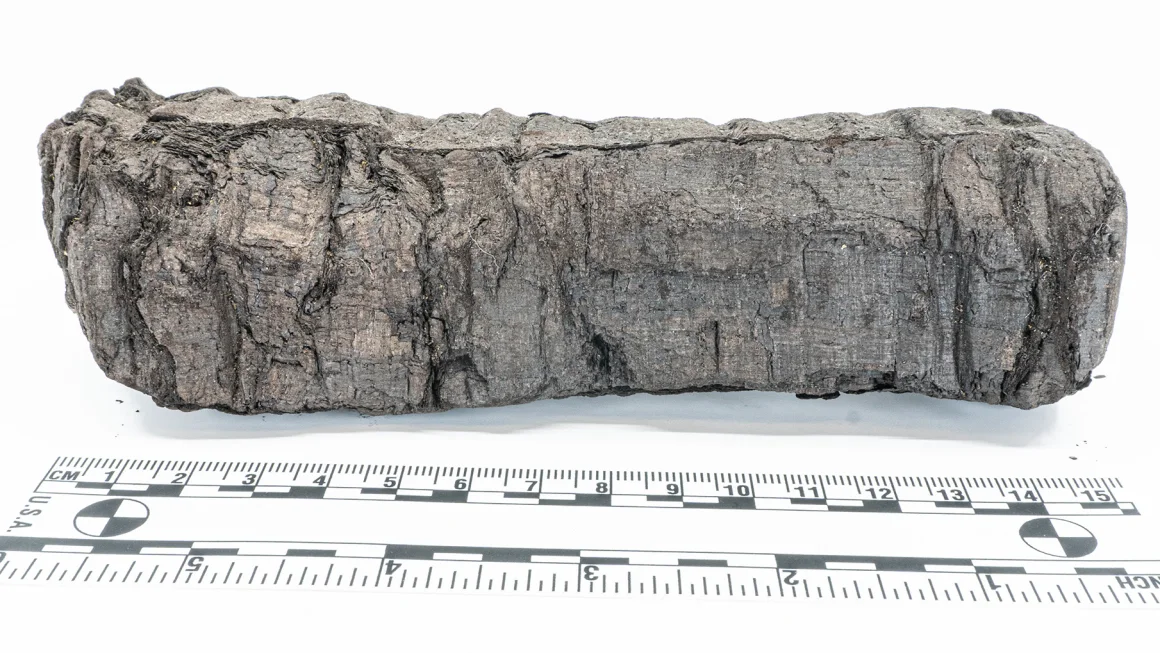
One of the most notable AI-assisted breakthroughs was in the decoding of the Herculaneum scrolls, ancient papyri that survived the eruption of Mount Vesuvius in AD 79. With the help of AI and high-resolution X-rays, researchers have now been able to decipher more than 2,000 characters from these nearly unreadable scrolls. The Vesuvius Challenge, a competition to expedite the deciphering process, has set a goal to unlock 90% of the scrolls by the end of 2024. AI’s ability to virtually flatten the charred scrolls and distinguish ink from carbonized papyri has made this remarkable feat possible, offering unprecedented insights into ancient Rome and Greece.

Another area where AI is making waves is in the study of animal communication. Machine learning has enabled scientists to begin understanding the complex “language” of sperm whales. By analyzing 9,000 click sequences, researchers have identified patterns that resemble human phonetics, such as rhythm, tempo, and ornamentation. While the meaning of these clicks remains elusive, AI’s ability to detect these intricate patterns is opening the door to potential communication with marine mammals. The same techniques are being applied to other species, offering a new way to understand animal languages.

In the field of archaeology, AI is helping to uncover ancient sites in remote and challenging environments. In the Nazca Desert, AI models trained on high-resolution imagery have nearly doubled the number of known geoglyphs in just a few months. While the models are not yet perfect, they hold immense potential for surveying hard-to-reach areas, making AI an indispensable tool for archaeologists. Similarly, AI is aiding in the identification of burial mounds in Mongolia, demonstrating its utility in archaeological research across diverse terrains.

AI is also revolutionizing the understanding of life at the molecular level. The development of AlphaFold by Google DeepMind has accelerated progress in protein structure prediction, solving a long-standing challenge in physical chemistry. This AI tool, now used by millions of researchers, predicts the 3D shapes of proteins from their amino acid sequences, speeding up advancements in biology and medicine. While there are limitations—such as the inability to predict the impact of certain mutations—AlphaFold remains a game-changer in biomedical research.

These examples reflect the growing influence of AI in scientific discovery. From unraveling ancient mysteries to decoding the language of animals and advancing medical research, AI is proving to be a superpower in science. As the field continues to evolve, its potential to solve complex problems and uncover the unknown remains boundless.