Yazılar

Manufacturers Turn to AI to Manage Supply Chains Amid Tariff Volatility

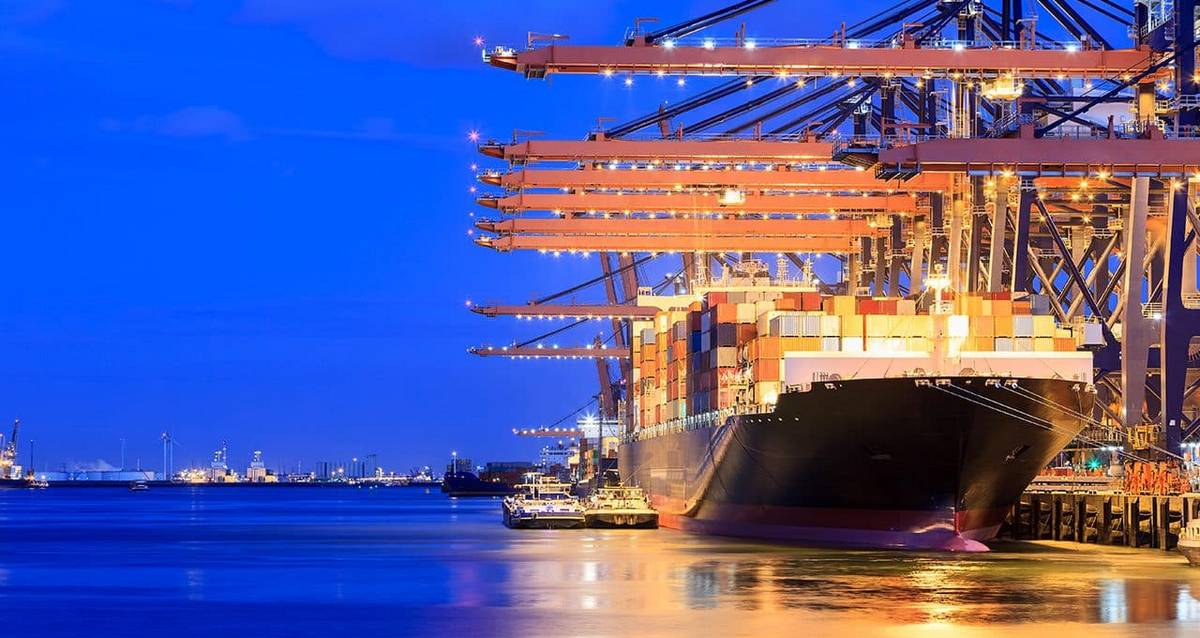
U.S. manufacturers like The Toro Company are using artificial intelligence to maintain lean “just-in-time” inventories despite ongoing global trade uncertainties and fluctuating tariffs. Toro’s supply chain chief, Kevin Carpenter, says AI helps the company process daily news—from policy updates to commodity prices—into actionable insights, guiding purchasing and inventory decisions.

Generative AI is being increasingly adopted in supply chains, capable of analyzing massive datasets and suggesting optimal actions. Industry research firm Gartner predicts AI software spending for supply chains could rise from $2.7 billion today to $55 billion by 2029. Leading providers include SAP, Oracle, Coupa, Microsoft, and Blue Yonder.

While AI improves efficiency and helps manage cost pressures, experts caution it is not a “silver bullet.” Human oversight remains essential for strategic decisions, with AI handling routine tasks like scheduling and ordering. Companies using AI can better react to uncertainty, reduce excess inventory, and protect profit margins amid rising costs and global disruptions.
ABB Launches New Robot Families for China’s Mid-Sized Market to Boost Automation

Swiss engineering giant ABB (ABBN.S) announced on Wednesday the launch of three new families of factory robots specifically designed for the Chinese market, aiming to capitalize on growing automation demand among mid-sized companies. These new robots will serve sectors such as electronics, food and beverage, and metals, performing tasks like polishing and product placement on production lines.

ABB highlighted that China’s mid-market segment, where robots handle simpler tasks like pick-and-place operations, packaging, and basic inspections, is expected to grow by 8% annually in value over the next three years—significantly faster than the global robotics industry in recent years. This surge is driven by labor shortages and the increasing ease of operating robotics technology, aided by advances in artificial intelligence.

The new ABB robot families—Lite+, PoWa, and IRB1200—offer different arm load capacities and speeds tailored to customer needs. One model can be set up and operational within 60 minutes of unpacking and can be programmed using voice commands or by demonstration. Pricing for these robots, along with controllers and equipment, ranges from approximately $20,000 to over $100,000.

China remains the largest robotics market globally, accounting for 51% of new robot installations worldwide in 2023, according to the International Federation of Robotics. It is also ABB’s biggest market for robotics, making up about 30% of the company’s robotics business.

Sami Atiya, president of ABB’s robotics and discrete automation division, downplayed concerns about potential impacts from U.S. tariffs on China, citing the strong domestic market and persistent labor shortages as key demand drivers. The robots will be manufactured at ABB’s new Shanghai factory.

Earlier this year, ABB announced plans to spin off its robotics division, which competes with Japan’s FANUC, Yaskawa, and Germany’s Kuka. Atiya said the spin-off remains on track for completion by Q2 2026 but did not disclose potential valuations or buyer interest, noting that while ABB is open to discussions, their primary goal is to proceed with the spin-off.

SoftBank’s Masayoshi Son Proposes $1 Trillion Arizona AI and Robotics Hub

SoftBank Group founder Masayoshi Son is planning a $1 trillion industrial complex in Arizona focused on robotics and artificial intelligence, Bloomberg News reported Friday, citing sources familiar with the matter. The ambitious project aims to revive high-end tech manufacturing in the U.S. and create a hub akin to China’s manufacturing powerhouse, Shenzhen.

Son is reportedly seeking to partner with Taiwan Semiconductor Manufacturing Co. (TSMC) for the venture, codenamed Project Crystal Land, though the exact role TSMC would play and its interest level remain unclear. TSMC is already investing heavily in U.S. chip manufacturing with planned investments totaling $165 billion.

SoftBank officials have engaged in discussions with U.S. federal and state officials, including Commerce Secretary Howard Lutnick, to explore tax incentives for companies that build factories or invest in the industrial park.

The project also seeks interest from other tech giants such as Samsung Electronics. However, the plans are preliminary and dependent on support from the Trump administration and state authorities.

If realized, the $1 trillion investment would surpass the scale of the $500 billion “Stargate” project, a U.S. data center expansion funded by SoftBank, OpenAI, and Oracle.

SoftBank and TSMC have declined to comment on the report. The White House and Department of Commerce did not immediately respond to requests for comment.

This proposed initiative follows several major SoftBank investments this year, including its $6.5 billion acquisition of semiconductor designer Ampere and up to $40 billion commitment to OpenAI, part of which may be syndicated to other investors. Recently, SoftBank also raised $4.8 billion by selling shares in T-Mobile.