Yazılar

Microsoft Shares Drop as Cloud Outlook Disappoints, Meta Gains on AI Optimism

Microsoft saw its shares tumble 6% on Thursday after its artificial intelligence (AI) investments failed to significantly boost cloud revenue. Meanwhile, Meta’s stock rose 4% as CEO Mark Zuckerberg reassured investors of strong growth potential, calling 2024 a “really big year.”

Both tech giants defended their heavy AI spending following concerns sparked by Chinese AI startup DeepSeek’s recent advancements in low-cost AI models. However, while Meta continues to show strong ad revenue growth—justifying its AI investments, according to Evercore analyst Mark Mahaney—Microsoft’s Azure cloud platform has struggled.

Microsoft missed market estimates for Azure’s quarterly revenue growth and provided a third-quarter forecast below expectations. The company had previously promised a second-half rebound, but analysts now express skepticism.

“The second-half re-acceleration story for Azure is not playing out,” said Barclays analyst Raimo Lenschow, adding that Microsoft prioritized AI workloads over core Azure functions, delaying the expected growth recovery.

For Meta, a stronger-than-expected 21% revenue increase eased investor concerns about Zuckerberg’s aggressive AI spending plans, which could reach $65 billion this year. Analysts remain bullish, with Barton Crockett of Rosenblatt stating that “Meta might have more benefits to show from AI than anyone.”

At least 15 brokerages raised their price targets on Meta, which saw a 65% stock gain in 2023, the largest among Big Tech firms. The stock’s rally was set to add over $80 billion to its market value.

Conversely, Microsoft was on track to lose about $182 billion in market capitalization. J.P. Morgan analyst Mark Murphy noted that Microsoft “did not recommit to its Azure second-half outlook the same way it did 90 days ago,” weakening confidence in the company’s cloud growth trajectory.

 

Meta Reports Strong Q4 Sales But Forecasts Muted Outlook Amid AI Investments

Meta Platforms (META.O) exceeded Wall Street expectations for its fourth-quarter revenue, reporting $48.4 billion, which outpaced analysts’ predictions of $47 billion. Despite this strong performance, the parent company of Facebook and Instagram issued a cautious outlook for the first quarter of 2025, with expected revenue between $39.5 billion and $41.8 billion, slightly below the analysts’ consensus of $41.72 billion.

Meta’s CEO, Mark Zuckerberg, struck an optimistic tone during a conference call, focusing on the company’s AI initiatives. He expressed confidence in the open-source AI strategy, commenting that the emergence of Chinese startup DeepSeek’s AI models reinforced his belief in this direction. “There’s going to be an open-source standard globally,” Zuckerberg remarked, emphasizing that he sees it as an American standard.

However, Meta’s outlook raised questions about the company’s capital spending, as the company relies on its core social media advertising business to finance its significant AI and “metaverse” investments, such as smart glasses and augmented reality systems. Meta has already committed up to $65 billion in capital expenditures for 2025 to expand its AI infrastructure, alongside increasing AI-related hires. The company also anticipates total expenses for 2025 to be between $114 billion and $119 billion, up from $95 billion in 2024.

Jeremy Goldman, principal analyst at eMarketer, noted that while Meta’s fourth-quarter results were strong, the key issue going into 2025 is whether its substantial AI investments will pay off. He highlighted that Meta’s family daily active people (DAP) metric, which tracks unique users who open any of its apps in a day, grew by 5% year-over-year to 3.35 billion.

Meta’s results came after DeepSeek, a Chinese AI company, launched new models that outperformed top U.S. competitors at a fraction of the cost, fueling concerns about the sustainability of U.S. AI business models and triggering a tech stock selloff. Zuckerberg acknowledged the challenges posed by DeepSeek but said it was too early to determine how its global impact would affect Meta’s AI strategy. He added that Meta’s AI teams were already incorporating insights from DeepSeek’s models into their work.

Meta continues to face financial losses in its metaverse-focused Reality Labs unit, which, while exceeding sales expectations, still reported a $5 billion loss in Q4. Despite these losses, Zuckerberg believes the long-term business potential of AI will become evident after 2025.

Meta’s hefty investment in AI includes plans to acquire more of Nvidia’s AI chips and develop custom silicon to train AI systems for better feed recommendations by next year. CFO Susan Li confirmed the company’s goal to use its own chips for these AI tasks. Meta’s continued investment in AI is part of its broader strategy to enhance user experiences across its platforms, while also aiming for cost reductions in AI model development.


DeepSeek’s Global Success Sparkles with National Pride in China

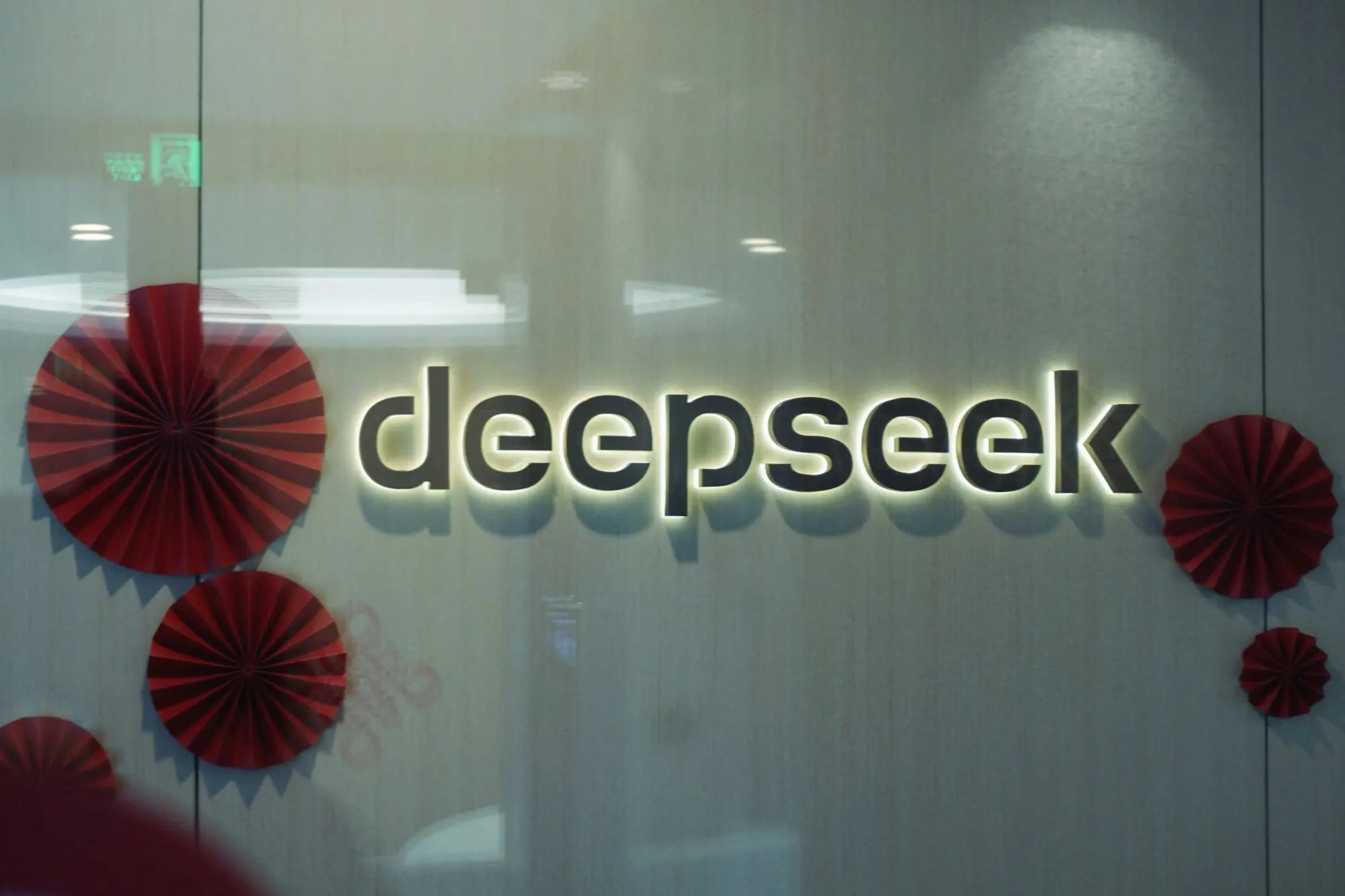
Chinese bloggers, state media, and citizens are celebrating the rapid success of DeepSeek, the homegrown AI startup, viewing its rise as a symbol of China’s resilience against Western efforts to constrain its tech industry. Last week, DeepSeek launched a free AI assistant that claims to use less data at a fraction of the cost of competing services. By Monday, it had surpassed U.S. rival ChatGPT in downloads on Apple’s App Store, prompting a significant selloff in tech shares globally.

DeepSeek’s ability to rival the capabilities of OpenAI while offering a more affordable alternative has raised concerns about the sustainability of profit margins and business models of U.S. AI giants such as Nvidia and Microsoft. In China, the startup’s success has been seen as a victory against U.S. efforts to block access to advanced semiconductors, which are critical for AI development.

“This symbolizes that U.S. containment, persecution, and sanctions in advanced technology against China have completely failed,” wrote military commentator Chen Xi on his WeChat account. This sentiment aligns with statements from former U.S. President Donald Trump, who suggested that DeepSeek’s achievements should spur American firms to innovate and that it was beneficial for Chinese companies to introduce cheaper, faster AI technology.

In Zhejiang, where DeepSeek is based, the provincial government’s media office published a widely shared essay celebrating the company’s success. The article, read more than 100,000 times, declared, “The moon overseas is not actually more round. Whatever others can do, we can also do—and even do it better.” The essay pushed back against both overly optimistic and overly pessimistic views of China’s technological progress.

This wave of pride surrounding DeepSeek mirrors the response to Huawei’s surprise launch of the Mate 60 Pro smartphone in 2023, which came despite U.S. sanctions. At that time, the state-backed Global Times praised Huawei’s ability to produce high-end smartphones, arguing that the U.S. crackdown had failed.

The reaction from the Chinese public has been equally supportive. Chen Jianuo, a 38-year-old Beijing resident, expressed pride over DeepSeek’s international success, reflecting on the positive global attention the company has garnered. “China has made great progress in AI development, and I hope our technological growth continues,” she shared.

Leo Li, a 24-year-old student, also voiced his pride, saying, “It’s exciting that a Chinese company is on par with Meta and OpenAI. As a Chinese citizen, it feels great to see our AI research becoming a global sensation.”