Yazılar

Trump Says Microsoft to Make Changes to Limit Data Center Power Costs for Americans

U.S. President Donald Trump said on Monday that Microsoft will introduce “major changes” this week aimed at preventing American consumers from facing higher electricity bills due to the growing power demands of data centers.

In a post on social media, Trump said his administration is working closely with major U.S. technology companies to address rising utility costs linked to the rapid expansion of data centers, which underpin cloud computing and artificial intelligence services. He stressed that protecting households from higher energy prices was a priority.

“I never want Americans to pay higher Electricity bills because of Data Centers,” Trump said, adding that his administration is securing commitments from leading tech firms “to the American People,” with further announcements expected in the coming weeks.

Data centers have become a growing concern for policymakers as electricity demand surges across the United States, driven by AI workloads and large-scale cloud infrastructure. Utilities in several regions have warned that new data center projects could strain local power grids and push up costs for residential users.

Trump did not provide details on the specific changes Microsoft plans to implement, nor did he name other technology companies involved in the discussions. Microsoft has not yet publicly commented on the statement.
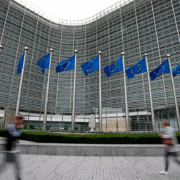
Big Tech to Avoid Strict Obligations in EU Digital Rules Overhaul, Sources Say

Major U.S. technology companies including Alphabet, Meta Platforms, Netflix, Microsoft and Amazon are set to avoid strict new regulatory obligations under the European Union’s upcoming overhaul of digital rules, according to people with direct knowledge of the matter.

Despite strong lobbying from telecoms companies for tougher measures targeting Big Tech, the companies will instead fall under a voluntary framework as part of the planned Digital Networks Act (DNA), the sources said. The European Commission has declined to comment.

The DNA, which will be presented by EU tech chief Henna Virkkunen on January 20, is aimed at boosting Europe’s competitiveness and encouraging greater investment in telecoms infrastructure. The proposal will still need approval from EU member states and the European Parliament before it can become law.

Under the draft rules, Big Tech firms will be encouraged to cooperate voluntarily with telecoms operators in discussions moderated by BEREC, rather than being subject to binding obligations similar to those imposed on telecoms providers. One source described the approach as a “best practices regime” with no new mandatory requirements.

The planned overhaul will also address spectrum policy, with the Commission setting out guidance on licence duration, sale conditions and pricing methodologies to be used by national regulators during spectrum auctions, which often generate billions of euros for governments. While the goal is to harmonise spectrum allocation across the EU and reduce regulatory burdens for telecoms firms, some national regulators are expected to resist what they may see as increased centralisation of power.

In addition, the Commission plans to issue guidance on the rollout of fibre infrastructure, a key element of the EU’s digital strategy to narrow the gap with the United States and China. Governments may also be allowed to extend the 2030 deadline for replacing copper networks with fibre if they can demonstrate they are not ready to meet the target.

The EU’s digital policy push has drawn criticism from Washington in recent years, with U.S. officials arguing that new rules unfairly target American companies. Brussels has repeatedly rejected those claims.

Underwater Cables: The Hidden Arteries of the AI Boom and Global Internet

Deep beneath the oceans lies one of the most crucial — yet least visible — components of modern life: underwater communication cables. Nearly 95% of the world’s international data and voice traffic flows through this vast network of almost one million miles of fiber-optic lines connecting continents.

These cables carry everything from financial transactions and government communications to video calls, cloud services, and AI data transfers. As artificial intelligence grows more data-hungry, investment in subsea infrastructure is accelerating at record speed.

Between 2025 and 2027, global spending on subsea cables is expected to reach $13 billion, nearly double the investment made over the previous three years, according to TeleGeography.

“AI is increasing the need that we have for subsea infrastructure,” said Alex Aime, vice president of network investments at Meta. “Without that connectivity, you just have expensive warehouses.”

Tech giants are now the biggest investors. Meta’s Project Waterworth, a 50,000-kilometer cable linking five continents, will be the longest in the world. Amazon’s Fastnet, connecting the U.S. and Ireland, will deliver speeds equivalent to streaming 12.5 million HD movies simultaneously. Google has funded over 30 subsea systems, while Microsoft has invested in others to bolster its Azure cloud network.

But as global reliance on these cables deepens, so do concerns about security and resilience. Damaged or sabotaged cables can cut off entire nations — as seen when Tonga lost internet access after a volcanic eruption in 2022.

While most damage stems from accidents — fishing nets or dropped anchors — analysts have noted a rise in suspected sabotage near Taiwan and in the Baltic Sea, often coinciding with geopolitical tensions. In response, NATO launched “Baltic Sentry” in early 2025 to protect critical subsea infrastructure.

The U.S. Federal Communications Commission (FCC) has also tightened rules on foreign ownership of cable systems, citing threats from China and Russia. “We’re making it difficult to connect undersea cables directly from the U.S. to adversary nations,” said FCC Chair Brendan Carr.

From the 1850 telegraph line between Dover and Calais to AI-era fiber networks, subsea cables remain the unseen lifeline of global communication — and the quiet battleground of the world’s next digital conflict.