
Yazılar

The Global AI Buildout Accelerates as Tech Titans Drive Record Investment

The global race to build artificial intelligence infrastructure shows no sign of slowing, as technology giants and industrial firms alike pour trillions into data centers, chips, and computing power. Nvidia’s market value soared past $5 trillion this week — a milestone that underscores how central AI has become to the global economy.

In a whirlwind week for the tech sector, Microsoft and OpenAI struck a landmark deal expanding the ChatGPT maker’s fundraising capacity, while Amazon announced 14,000 corporate job cuts just days before its cloud division reported its fastest growth in nearly three years. Together, these developments highlight AI as the defining engine of modern corporate spending and stock market momentum.

AI’s impact now extends beyond Silicon Valley. Over 100 non-tech companies — from Honeywell and GE Vernova to Caterpillar — referenced data centers in their earnings calls, signaling how deeply AI demand is reshaping industrial supply chains. Caterpillar’s data center equipment sales jumped 31% last quarter, reflecting the sector’s explosive growth.

Goldman Sachs projects global AI-related infrastructure spending could reach up to $4 trillion by 2030. Microsoft, Amazon, Meta, and Alphabet are expected to collectively invest around $350 billion this year alone. Meanwhile, AI investment is fueling international trade, with the U.S. importing vast quantities of semiconductors from Taiwan, South Korea, and Vietnam.

Despite talk of an AI “bubble,” companies continue to ramp up spending. Apple plans to significantly boost AI investments, and Amazon is projecting capital expenditures of $125 billion in 2025. Economists say this phase of the AI revolution remains in its early stages — with innovation advancing faster than any technology cycle in recent history.

Microsoft AI Chief Mustafa Suleyman Labels Concept of Conscious AI as ‘Absurd’

Microsoft’s AI chief, Mustafa Suleyman, has dismissed the notion that artificial intelligence could ever be conscious, calling the idea “absurd.” According to reports, Suleyman believes that AI, no matter how advanced, cannot experience emotions or sensations like humans, making any attempts to create conscious AI inherently misguided. His remarks come at a time when tech companies are increasingly promoting AI companions, raising concerns about users developing unhealthy attachments to chatbots. Devamını Oku

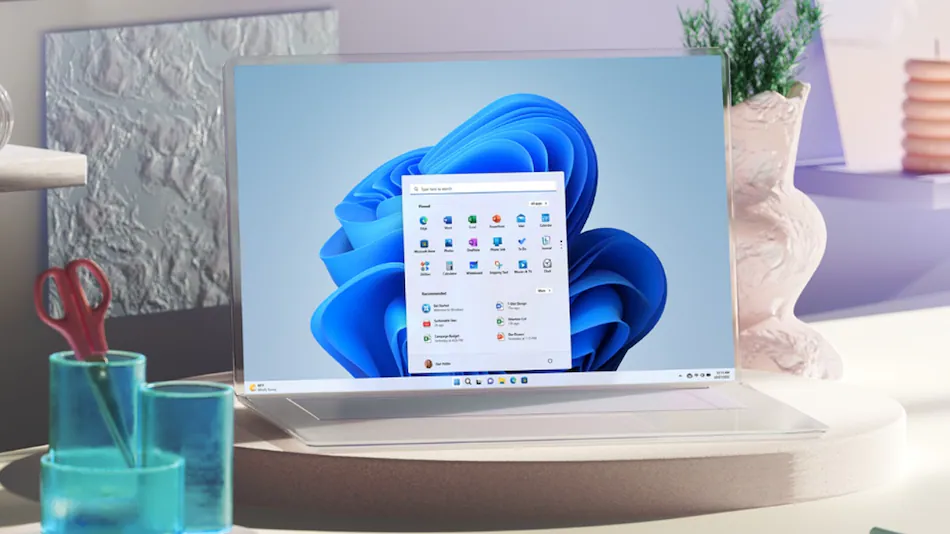
Microsoft Unveils New Windows 11 Insider Preview Build Featuring Ask Copilot Shortcut and Shared Audio Support

Microsoft has announced the release of a new Windows 11 Insider Preview Build, bringing several notable features and improvements to both the Dev and Beta Channels. Among the highlights is the introduction of Ask Copilot in the taskbar — a streamlined way for users to interact with Microsoft’s AI assistant directly through one-click access. This enhancement allows users to access Copilot Vision and Voice features more quickly, making it easier to perform tasks using natural language commands. Additionally, the company is rolling out a new Shared Audio feature that enables users to play audio simultaneously on two connected devices, expanding personalization and accessibility options across the system.

According to Microsoft’s official Windows Insider blog, the latest update arrives as Windows 11 Insider Preview Build 26220.7051 (KB5067115). While this release includes routine bug fixes and performance enhancements, the most exciting addition is undoubtedly the integration of Ask Copilot directly within the Windows taskbar. This AI-powered shortcut aims to improve productivity by allowing users to perform everyday tasks, find information, and even control settings through both text and voice inputs. It’s designed as an opt-in experience, meaning users can choose to enable it manually under Settings > Personalization > Taskbar > Ask Copilot.

The new Shared Audio functionality, currently in testing, is another notable addition in this build. It allows a single audio stream to be played on two devices at once — for example, sharing music between two pairs of Bluetooth headphones or syncing playback across speakers. This feature could be especially useful for watching movies, gaming, or collaborative listening experiences. It represents part of Microsoft’s broader effort to enhance multimedia flexibility in Windows 11, aligning the platform more closely with the needs of creators and casual users alike.

In addition to these updates, the build extends Full-Screen Experience (FSE) support to a wider range of handheld gaming PCs, further optimizing Windows 11 for portable gaming devices. This improvement ensures smoother frame rates, better scaling, and a more immersive experience for gamers using compact form-factor PCs. With these updates, Microsoft continues to refine Windows 11 into a more intelligent, flexible, and adaptive platform — one that blends AI-powered assistance with thoughtful usability enhancements across devices and use cases.