Yazılar

OpenAI’s ChatGPT and Sora Services Resume After Hours-Long Outage

OpenAI announced Thursday that its popular ChatGPT assistant, Sora video generator, and developer interface were fully operational again following an hours-long outage. The disruption lasted just over four hours, briefly halting access to some of the company’s widely used services.

This outage comes at a time when ChatGPT continues to expand rapidly. Sam Altman, OpenAI’s CEO, reported earlier in December that the service now reaches 300 million active users weekly. Moreover, Apple recently integrated ChatGPT into its software updates for iPhone, iPad, and Mac, bringing further mainstream exposure to the tool.

The company’s status page confirmed the issue had been resolved after the brief downtime. In June, OpenAI also experienced a similar issue, which lasted over five hours.

OpenAI, which reached a $157 billion valuation following an October funding round involving major investors such as Microsoft and Nvidia, has seen a meteoric rise since the launch of ChatGPT in late 2022. This growth has cemented its position as one of the most talked-about companies in the tech world.

Additionally, OpenAI had announced the release of Sora on Monday to users in the U.S. and other countries. However, Altman admitted on X the following day that the demand for Sora had exceeded expectations, and it would take time before everyone gains access.


Acadia and Microsoft Spearhead $9 Billion U.S. Renewables Roll-Out

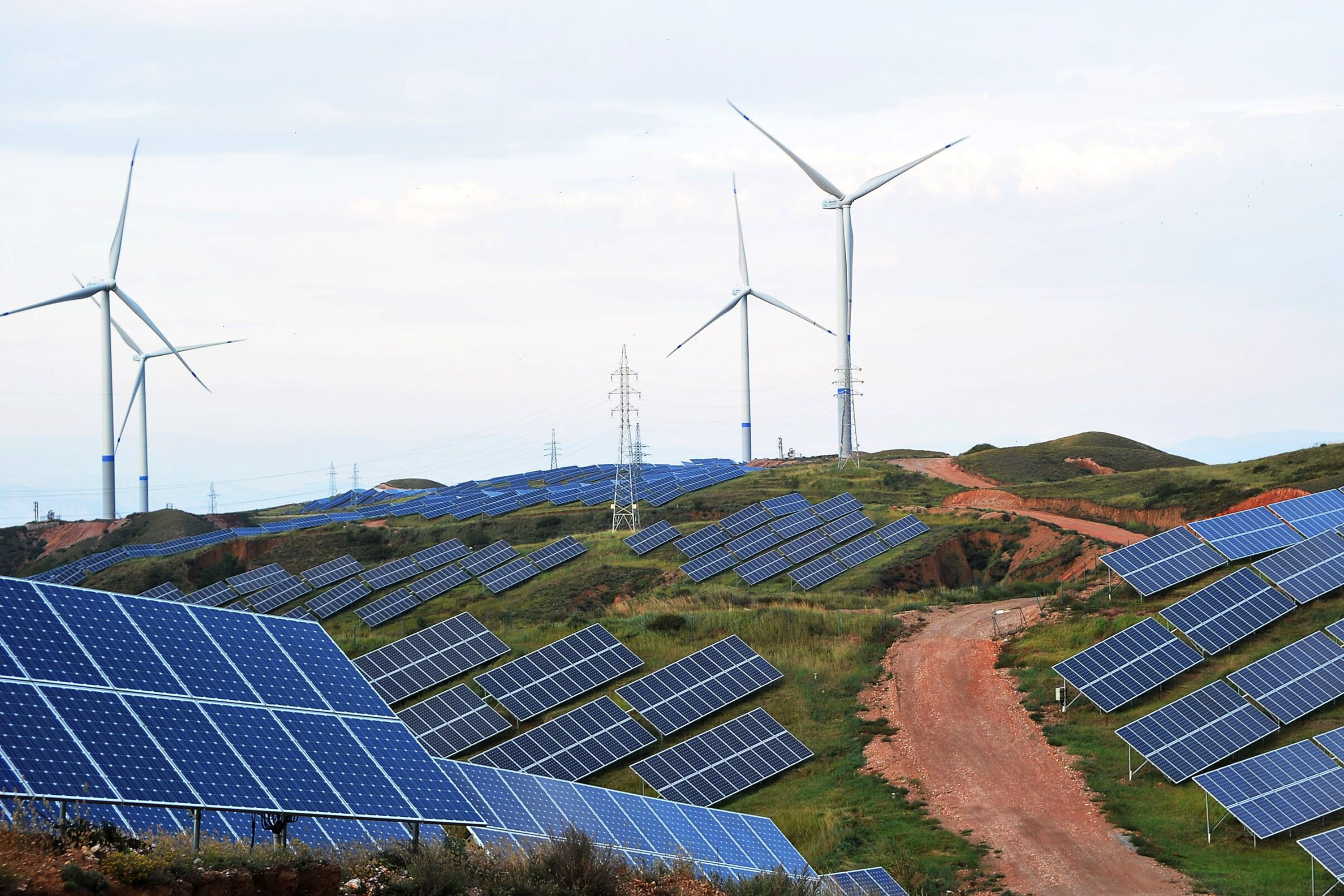
Acadia Infrastructure Capital, a U.S. investor, has teamed up with corporations including Microsoft to launch the Climate and Communities Investment Coalition (CCIC), aiming to develop a $9 billion pipeline of renewable energy projects across the United States. According to Acadia Vice President Brian O’Callaghan, the initiative will accelerate the deployment of corporate-led renewable energy projects while delivering tangible benefits to local communities.

The coalition plans to build approximately 5 gigawatts of renewable energy capacity over the next five years. Beyond expanding clean energy infrastructure, the initiative is designed to provide socio-economic benefits, such as:

  • Making clean energy more accessible to low- and middle-income households at reduced prices.
  • Hiring local workers for project development.
  • Supporting contractors with diverse ownership.

ACCELERATING CORPORATE RENEWABLE ENERGY INVESTMENT

With falling costs already driving the adoption of renewable energy, the CCIC aims to exponentially increase the pace of deployment by attracting corporate financing. Many companies seek to meet environmental targets or acquire Renewable Energy Certificates (RECs) tied to these projects.

RECs are highly sought after for companies aiming to green their power supply or offset emissions in their supply chains. “Renewable energy will continue to expand without corporations. With corporations, the pace becomes exponential,” said O’Callaghan. He added that corporate investments would act as a magnet for additional funding from other stakeholders.


FLAGSHIP PROJECTS AND CORPORATE BACKING

The coalition’s first project involved securing financing for a 210-megawatt solar plant in collaboration with Matrix Renewables, with Microsoft playing a significant role. Danielle Decatur, Director of Environmental Justice at Microsoft, noted that the program aligns with the company’s sustainability goals through “high-quality renewable energy procurement.”

In addition to facilitating renewable energy deployment, the coalition emphasizes community-focused outcomes. Yinka Bode-George, CEO of the non-profit Sustain Our Future Foundation, stated that the program would ensure “meaningful, lasting benefits to community stakeholders.”

Google Achieves Quantum Computing Milestone with New Chip “Willow”

Google has announced a groundbreaking achievement in quantum computing, unveiling a new chip named “Willow” that can solve complex problems significantly faster than classical computers. According to the tech giant, its quantum system resolved a computation in just five minutes—a task that would take a classical computer longer than the entire history of the universe to complete.

The advancement was made by Google’s Quantum AI unit, based in Santa Barbara, California. The team emphasized that while the problem solved lacks direct commercial applications, the technology holds immense potential for fields like medicine, battery chemistry, and artificial intelligence. These are areas where today’s computers fall short.


The Willow Chip and Quantum Error-Correction

Willow features 105 qubits, the fundamental building blocks of quantum computers. Qubits operate on principles of quantum mechanics, enabling unprecedented speed, but they are prone to errors due to environmental interference. As the number of qubits increases, the risk of accumulating errors also rises, which has been a major hurdle for quantum computing since the 1990s.

In a research paper published in Nature, Google reported that it has developed a technique to reduce error rates by linking qubits in a way that improves reliability as the number of qubits grows. Importantly, the company demonstrated real-time error correction—an essential step toward making quantum computers viable for practical applications.

“We are past the break-even point,” said Hartmut Neven, head of Google Quantum AI, signaling a key moment in the journey to scalable quantum computing.


Comparisons with Classical and Quantum Rivals

This breakthrough addresses criticisms from Google’s 2019 quantum computing claim, where IBM argued that a classical computer could solve the same problem in two-and-a-half days rather than the proposed 10,000 years. Google adjusted its benchmarks based on feedback and concluded that even under ideal conditions, a classical system would still require a billion years to match Willow’s performance.

While competitors such as IBM and Microsoft are developing chips with more qubits, Google prioritizes making its qubits more stable and reliable. “We’re focusing on building the highest-quality qubits possible,” said Anthony Megrant, Chief Architect of Google Quantum AI.


New Facilities and Faster Innovation

Google previously fabricated its chips at the University of California, Santa Barbara, but the company now has a dedicated fabrication facility. This new setup allows Google to produce chips more rapidly, testing and iterating innovations in advanced cryostats—specialized refrigerators used to maintain the extreme temperatures required for quantum experiments.

Megrant explained the motivation: “If we have a good idea, we want someone to bring it to the cleanroom and test it in cryostats as quickly as possible. This speeds up our learning cycles significantly.”


Looking Ahead

Google’s success with Willow not only marks a milestone in overcoming quantum error challenges but also brings the industry closer to achieving scalable quantum systems with real-world applications. As the race among tech giants intensifies, Google’s focus on precision and reliability could redefine the future of computing.