Yazılar

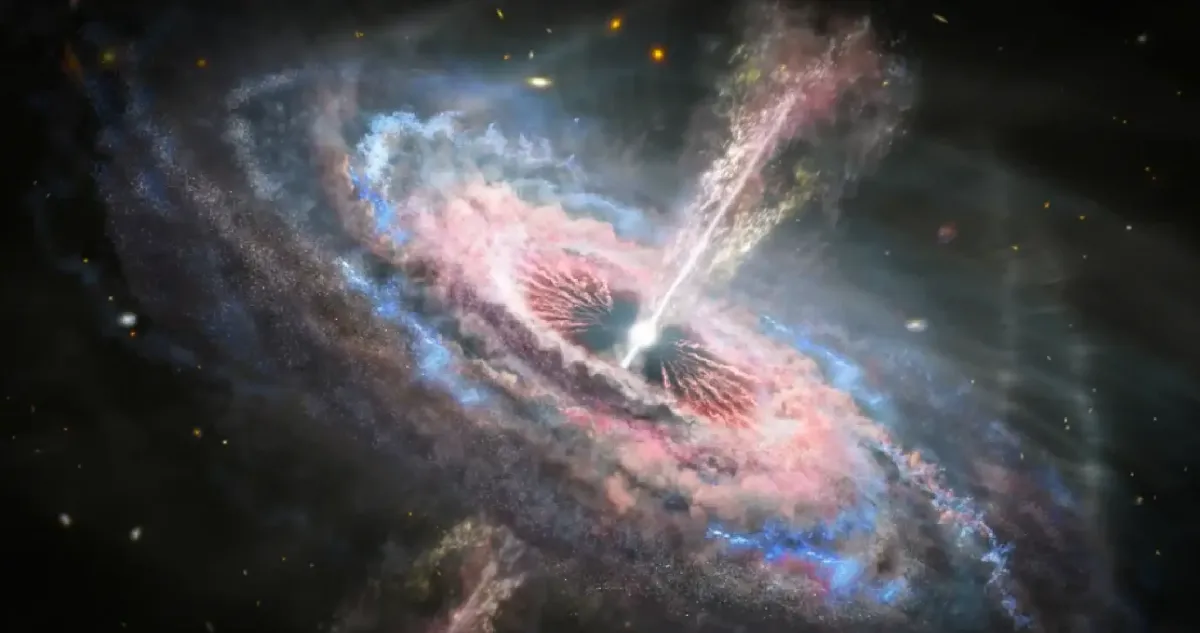
Hubble Reveals Stunning Close-Up of Quasar 3C 273, Unveiling Mysterious Structures

The Hubble Space Telescope has captured its closest-ever image of a quasar, offering an extraordinary view of its mysterious surroundings. The quasar in question, 3C 273, is located billions of light-years away from Earth and is one of the brightest known objects in the universe. This breakthrough was made possible through Hubble’s imaging spectrograph, which allows astronomers to minimize the overwhelming brightness of the supermassive black hole at the quasar’s center. This technology enables scientists to study the intricate structures around the black hole with unprecedented clarity.

Researchers, including Bin Ren from the Côte d’Azur Observatory in France, have been fascinated by the unusual features discovered around 3C 273. According to NASA, these findings include several blobs of varying sizes and a mysterious L-shaped filamentary structure located approximately 16,000 light-years from the quasar’s black hole. These structures could be remnants of small galaxies that are feeding gas and dust into the black hole, contributing to the quasar’s extraordinary luminosity. This discovery may help scientists better understand the processes fueling quasars and the dynamics of supermassive black holes.

Quasars are known for their unique properties, primarily their ability to shine with incredible brightness. Powered by supermassive black holes at the centers of active galaxies, quasars are a result of matter falling into the black hole, forming a hot, glowing accretion disk. The immense gravitational forces at play cause the material in this disk to heat up, producing intense light. Additionally, magnetic fields near the black hole’s poles accelerate particles to nearly the speed of light, creating massive jets of plasma that can extend vast distances, sometimes reaching hundreds of thousands of light-years into space.

The new findings surrounding 3C 273 could offer further insight into the behavior and formation of quasars. As scientists continue to analyze the data from Hubble, these unusual structures may provide crucial information on how black holes grow and interact with their environments, helping to deepen our understanding of the universe’s most powerful objects.
Jared Isaacman: Trump’s NASA Pick and a Crypto Billionaire with Space Ambitions

Jared Isaacman, President-elect Donald Trump’s pick to lead NASA, is not only a space enthusiast but also a crypto billionaire with significant influence in the fintech sector. At 41 years old, Isaacman made headlines earlier this year by commanding the world’s first all-civilian space mission, a remarkable feat in commercial space travel. He is also the founder and CEO of Shift4, a fintech company specializing in secure payment processing, which he founded at the age of 16 in 1999. The company, which went public in 2020, has seen its stock surge nearly 40% this year, bringing its market value to $9.3 billion.

Trump highlighted Isaacman’s leadership in a post on Truth Social, praising him for his success in building Shift4 into a global financial technology leader. Much of that success stems from Isaacman’s forward-thinking approach to cryptocurrency, particularly his investments in stablecoins—a less glamorous but growing sector of the digital asset market.

In early 2022, Isaacman and his team met with crypto entrepreneurs Alex Wilson and Pat Duffy, who were in the process of selling their crypto donation platform, The Giving Block, to Shift4. The group discussed the potential applications of blockchain technology across Shift4’s payment services. While the broader crypto market was booming, with digital assets like Bitcoin reaching record highs, Isaacman and his team focused on stablecoins—cryptocurrencies pegged to the value of real-world assets, typically the U.S. dollar.

Stablecoins, worth approximately $200 billion today, are seen as a more stable and practical option for cross-border payments, offering lower transaction costs and faster processing times compared to traditional financial systems. Isaacman, Wilson, and Duffy believed that stablecoins were more likely to become mainstream as a payment method than Bitcoin or Ethereum. This vision led to Shift4’s acquisition of The Giving Block for $54 million, along with a potential earnout of up to $246 million. In October 2023, Shift4 rolled out its “Pay with Crypto” service, allowing customers to use cryptocurrency at over 200,000 merchants.

Isaacman’s involvement in the crypto space aligns with the broader trend of digital currencies becoming increasingly mainstream. The crypto market has seen substantial growth since Trump’s election win in 2024, with Bitcoin reaching new highs and institutional investors jumping in, fueled by the popularity of spot bitcoin exchange-traded funds. Companies like Stripe, PayPal, Visa, and Mastercard are also embracing stablecoins, recognizing their potential for faster and cheaper transactions.

In addition to his achievements in fintech, Isaacman has also pursued a passion for space exploration. He has commanded two private SpaceX missions, one in 2021 and another in 2024, further cementing his ties with Elon Musk, a key ally of Trump. Isaacman views his appointment to lead NASA as an opportunity to advance human space exploration and contribute to humanity’s understanding of the universe.

Despite his new role, Isaacman will remain CEO of Shift4 until his Senate confirmation. He expressed that his choice to lead NASA is driven by his desire to give back to the country that enabled his success and to continue pushing the boundaries of space exploration. His leadership at both Shift4 and NASA is expected to shape the future of space technology and cryptocurrency as they continue to converge.


Study Suggests Venus May Have Never Had Oceans, Disputing Previous Theories

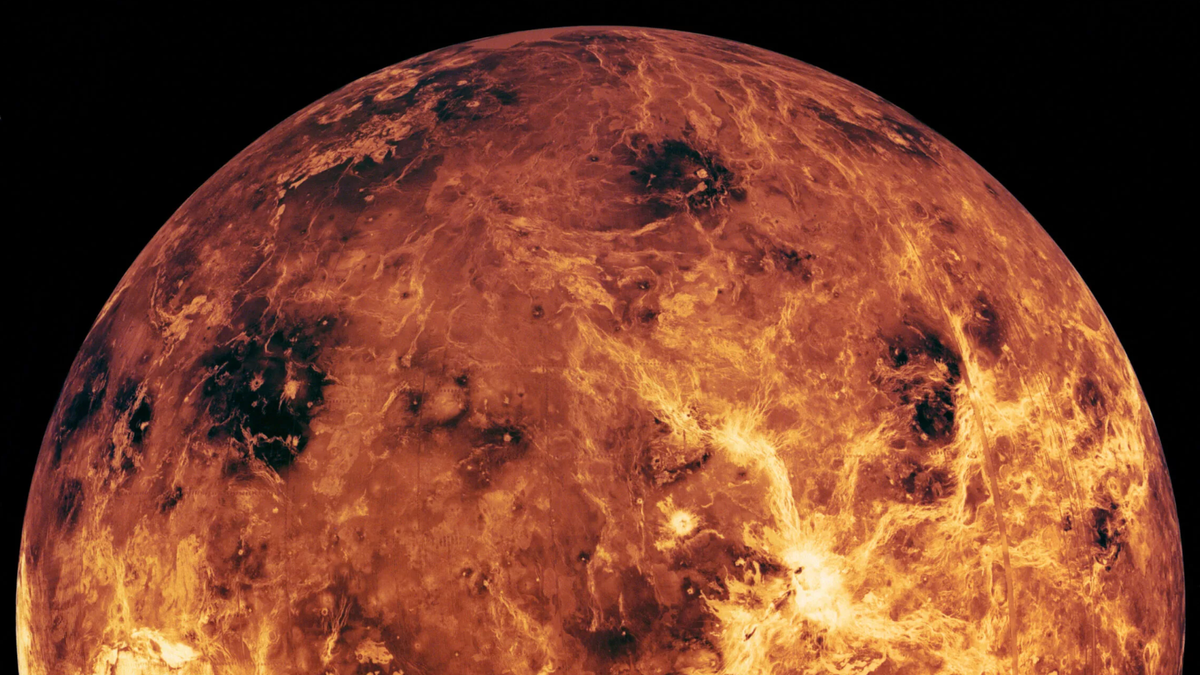
A recent study published in Nature Astronomy has upended previous theories about Venus, suggesting that the planet may have never had oceans or conditions suitable for life. The research, led by Tereza Constantinou, a doctoral researcher at the University of Cambridge’s Institute of Astronomy, delved into the composition of Venus’s atmosphere to infer its interior water content. The results paint a picture of a planet that remained dry throughout its history, challenging earlier beliefs that Venus might have once had liquid water on its surface.

One of the key findings of the study centers around the planet’s atmospheric chemistry, particularly the amount of water vapor released during volcanic activity. On Earth, volcanic eruptions are typically associated with significant amounts of water vapor, indicating a water-rich mantle. However, on Venus, volcanic eruptions emit a mere 6 percent water vapor, a stark contrast to the more than 60 percent found on Earth. This substantial difference suggests that Venus’s interior is remarkably dry, which raises doubts about the possibility of liquid water ever existing on its surface.

The research also highlights that, unlike Earth, Venus’s volcanic eruptions do not release significant amounts of water vapor. According to Constantinou, this implies that the planet’s interior—the source of volcanic activity—is similarly dry. This lack of water vapor further supports the hypothesis that Venus has always been devoid of the liquid water necessary to form oceans, oceans that might have otherwise provided the conditions required for life.

These findings challenge past theories that Venus may have had oceans in its early history, potentially making it more Earth-like and habitable. However, the new research suggests that even if Venus once had a more temperate climate, its dry interior likely made it impossible for liquid water to accumulate or persist. As our understanding of Venus continues to evolve, this study raises important questions about the planet’s geological and atmospheric history, offering a fresh perspective on the enigmatic world