Yazılar

Could Eutelsat Replace Starlink for Ukraine’s Satellite Internet Needs?

As speculation grows about Ukraine potentially losing access to Elon Musk’s Starlink satellite internet, a critical tool for military communications during the ongoing war with Russia, attention has turned to Eutelsat, a European satellite provider, as a potential alternative. The Franco-British company, which recently merged with Britain’s OneWeb, has reportedly been in talks with the European Union to provide additional services to Ukraine. This follows concerns over the U.S. possibly using Starlink access as leverage in diplomatic discussions with Kyiv regarding critical minerals.

Here’s a breakdown of how Eutelsat could step in to support Ukraine’s communication needs.

How Crucial is Starlink to Ukraine?

Starlink’s satellite internet system has become indispensable for Ukraine, especially after its fixed-line and mobile networks were severely damaged by Russian bombings since the invasion began in February 2022. The system allows users to access the internet via a small satellite dish that connects to a constellation of satellites orbiting overhead.

While Starlink’s internet services are also available to civilians, the primary users are Ukraine’s military forces, which rely heavily on Starlink for communication amid constant jamming and interception of signals. The system is vital for battlefield command and control, and Ukraine has also used Starlink to guide attack drones, though SpaceX restricted this use two years ago. Initially funded by SpaceX, the U.S. government later took over the provision of Starlink to Ukraine. Recently, Poland confirmed it had been covering Ukraine’s subscription fees and would continue to do so.

How Does Eutelsat Compare to Starlink?

Eutelsat has already been providing support for government and institutional communications in Ukraine and has stated it can offer alternatives for certain government and defense applications. The company controls a global satellite network after merging with OneWeb in 2023, making it one of the few firms, along with Starlink, to offer global coverage via Low Earth Orbit (LEO) satellites.

While Eutelsat’s fleet consists of around 630 LEO satellites, compared to Starlink’s more than 7,000, it still offers the same capabilities within Europe, according to the company. Eutelsat provides speeds of up to 150 Mbps, slightly lower than Starlink’s promise of 200 Mbps. However, Eutelsat’s OneWeb terminals are significantly more expensive, with costs up to $10,000 per terminal plus monthly subscriptions. In contrast, Starlink charges Ukrainian users a one-time payment of $589 for the terminal, with monthly fees ranging from $95 to $440, depending on usage.

Despite this, the question remains whether any donor countries or organizations would be willing to fund the high cost of OneWeb subscriptions for Ukraine. France and the UK, which hold a combined 24.8% stake in Eutelsat, are actively involved in diplomatic efforts surrounding a peace deal with the U.S.

Are There Any Other Alternatives?

While global competition for Starlink is growing, it remains limited. Luxembourg-based SES provides satellite services to NATO defense forces through its medium Earth orbit O3b mPOWER constellation, but it focuses primarily on corporate customers and governments. SES’s services are not consumer-friendly and do not cater directly to end-users.

Additionally, some European initiatives like IRIS² and GOVSATCOM, which Ukraine is interested in, may take years before they are fully operational, leaving a gap in immediate satellite communication support for the country.

Germany Suspects Sabotage in Baltic Sea Telecoms Cable Damage

Germany Warns of Possible Sabotage After Damage to Undersea Cables

Germany has raised concerns that the recent damage to two underwater telecoms cables in the Baltic Sea could be the result of sabotage. Speaking at a meeting in Brussels, German Defence Minister Boris Pistorius stated that the damage, which occurred between Sunday and Monday, should be presumed to be a deliberate act, dismissing the possibility of accidental damage from ship anchors. The cables affected include one linking Finland and Germany and another connecting Sweden and Lithuania.

Pistorius emphasized that while it remains unclear who was responsible for the damage, the incident should be considered a “hybrid” action, suggesting the possibility of political or military involvement. He expressed skepticism about claims that the cables were damaged accidentally and underlined the need to investigate the situation thoroughly.


Heightened Surveillance and Investigation Underway

In response to the damage, Lithuania has increased its naval patrols in the Baltic Sea. The Lithuanian armed forces are working alongside regional NATO members to assess the situation, while the Lithuanian Prosecutor General’s Office has begun gathering information to decide if a formal investigation should be launched.

The Swedish Post and Telecom Authority is also coordinating with other relevant agencies to gather more details, though it declined to provide further comments on the situation. Both cable companies—Arelion, which operates the cable linking Lithuania and Sweden, and Cinia, which owns the Finland-Germany link—confirmed that the damage was significant, with Arelion calling it “full damage.”


Concerns of Espionage and Sabotage in the Region

The incident comes amid growing tensions in the region, following the war between Russia and Ukraine. Dutch Defence Minister Ruben Brekelmans pointed to increased Russian activity in the seas, suggesting it could be linked to espionage or sabotage aimed at critical infrastructure. This mirrors previous concerns about Russia’s possible involvement in damaging the Nord Stream gas pipelines in 2022, which remains unsolved.

Both Sweden and Germany are closely monitoring the situation, and while no direct evidence has pointed to a specific perpetrator, the damage to the cables raises further questions about the security of vital infrastructure in the region. The companies involved have stated that repairs could take up to 15 days, depending on the assessment of the damage.

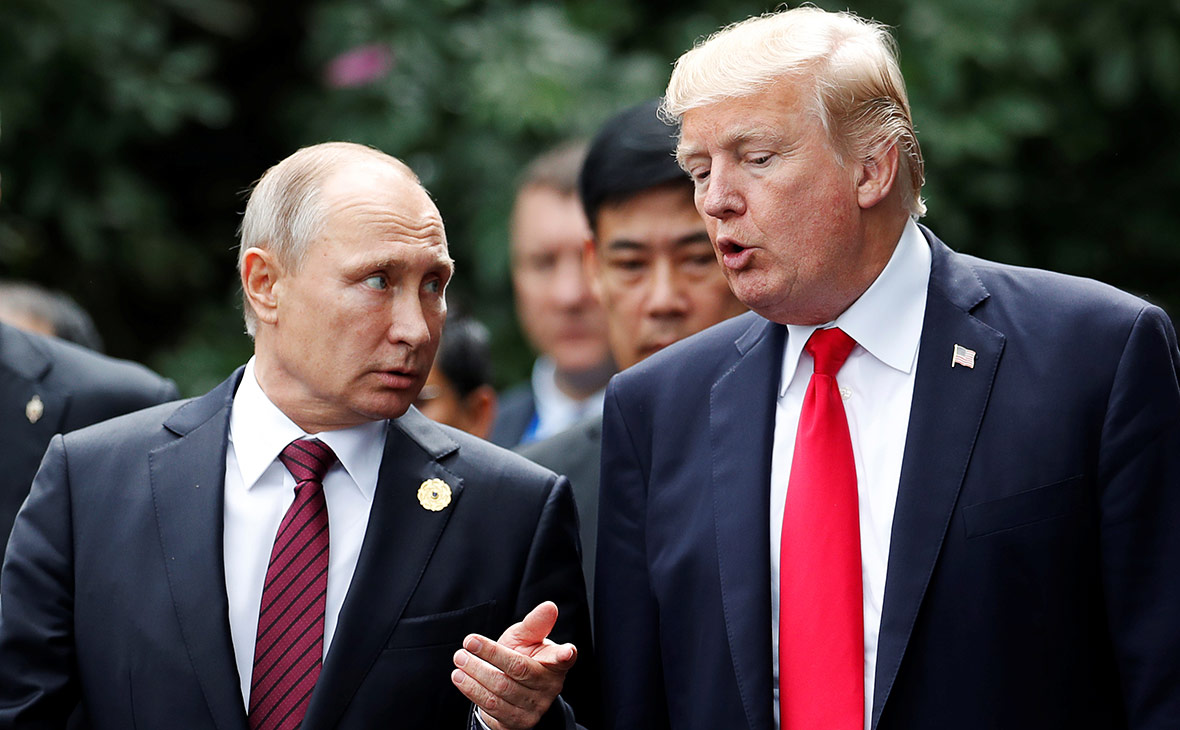
Putin Open to Talks with Trump, But Ukraine Demands Remain Firm, Says Kremlin

Russian President Vladimir Putin is reportedly open to discussing the Ukraine conflict with U.S. President-elect Donald Trump, though he remains resolute in his demands regarding Ukraine, the Kremlin confirmed on Friday. Dmitry Peskov, Putin’s spokesperson, emphasized that Moscow’s objectives in Ukraine have not shifted and that Putin has no intention of revising these terms.

When questioned about whether Putin’s willingness to communicate with Trump indicates any flexibility in Russia’s stance, Peskov clarified that Russia’s goals remain unchanged. “The president has never suggested a shift in the objectives of the special military operation. He has repeatedly emphasized that they are consistent,” said Peskov. He underscored that Russia’s goals pertain to securing the nation’s interests and protecting Russian citizens in the contested areas.

As of mid-2023, Putin’s terms for ending the war require Ukraine to abandon NATO aspirations and withdraw its military from the four regions—Donetsk, Luhansk, Kherson, and Zaporizhzhia—that Russia claims as its own. Ukraine has dismissed these conditions, with President Volodymyr Zelenskiy asserting that accepting such terms would amount to surrender. Instead, Zelenskiy has presented a “victory plan” calling for increased Western military assistance to achieve a decisive Ukrainian win.

Trump, who has previously criticized extensive U.S. support for Ukraine, has suggested he could end the conflict within 24 hours if given the opportunity, though he has not specified his approach. Zelenskiy expressed skepticism over Trump’s promise, warning that a quick resolution could entail significant losses for Ukraine. “If it’s just fast, it means losses for Ukraine. I just don’t yet understand how this could be in any other way,” Zelenskiy remarked.

In recent statements, Putin extended congratulations to Trump following his election win, commending his composure during an attempted assassination in July. He also expressed an openness to dialogue, describing Trump’s comments on resolving the Ukraine conflict as noteworthy. Trump himself has mentioned to NBC that he has not yet spoken with Putin but anticipates a conversation in the near future.

Peskov, however, noted that while there are no confirmed plans for a call between Trump and Putin, the Russian president remains open to dialogue. According to the Kremlin, current U.S.-Russia relations are at an all-time low due to Washington’s ongoing support for Ukraine and extensive sanctions on Russia.

Putin’s last direct communication with U.S. President Joe Biden occurred in February 2022, shortly before Russia’s military intervention in Ukraine. During that call, Biden warned Putin of a swift Western response should he proceed with the invasion.

The Kremlin has also dispelled rumors that Trump had spoken to Putin since leaving office, despite claims in journalist Bob Woodward’s book “War” suggesting otherwise. According to the book, an unnamed Trump aide claimed that Trump and Putin may have had as many as seven conversations since Trump exited the White House in 2021. The Kremlin, however, has denied such claims.