Yazılar

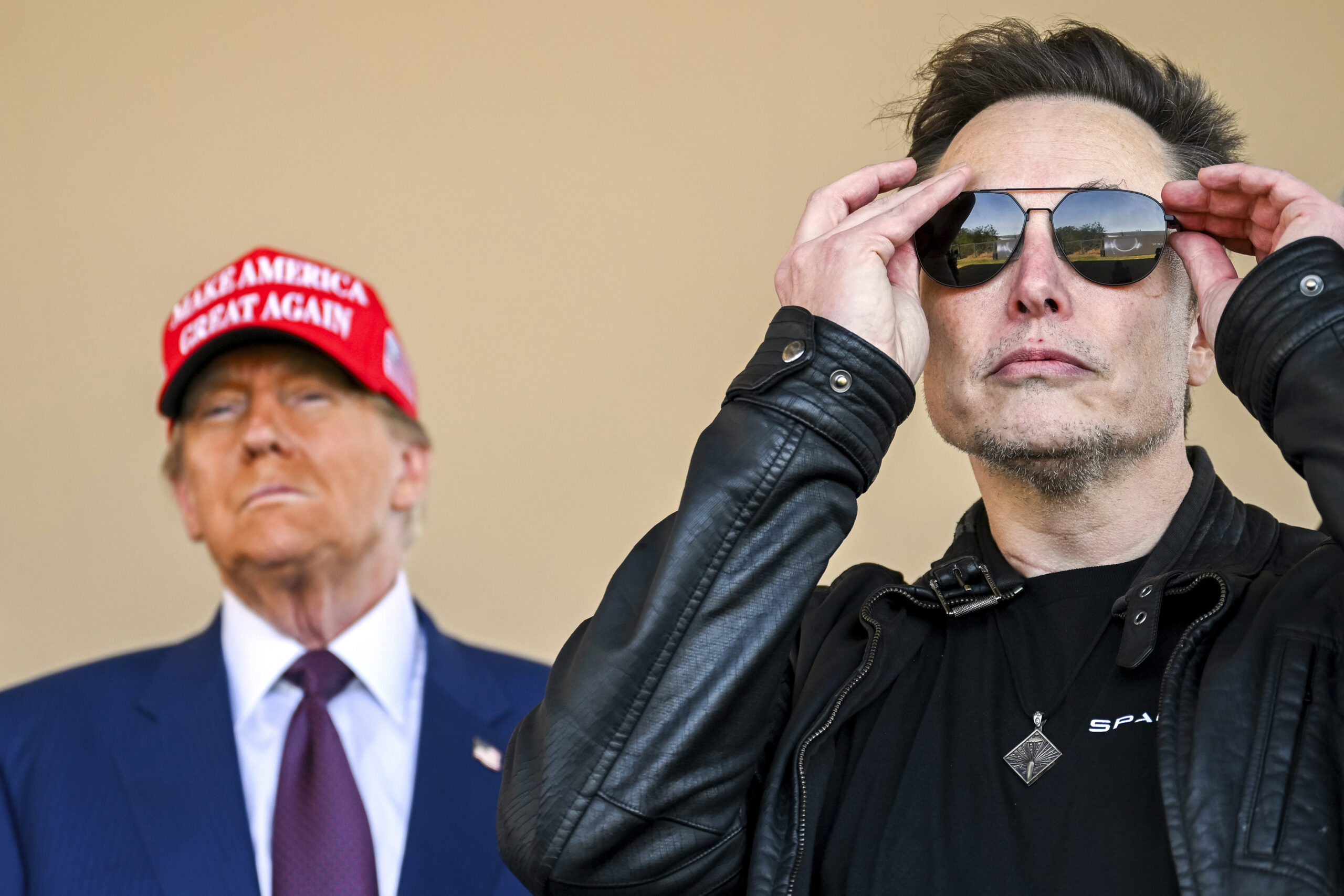
Trump-Musk Feud Triggers $150 Billion Wipeout in Tesla Market Value

Tesla shares plummeted 14% on Thursday, erasing $150 billion in market value, as a public feud between U.S. President Donald Trump and Tesla CEO Elon Musk rattled investors. The stock selloff occurred despite no major company-specific news, as traders reacted to escalating tensions between the two high-profile figures.

The dispute began when Trump criticized Musk’s opposition to his administration’s tax bill, which includes provisions that would eliminate federal subsidies for electric vehicle (EV) purchases. Musk responded by attacking Trump’s policies on social media, further intensifying the confrontation. Trump later escalated his rhetoric, suggesting that terminating government subsidies and contracts with Musk’s companies could save the federal government billions of dollars.

The spat poses multiple risks for Tesla, especially as it tries to navigate a shifting regulatory landscape. The U.S. Transportation Department, which regulates vehicle safety standards, could become an obstacle to Musk’s ambitions of mass-producing autonomous robotaxis — a cornerstone of Tesla’s future growth strategy. The department is also investigating Tesla’s Full Self-Driving system following a fatal crash.

“Elon’s politics continue to harm the stock,” said Dennis Dick, chief strategist at Stock Trader Network. “First he aligned with Trump, upsetting Democratic buyers. Now he’s alienated the Trump administration.” Analysts warn that political fallout could also influence regulatory decisions that disproportionately affect Tesla, particularly if regulators mandate technologies like lidar, which Tesla currently avoids in favor of camera-based systems.

The market rout has also dented Musk’s personal wealth. Following Thursday’s selloff, his net worth fell by roughly $27 billion to $388 billion, according to Forbes.

Investors are increasingly concerned about Tesla’s exposure to political headwinds as well as its heavy reliance on government incentives. Trump’s budget proposal includes ending the popular $7,500 EV subsidy by late 2025, which could slash Tesla’s annual profit by $1.2 billion and hit regulatory credit sales by an additional $2 billion, according to J.P. Morgan estimates.

Despite these risks, Tesla remains the most valuable automaker globally with a market capitalization of around $1 trillion — more than triple that of Toyota. However, some investors question the stock’s lofty valuation, which trades at 150 times profit estimates. “I am short Tesla. I don’t understand its valuation or fundamentals. I think it’s overhyped,” said Bob Doll, chief investment officer at Crossmark Global Investments.

Tesla’s stock has been highly volatile since Musk endorsed Trump’s reelection bid in mid-2024. After an initial 169% surge, shares have since fallen 54% amid protests and weakening sales in major markets including Europe, China, and key U.S. states like California.

While Transportation Secretary Sean Duffy has already moved to ease some autonomous vehicle safety regulations, experts caution that federal regulators could still shape rules in ways that disadvantage Tesla. “With President Trump, being on his bad side always creates risk,” said Morningstar analyst Seth Goldstein, though he noted that broader industry pressure may limit targeted retaliation.

Ultimately, analysts suggest the political drama could overshadow Tesla’s ambitious AI and autonomous driving plans, which Wedbush previously valued at up to $1 trillion in potential market capitalization.

Tesla to Launch Robotaxi Trial in Austin by End of June, Says Elon Musk

Tesla is preparing to begin its much-anticipated robotaxi pilot program in Austin, Texas, by the end of June, CEO Elon Musk confirmed in an interview with CNBC. The trial marks a significant milestone for the electric carmaker’s shift toward autonomous driving and AI-driven products.

Initially, Tesla plans to deploy about 10 self-driving vehicles in select “safest” parts of Austin, with the goal of scaling up to approximately 1,000 cars over the following months. The launch comes at a critical time for Tesla, as global sales have slowed amid growing EV competition and mounting scrutiny of Musk’s political affiliations and side ventures.

Musk emphasized that Tesla’s long-term future hinges on autonomy and its humanoid robot project, Optimus. “The only things that matter in the long term are autonomy and Optimus,” he stated, underlining the strategic pivot away from building a low-cost EV platform.

The robotaxi launch will face close examination from the U.S. National Highway Traffic Safety Administration (NHTSA), which is currently investigating incidents involving Tesla’s Full Self-Driving (FSD) software, particularly in low-visibility conditions. The regulator recently asked Tesla to detail how its robotaxis will operate in adverse weather.

Meanwhile, Musk revealed that Tesla is in licensing discussions with major automakers interested in using its FSD software — a potential revenue stream that could help commercialize the robotaxi platform faster.

Beyond Tesla, Musk’s AI startup xAI is also making headlines. The company is expanding a massive supercomputer cluster named “Colossus” in Memphis, Tennessee, which will feature one million of Nvidia’s Blackwell chips — part of a broader plan to train advanced AI models. xAI recently acquired a 1-million-square-foot property in Memphis to support the buildout.

While a merger between Tesla and xAI is not currently planned, Musk did not rule it out entirely, stating it would require shareholder approval if it were to move forward.

Amazon’s Zoox Issues Software Recall After Self-Driving Robotaxi Crash in Las Vegas

Zoox, the self-driving vehicle subsidiary of Amazon, has agreed to recall 270 autonomous vehicles following an April 8 crash in Las Vegas involving one of its unoccupied robotaxis and a passenger car. No injuries were reported, but the incident prompted a temporary suspension of operations and a subsequent software update to correct the issue.

According to Zoox, the crash occurred when the robotaxi misjudged a perpendicular vehicle’s behavior, incorrectly anticipating that the oncoming car would continue moving. Instead, the car stopped and yielded, but the Zoox vehicle had already slowed and shifted right, leading to a collision despite hard braking.

The company identified that the issue arises when its vehicles travel at over 40 mph (64 km/h) and encounter vehicles that slowly encroach from perpendicular driveways. The system’s failure to accurately predict the yielding vehicle’s stop was the root cause of the incident.

Zoox has since rolled out a software fix to prevent similar errors and stated that the vehicle behavior has been addressed. This marks the second recall in recent months: in April, the National Highway Traffic Safety Administration (NHTSA) closed a probe into 258 Zoox vehicles following two rear-end collisions caused by unexpected braking, after Zoox issued a software update.

However, Zoox remains under NHTSA scrutiny. The agency is still investigating the company’s 2022 self-certification of a robotaxi without traditional controls, such as a steering wheel or pedals.

The incident underscores ongoing regulatory and technical hurdles faced by autonomous vehicle developers as they approach broader deployment.