Yazılar

U.S. Lifts Sanctions on Tornado Cash Amid Legal Challenges

The U.S. Treasury Department announced on Friday that it has lifted sanctions on Tornado Cash, a cryptocurrency “mixer” accused of facilitating the laundering of more than $7 billion, including funds stolen by North Korean hackers. The decision follows legal challenges from six Tornado Cash users, who filed a lawsuit against the sanctions, supported by cryptocurrency exchange Coinbase.

In 2022, the U.S. Treasury’s Office of Foreign Assets Control (OFAC) blacklisted Tornado Cash, claiming the firm had been involved in laundering cybercrime proceeds, including $455 million stolen by the Lazarus Group, a North Korean-backed hacking organization. Tornado Cash is designed to obfuscate the origins and recipients of cryptocurrency transactions, making it a popular tool for illicit activities.

Despite the sanctions being lifted, the Treasury reaffirmed its concerns over North Korea’s state-sponsored cyber activities, particularly its use of stolen digital assets to fund government operations. Treasury Secretary Scott Bessent emphasized the importance of protecting the digital asset industry from misuse by North Korea and other malicious actors.

The decision to lift the sanctions comes after a U.S. appeals court ruled in November that OFAC had overreached in its application of the sanctions. The Treasury indicated that the repeal followed a review of legal and policy issues, particularly in light of evolving technology and legal environments.

In 2023, two co-founders of Tornado Cash were charged with facilitating over $1 billion in money laundering, including laundering for the Lazarus Group. One of the co-founders, Roman Storm, is awaiting trial and has denied any wrongdoing. Additionally, Tornado Cash developer Alexey Pertsev was sentenced to five years and four months in prison in the Netherlands for his involvement in money laundering activities.
Losses from Crypto Hacks Surge to $2.2 Billion in 2024, Report Shows

Funds stolen from cryptocurrency platforms by hackers surged by 21% in 2024, reaching a staggering $2.2 billion, according to a report from blockchain analysis firm Chainalysis. This marks the fourth consecutive year in which crypto heists have exceeded $1 billion, with the number of incidents rising to 303 from 282 in 2023. In comparison, hackers stole $1.8 billion last year.

Surge in Crypto Hack Incidents

The rise in hacking activity comes amid a significant increase in the value of bitcoin, which has jumped 140% this year, surpassing the $100,000 mark. This surge in value has attracted institutional participation and notable support, including backing from U.S. President-elect Donald Trump. As the digital asset market expands, the report highlights that illicit activities, including hacking and fraud, have also risen in tandem.

Majority of Hacks Target Centralized Platforms

The report indicates that compromises to private keys, which control access to users’ crypto assets, accounted for the majority of stolen funds. Most of the hacks targeted centralized platforms, which are particularly vulnerable to such attacks.

Among the most significant hacks were the theft of over $305 million from Japan’s DMM Bitcoin exchange in May and the loss of $235 million from India’s WazirX exchange in July.

North Korea’s Role in Crypto Hacks

One of the most concerning findings in the report is the dramatic increase in crypto hacking linked to North Korea, which more than doubled from 2023 to a record $1.3 billion in 2024. Chainalysis suggests that cryptocurrency is used by North Korea to circumvent international sanctions, though the country routinely denies any involvement in such cyber crimes.

Outlook for 2025

With the rise in crypto-related crimes, experts from Chainalysis warned that addressing fraud and other illicit activities will be a major challenge for the industry moving into the new year.


Starbucks Opens Cafe with a View of North Korea

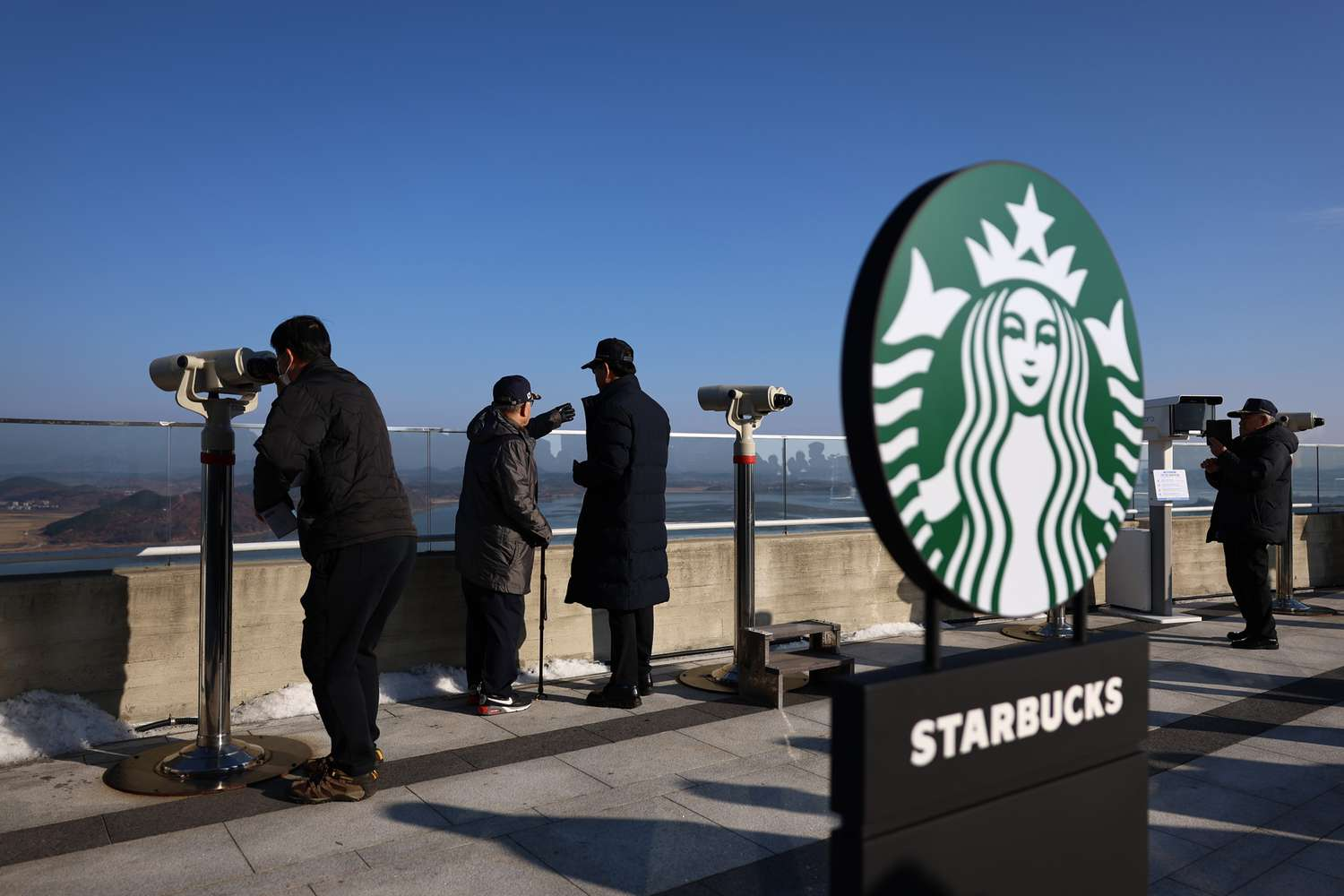
Starbucks has opened a unique cafe in South Korea, offering coffee lovers the chance to enjoy their brews while gazing across the border into North Korea. Located in the Aegibong Peace Ecopark in Gimpo city, the cafe sits on an observation tower, just 20 miles north of Seoul, and offers a view of the Hermit Kingdom across the Jo River, which separates the two nations.

The 30-seat Starbucks opened its doors on Friday, November 29, drawing crowds eager to witness the rare sight of North Korea from afar. On clear days, patrons can spot farms and low-rise buildings in Kaepung county, one of North Korea’s border regions. Some visitors with binoculars or high-powered cameras even reported glimpsing people walking in the distance.

“I wish I could share this tasty coffee with the people living in North Korea right in front of us,” said local resident Baek Hea-soon, 48, reflecting on the symbolic nature of the location.

A Unique Location with Historical Significance

The cafe’s position at the Aegibong Peace Ecopark is steeped in history. Situated near the Korean Demilitarized Zone (DMZ), which remains one of the most heavily fortified borders in the world, the area once hosted Hill 154, a site of fierce fighting during the Korean War. Today, the park serves as a point of interest for tourists seeking a rare glimpse into North Korea.

Gimpo Mayor Kim Byung-soo praised the location as an embodiment of the “charm of Korean culture,” while local authorities aim to leverage the site’s historical importance to increase tourism. The Starbucks outlet is one of the few ways for South Koreans and international visitors to get a look at North Korea, albeit from a distance, without entering the isolated country.

Visitors’ Reactions and International Context

On opening day, some patrons, like 80-year-old Lim Jong-chul, noted the contrast between the tense security of the region and the sense of peace offered by the cafe’s serene setting. Lim, a Vietnam War veteran, expressed that the cafe gave a feeling of reassurance despite the political tensions that persist.

The cafe’s debut comes at a time of heightened tension between North and South Korea. Despite an armistice ending the Korean War in 1953, the two countries technically remain at war, with no formal peace treaty signed. Recent remarks from North Korean leader Kim Jong Un, including threats to use nuclear weapons against South Korea, have further strained relations.

A Shift in North Korea’s Tourism Policy

While North Korea is currently closed to tourists due to the Covid-19 pandemic, tour companies suggest that the country may begin to reopen limited international tourism by the end of 2024. In the meantime, the Starbucks at the DMZ offers a new way for visitors to engage with the geopolitical landscape and the ongoing divide between the two Koreas.

The cafe provides an alternative to the typical DMZ tours that attract thousands of visitors annually, offering a unique blend of coffee culture and a front-row seat to one of the world’s most politically charged borders.