Yazılar

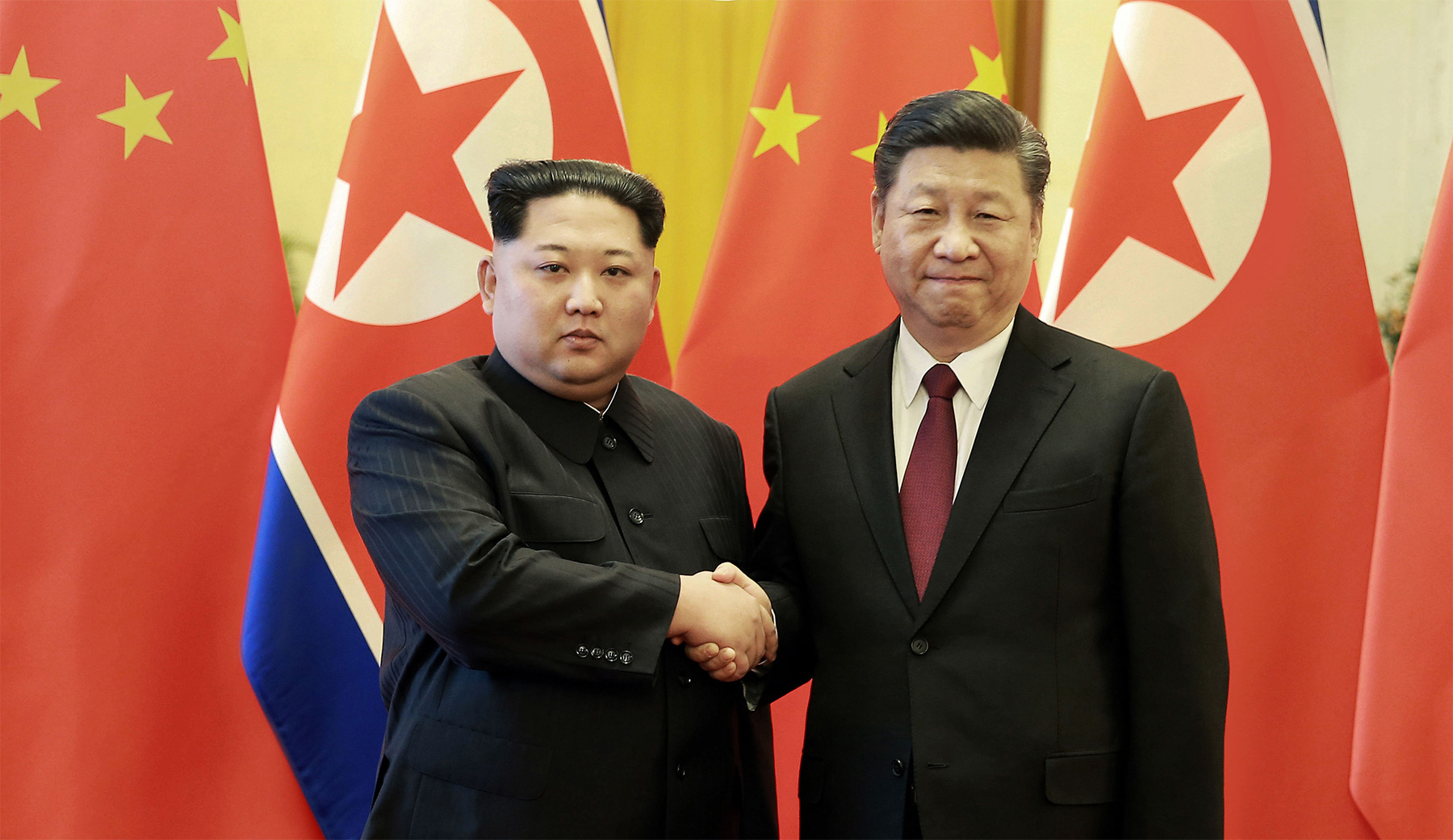
Kim Jong Un’s Deteriorating Relationship with China Amidst Growing Alliance with Russia

Chinese tourists huddle against the brisk autumn breeze on a 12-storey building in Fangchuan, the northeastern tip of China where the borders with Russia and North Korea converge. Standing at this unique location, one woman proudly declares her proximity to both nations: “I feel very proud to be standing here… with Russia on my left and North Korea on my right. There are no borders among the people.” However, such optimism may overlook the geopolitical tensions that lie beneath the surface.

China finds itself caught between its sanctioned neighbors as fears rise regarding the burgeoning alliance between Vladimir Putin and Kim Jong Un. Recent reports suggest North Korea may be sending thousands of troops to bolster Russia’s invasion of Ukraine. This was further underscored when Pyongyang launched a banned intercontinental missile last Thursday, escalating tensions in the region. Christopher Green, an analyst from the International Crisis Group, emphasizes that “China seeks a relationship with a reasonable, high level of control over North Korea,” yet the emerging ties between Pyongyang and Moscow threaten to undermine that stability.

While both Moscow and Pyongyang deny that North Korean soldiers are being deployed to Ukraine, U.S. officials assert they have evidence of such movements, following intelligence claims from South Korea and Ukraine. These developments emerged just prior to Xi Jinping’s meeting with Putin at the Brics summit earlier this October, overshadowing a gathering intended to showcase a united front against the West.

Beijing’s frustrations with the current trajectory of its allies are palpable. “China is unhappy with the way things are going,” Green observes, noting that the nation is trying to keep its discontent relatively quiet. In Fangchuan, the presence of tourists is tolerated, but journalists face scrutiny, with the police closely monitoring their activities.

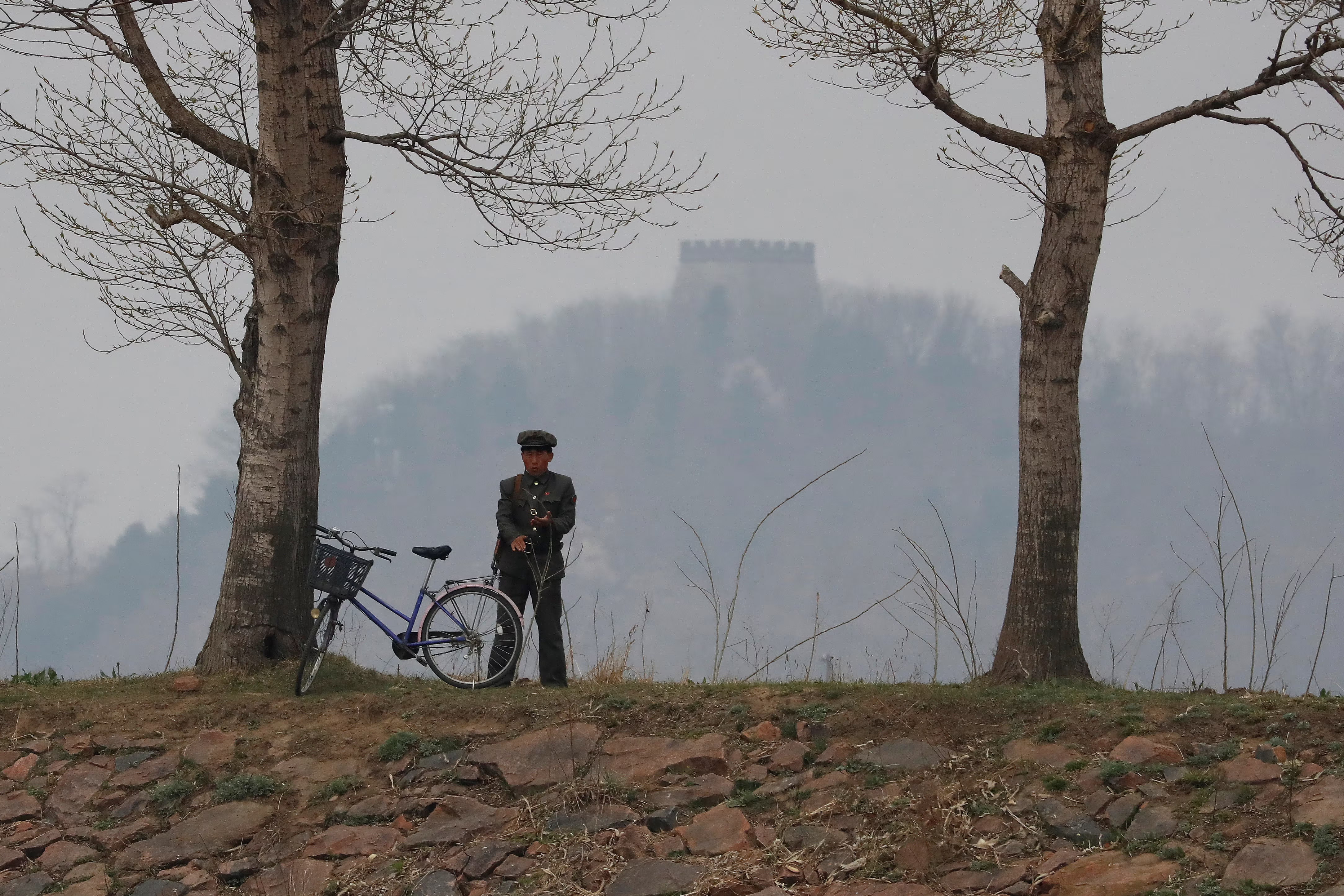
Many tourists visiting the border area express intrigue about North Korea. Through telescopes, they spy cyclists in the hermit kingdom, often captivated by its mysterious aura. This proximity highlights how intertwined the fates of the three nations have become, with China’s economy heavily reliant on North Korea, which relies on Beijing for over 90% of its foreign trade.

Historically, relations between China and North Korea have fluctuated. In the early 1960s, Chinese families fled across the Tumen River into North Korea. However, following the Soviet Union’s collapse in 1991, North Korea’s economy crumbled, and the regime increasingly relied on China. Yet now, with Russia offering an alternative ally, Kim Jong Un is leveraging this relationship for North Korea’s benefit.

Aidan Foster-Carter, a longtime observer of North Korea, describes the situation as a shift in allegiances, with Kim being characterized as “the comrade from hell” to both Russia and China. Analysts note that Kim has shown more affection towards Putin than Xi in recent months, even meeting with the Russian leader twice in the past year, while avoiding any engagement with Xi since 2019.

As North Korea strengthens its ties with Russia, Kim’s actions may be alienating his traditional benefactor, China. The Kremlin’s needs align with Pyongyang’s ambitions, creating a precarious partnership that could further destabilize the region. Xi, who is striving for stability and a new global order, finds himself in a difficult position, unable to control the unfolding alliance between his two neighbors.

The recent developments have led to discussions between the U.S. and China regarding the situation. While Beijing has previously complied with international sanctions against North Korea, the current circumstances are pushing Xi to weigh his options more carefully. As the situation unfolds, any drastic measures could lead to a refugee crisis at the Chinese border, a scenario that Beijing is keen to avoid.

Ultimately, Kim Jong Un faces a pivotal decision as well. While Russia may currently provide military support, it is China that has historically sustained North Korea’s regime. The delicate balance between maintaining these alliances will have significant implications not just for the leaders but for the millions of North Koreans who rely on the regime for their survival.
 

Rights Group: Over 100 North Korean Defectors Disappear After Arrest by Secret Police

A report by the Seoul-based Transitional Justice Working Group (TJWG) reveals that over 100 North Korean defectors have vanished following arrests by North Korea’s secret police, with some individuals taken after attempting to contact family members in South Korea. The report, based on interviews with 62 North Korean escapees now in South Korea, outlines a disturbing pattern of enforced disappearances. According to TJWG, a database of 66 disappearance cases, developed in collaboration with international organizations, includes mapped routes showing detainee transfers.

Of the 113 individuals noted in the report, 80% were arrested within North Korea and the remainder in China or Russia, with roughly 30% of these arrests occurring since Kim Jong Un came to power in 2011. Nearly 40% were detained for attempted defections, and others disappeared after facing accusations like maintaining contact with people abroad. The report highlights that over 81% of these individuals vanished after being detained by North Korea’s Ministry of State Security (MSS), or “bowibu.” In one account, a recent defector reported that a friend was arrested for attempting to retrieve a Chinese cell phone and was later rumored to have died in custody.

TJWG’s project director, Kang Jeong-hyun, emphasized that these disappearances point to enforced disappearances and crimes extending beyond North Korea, involving China and Russia as well. This report comes just ahead of the U.N. Human Rights Council’s Universal Periodic Review on North Korea. A previous U.N. report estimates up to 200,000 people are held in the North’s detention camps, with prisoners enduring forced labor, torture, starvation, and other human rights abuses.

North Korea’s leadership has long branded defectors as “human scum” and has increased border restrictions in recent years. Meanwhile, China’s government denies the presence of defectors, labeling them as illegal economic migrants. North Korea’s Association for Human Rights Studies recently dismissed a U.N. report detailing human rights violations as fabricated Western propaganda.

North Korea Destroys Roads Connecting to South Amid Escalating Tensions

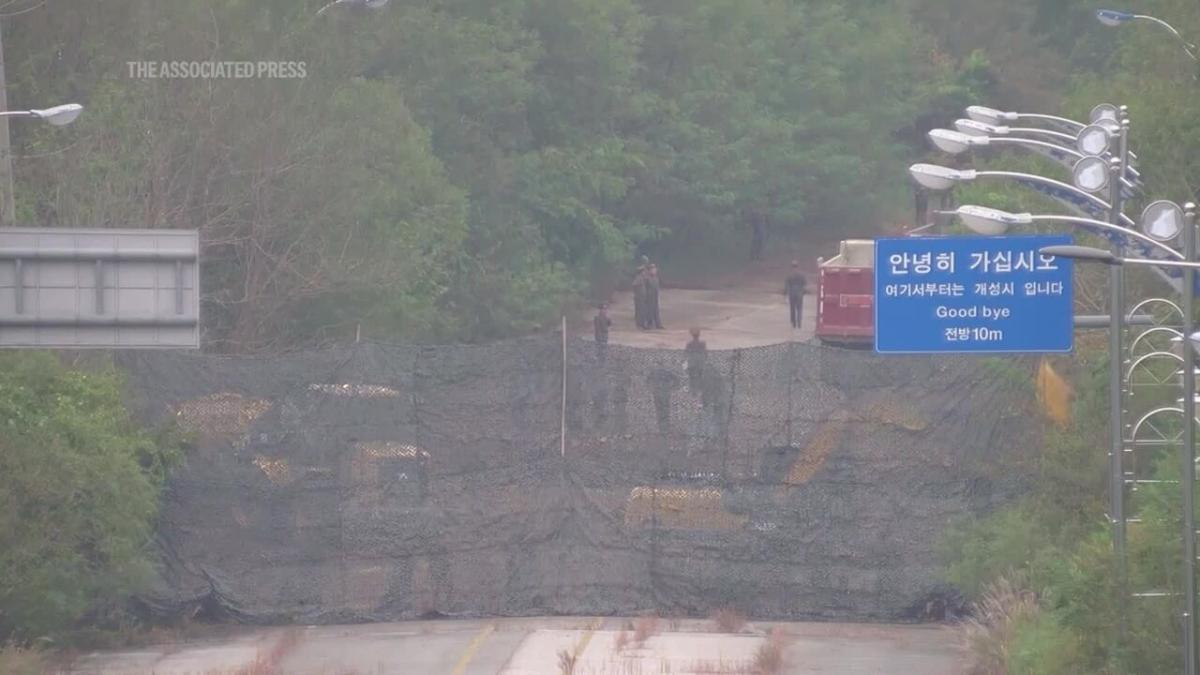
North Korea has destroyed sections of two major roads linking it with South Korea, further escalating tensions on the peninsula. South Korea’s Joint Chiefs of Staff (JCS) confirmed that portions of the Gyeongui and Donghae lines, critical transportation routes along the west and east coasts, were blown up on Tuesday around noon local time. The destruction comes shortly after North Korea declared it would sever all ties with the South.

Although these roads have been inactive for years due to the divided nature of the Korean Peninsula, the demolition carries heavy symbolic weight. The action reflects increasing hostility between North Korean leader Kim Jong Un and South Korean President Yoon Suk-yeol, as rhetoric between the two governments intensifies.

Explosions and Military Responses

South Korean authorities released video footage showing multiple explosions on roads north of the Military Demarcation Line (MDL), the boundary dividing the two Koreas. Following the blasts, North Korea deployed heavy machinery to further disrupt the routes. South Korea responded by opening fire within the MDL area, while remaining on high alert in collaboration with the United States, according to the JCS.

The destruction of the roads occurred just days after North Korea accused the South of flying drones loaded with propaganda over its capital, Pyongyang, in what Pyongyang called an act of provocation. In retaliation, North Korea recently launched its own balloons filled with trash into South Korean territory, marking a continued tit-for-tat exchange between the two sides.

North Korea’s Shift Toward Isolation

This latest move follows a series of actions by Kim Jong Un aimed at isolating North Korea from the South. Earlier this year, Kim ended the country’s policy of seeking peaceful reunification, calling relations between the two Koreas those of “belligerents at war.” In January, he announced that North Korea would no longer pursue reconciliation efforts with the South, signaling a major shift in inter-Korean diplomacy.

North Korea’s general staff reiterated this hardline stance on October 9, declaring that all remaining roads and railways connecting to the South would be cut off. This decision was framed as a response to joint U.S.-South Korean military drills and the recent presence of U.S. nuclear assets in the region, including aircraft carriers and long-range bombers.

Since January, North Korea has fortified its border defenses with land mines, anti-tank traps, and the dismantling of railways, marking a significant effort to further isolate itself from its southern neighbor.

Rising Nuclear Threats and International Concerns

North Korea’s increasingly belligerent behavior is accompanied by its ramped-up nuclear threats. Earlier this month, Kim Jong Un threatened to use nuclear weapons against the South if provoked, escalating concerns over potential conflict. In response, President Yoon Suk-yeol warned that if North Korea used nuclear weapons, it would face regime collapse.

These threats come amid reports that North Korea has strengthened its ties with Russia and increased its nuclear production, deepening global concerns over its geopolitical trajectory.

Expert Analysis

According to Leif-Eric Easley, a professor at Ewha Womans University in Seoul, North Korea’s moves to sever ties with the South may be part of a broader strategy to shift blame for the country’s economic difficulties. He suggests that Kim Jong Un could be exaggerating external threats to justify the North’s costly missile and nuclear weapons programs.

“Kim wants both domestic and international audiences to believe he is acting out of military strength,” said Easley, “but he may actually be motivated by political weakness. North Korea’s threats, both real and rhetorical, reflect the regime survival strategy of a hereditary dictatorship.”