
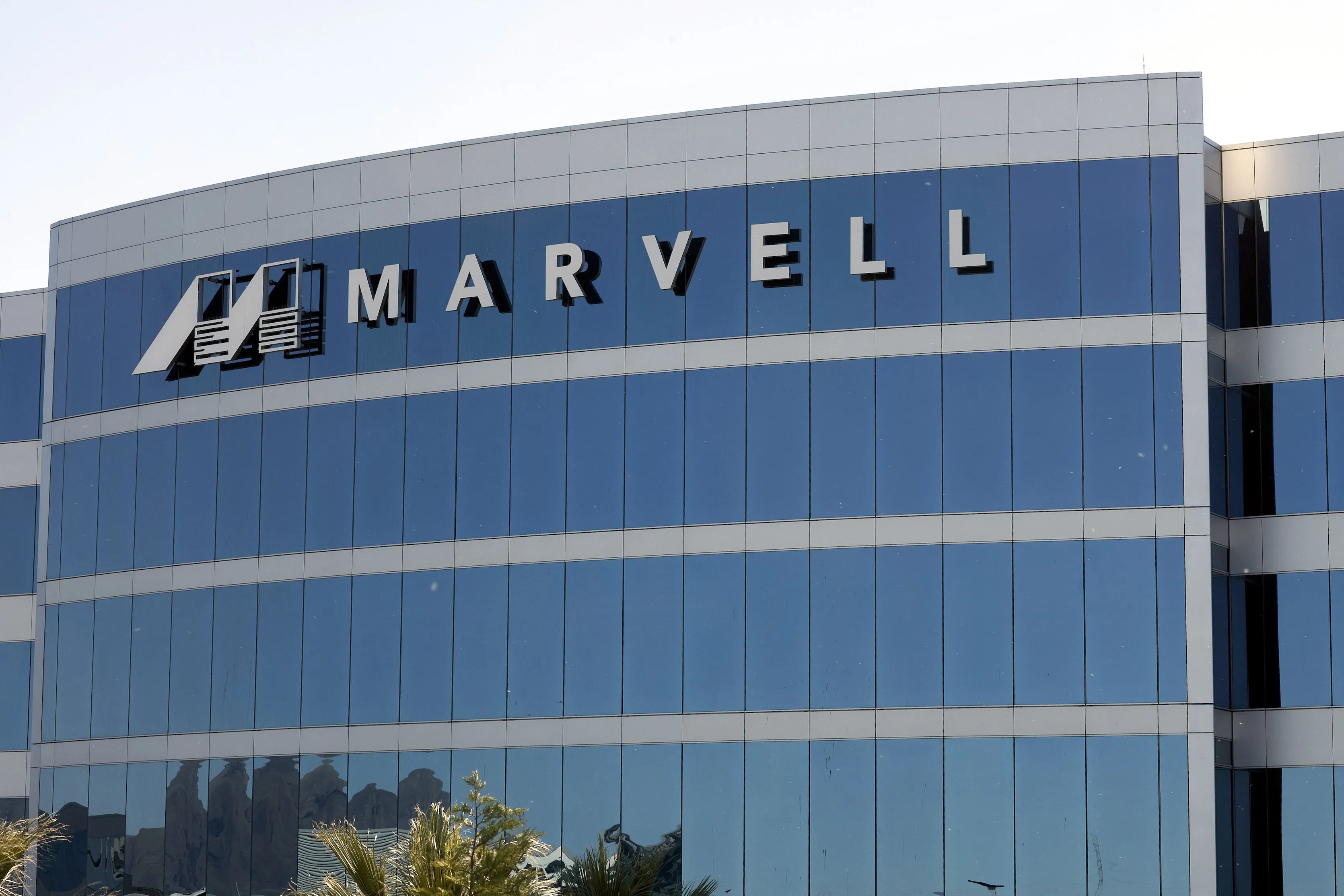
Marvell Technology Forecasts In-Line Q1 Revenue, Shares Drop 15%
Marvell Technology (MRVL.O) predicted first-quarter revenue in line with Wall Street’s expectations, but its shares fell sharply by 15% in after-hours trading. Investors were underwhelmed by the forecast, as they had hoped for more substantial growth driven by the surging demand for artificial intelligence (AI) chips.
The AI chip market has seen booming demand, particularly for sector-leader Nvidia’s (NVDA.O) AI processors. Major tech companies like Microsoft (MSFT.O), Meta Platforms (META.O), and Amazon.com (AMZN.O) have been working to reduce their reliance on Nvidia by developing their own AI chips, a trend that has benefited companies like Marvell and Broadcom (AVGO.O).
“The earnings print was generally OK, but I believe investors were expecting more given all the bullish data points in the overall AI space and the ramp of custom ASICs (AI chips) with certain hyperscalers,” said Tore Svanberg, an analyst at Stifel Nicolaus and Co.
Marvell’s data center segment performed well, with revenue up 78% year-over-year to $1.37 billion in the fourth quarter, driven by increased demand for custom AI chips as businesses work to optimize their AI workloads. In December, the company also signed a five-year chip deal with Amazon that includes custom AI chips.
“We’re engaged, we expect revenue to grow, but obviously, it’s like anything, you’ve got to show you can do it, and you’ve got to show it consistently,” Marvell COO Chris Koopmans said, emphasizing the “sticky” nature of the Amazon deal.
Marvell has pledged to focus its investments on data centers, seeing them as the best way to capitalize on the AI boom. Data center revenues accounted for 75% of its total revenue in the most recent quarter. However, Koopmans added that Marvell had not yet experienced any impact from tariffs affecting its data center business.
Despite posting solid results, Marvell’s shares dropped to $77.65 in after-hours trading, following a year-to-date increase of over 83%. In contrast, its larger competitor Broadcom saw a stock jump of around 107%. Analysts pointed to concerns over geopolitical pressures, AI monetization, and the magnitude of Marvell’s earnings beat as factors contributing to the decline.
Marvell forecast first-quarter revenue of $1.88 billion, slightly above analysts’ expectations of $1.87 billion.

