Yazılar

Marvell Shares Suffer Worst Day in 24 Years Amid Tepid AI Revenue Forecast

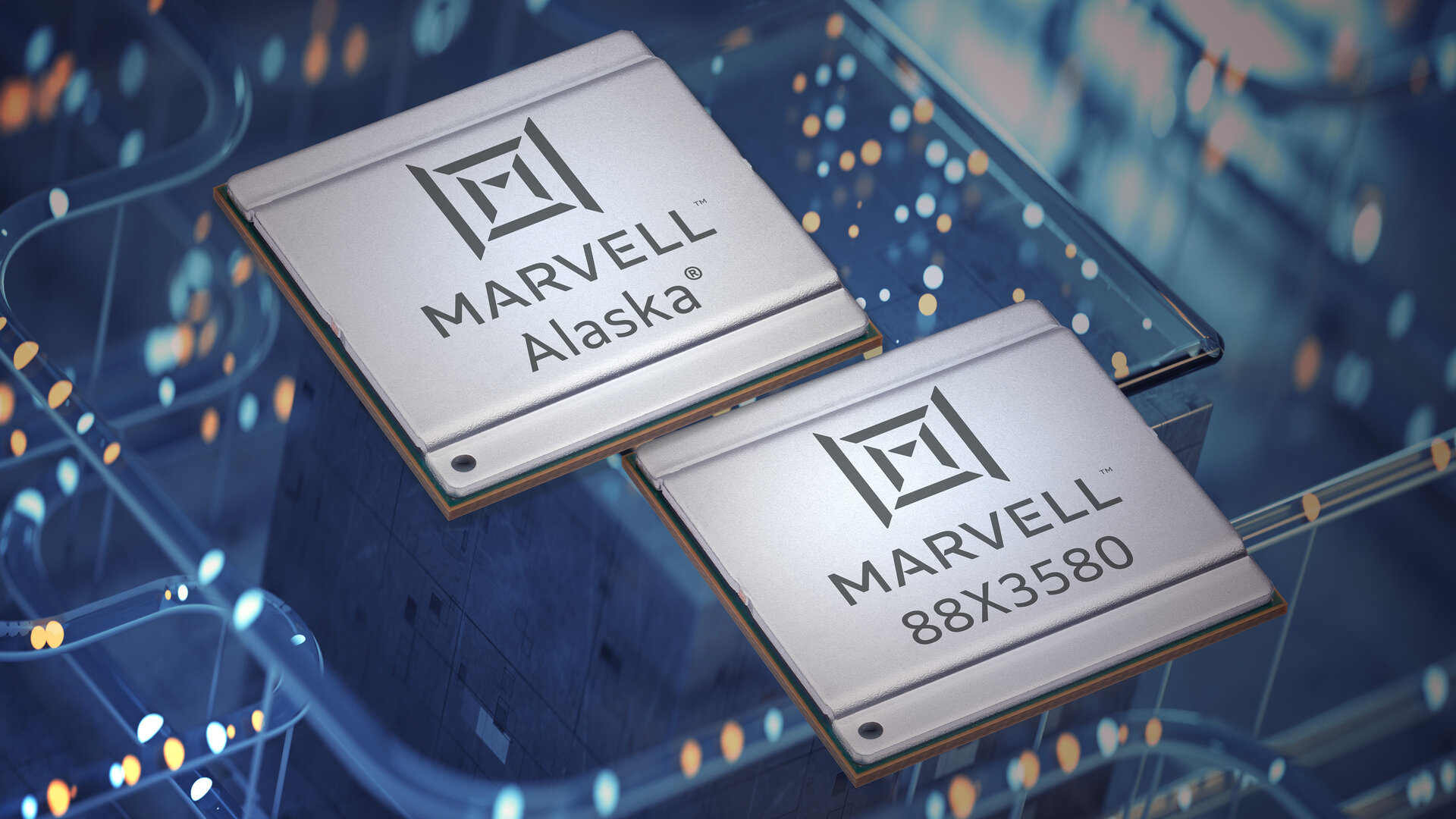
Marvell Technology’s (MRVL.O) shares plunged by 19.8% on Thursday, marking their worst day in over two decades. The sharp decline follows a revenue forecast for the upcoming quarter that failed to meet investor expectations, reigniting concerns about cooling demand for AI infrastructure.

The stock closed at $72.28, reaching a four-month low of $71.65 earlier in the day. Investors had been looking to Marvell’s earnings, a key supplier of custom AI chips, for indications of sustained demand in the AI sector, which has driven significant market growth since the rise of ChatGPT in late 2022. However, Marvell’s forecast for the next quarter was only slightly above analyst expectations, falling short of the more substantial beat that investors were hoping for.

TD Cowen analyst Joshua Buchalter noted that investors were anticipating stronger revenue growth, given recent comments on capital expenditures from some of Marvell’s largest customers. With over 45 million shares traded, significantly more than the 50-day average of 14 million, the market responded nervously.

The decline in Marvell’s stock price also weighed on other chipmakers, including Broadcom, which saw its shares drop nearly 7%, and Nvidia, which slid by 5%. Marvell’s performance led to a $15 billion loss in market value, and its shares are down 18% this year after an 83% rise in 2024.

Marvell’s CEO, Matt Murphy, did highlight that the company had exceeded its fiscal 2025 AI revenue target and is optimistic about surpassing its projections for fiscal 2026. However, analysts attributed the weak forecast to a slowdown in demand for on-premise data center products, as Big Tech shifts spending towards AI chips, leaving Marvell’s core networking business, which focuses on ethernet cables and fiber channels, in a weaker position.

The semiconductor sector overall has faced pressure from tariffs imposed by the U.S. government, adding to investor concerns. Analysts from Melius Research noted that sentiment around AI semiconductor stocks is currently negative, and many brokerages have cut their price targets for Marvell following the results.

U.S. Labor Department Investigates Scale AI for Fair Labor Practices

The U.S. Department of Labor is investigating Scale AI, a data labeling startup backed by major tech companies including Nvidia, Amazon, and Meta, for potential violations of the Fair Labor Standards Act. The investigation, which began nearly a year ago under the Biden administration, is focused on Scale AI’s compliance with fair pay practices and working conditions.

Scale AI, based in California, provides large volumes of accurately labeled data crucial for training AI tools such as OpenAI’s ChatGPT. The company also offers a platform for researchers to share AI-related information, with contributors from over 9,000 cities and towns.

A spokesperson for Scale AI emphasized that the company has worked closely with the Labor Department over the past year, explaining its business model and the emerging nature of the AI industry. The startup assured that feedback from its contributors has been largely positive, and it has dedicated teams to ensure fair compensation and support for workers. Nearly all payments to contributors are made on time, and the company resolves 90% of payment-related inquiries within three days.

Scale AI, which was founded in 2016, was valued at $14 billion in a recent funding round. Its client base includes AI firms like OpenAI and Cohere, as well as major corporations such as Microsoft and Morgan Stanley.

Broadcom Shares Surge on Strong AI Chip Demand and Positive Forecast

Broadcom’s shares surged in after-hours trading on Thursday, jumping 14% following a solid second-quarter forecast that alleviated investor concerns over AI chip demand. The surge came after the company reported better-than-expected revenue and a strong outlook, especially in its AI semiconductor segment. The upbeat forecast contrasts with Marvell Technology’s disappointing outlook earlier in the week, which had spooked the market.

Broadcom expects revenue of approximately $14.90 billion for the second quarter, surpassing analyst estimates of $14.76 billion, according to data compiled by LSEG. CEO Hock Tan reassured investors that demand for its custom AI chips is robust, particularly from cloud computing companies seeking alternatives to Nvidia’s expensive processors. Broadcom anticipates second-quarter revenue from its AI semiconductors to reach $4.4 billion, driven by significant investments from hyperscale customers for data center expansion.

Broadcom is increasingly benefiting from the trend of large tech companies moving away from off-the-shelf chips toward custom-made processors to meet the growing complexity of AI tasks. CEO Tan revealed that the company now has four additional hyperscale customers working closely with it to develop custom chips, joining the three existing customers using its AI processors. This growing customer base has contributed to Broadcom’s estimated revenue potential of $60 billion to $90 billion by 2027.

Notably, Broadcom is working with OpenAI to finalize the first custom chip design to reduce its reliance on Nvidia. Analysts like Anshel Sag from Moor Insights & Strategy have noted that Broadcom is positioning itself as a key player for hyperscalers and other companies wanting to control their AI designs and costs by developing their own custom AI accelerators.

In terms of manufacturing, Broadcom is exploring Intel’s most advanced process, 18A, through test wafers. Summit Insights analyst Kinngai Chan highlighted that Broadcom is better positioned than many of its peers due to its diversified exposure to the AI market, with multiple AI-specific customers for its chips.

In its first-quarter earnings report, Broadcom posted revenue of $14.92 billion, surpassing analysts’ expectations of $14.61 billion. The company’s AI revenue saw a remarkable 77% increase, reaching $4.1 billion, driven by the growing adoption of its custom accelerators. Broadcom’s infrastructure software segment also experienced strong growth, with revenue rising by over 47% to $6.70 billion, beating the $6.49 billion anticipated by analysts.