Yazılar

High-Flyer, the AI Quant Fund Behind China’s DeepSeek, Shifts Focus to Artificial General Intelligence

Key Highlights:

  • High-Flyer, a quantitative hedge fund, shifted its focus from managing a $13.79 billion portfolio to developing Artificial General Intelligence (AGI).
  • The fund, officially known as Hangzhou Huanfang Technology Ltd Co., is reorienting its resources to pursue AGI, which is a more advanced form of AI capable of surpassing human abilities in most economically valuable tasks.
  • The DeepSeek AI model, which has gained significant attention in the tech world, is part of this new direction under the leadership of Liang Wenfeng, High-Flyer’s founder and the leader of DeepSeek.
  • DeepSeek’s AI models have garnered praise from Silicon Valley and sparked concerns about the computational efficiency of U.S. firms’ AI models, given DeepSeek’s claims of utilizing far less computing power.

Background on High-Flyer’s AI Investment Strategy:

  • High-Flyer has heavily invested in supercomputing clusters, including those made up of Nvidia A100 chips, despite U.S. export controls. These clusters have been crucial for the development of its AI models.
  • The company has also spent millions on high-end Nvidia chips, setting up two AI supercomputing clusters with a combined investment of over $1.2 billion.
  • DeepSeek, which utilizes much less powerful chips (Nvidia’s H800 and H20), has nonetheless sparked debates on its computational capabilities, with some tech executives speculating it may have access to 50,000 Nvidia H100 chips, potentially bypassing U.S. export restrictions.

Future Prospects:

  • Liang Wenfeng has indicated that High-Flyer is not currently seeking external funding for DeepSeek and is more focused on overcoming challenges related to chip restrictions rather than financial concerns.
  • The company’s strategic shift towards AGI signals a long-term commitment to advancing AI technology for human benefit, even as it navigates international tensions over AI and technology exports.

Nvidia GeForce RTX 5090 GPU Benchmarks Show Performance Boost of Up to 46 Percent

Nvidia GeForce RTX 5090 GPU Benchmarks Reveal Significant Performance Gains

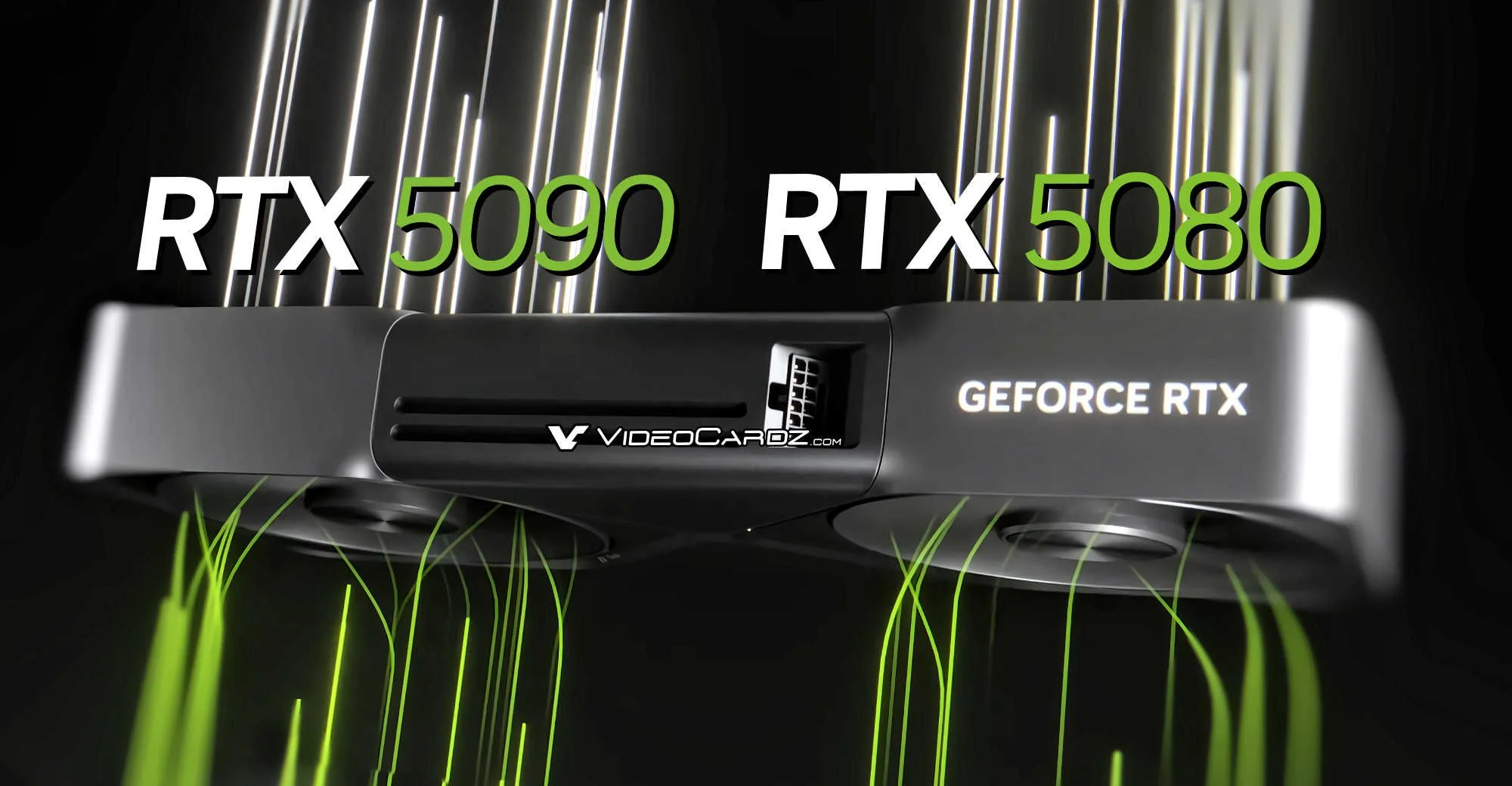
At the Consumer Electronics Show (CES) 2025, Nvidia unveiled its latest 50-series Blackwell GPUs, including the highly anticipated RTX 5090 and RTX 5080 models. These GPUs are set to hit the market on January 30, and ahead of their release, early benchmark results have surfaced, offering a glimpse into their performance. According to reports, the GeForce RTX 5090 shows impressive improvements, with some tests indicating a performance boost of up to 46 percent over its predecessor, the RTX 4090.

Performance Improvements Across Different Benchmarks

A detailed report from VideoCardz compiled results from various synthetic benchmarks, revealing that the RTX 5090 could deliver around a 20 percent performance increase compared to the RTX 4090. However, the actual performance boost can vary depending on the specific platform, game, resolution, and settings used during testing. The data suggests that the RTX 5090 is poised to offer a noticeable upgrade for gamers, especially in more demanding applications and higher resolutions.

FireStrike and TimeSpy Benchmarks Show Strong Gains

One of the key benchmarks, FireStrike, which is commonly used to evaluate DirectX 11 gaming PCs, highlighted a 36 percent performance improvement for the RTX 5090 over the RTX 4090. This result was consistent across different testing scenarios, including Performance, Extreme, and Ultra settings. Meanwhile, the DirectX 12-based TimeSpy benchmark also showcased a 33 percent increase in performance on both the Performance and Extreme settings. These results suggest that the RTX 5090 excels in both older and newer gaming titles, offering a substantial boost in frame rates and overall performance.

Anticipation Builds Ahead of Market Release

With the official release of the Nvidia GeForce RTX 5090 just around the corner, these early benchmark results have stirred excitement among gamers and enthusiasts. While the final performance will depend on various factors, the reported improvements over the RTX 4090 suggest that Nvidia’s Blackwell architecture could push the boundaries of graphical performance, particularly in next-gen gaming and high-performance computing tasks. As the market eagerly awaits the arrival of the new GPUs, these benchmarks set the stage for what could be a major leap forward in GPU technology.

OpenAI Teams Up with Nvidia, Microsoft, and SoftBank for ‘Stargate Project’ to Advance AI Infrastructure

OpenAI has unveiled The Stargate Project, a new initiative aimed at building advanced artificial intelligence (AI) infrastructure in the United States. Announced on Tuesday, the project represents a massive investment in scaling AI capabilities, with OpenAI committing $500 billion (roughly Rs. 43 lakh crore) over the next few years. The move comes in response to recent service outages and increased demand for AI computing power, which even led OpenAI to impose rate limits on its Sora video generation platform to manage server loads. Despite this ambitious expansion, Microsoft has clarified that the new venture does not alter its existing partnership with OpenAI.

OpenAI’s Stargate Project: A $500 Billion AI Investment

In a blog post, OpenAI detailed that The Stargate Project is designed to both strengthen its AI infrastructure and help maintain U.S. leadership in artificial intelligence. The company plans to immediately invest $100 billion (roughly Rs. 8.6 lakh crore) in the first phase, with the remaining $400 billion spread over the next four years. The initiative has drawn major equity investors, including SoftBank, Oracle, MGX, and OpenAI itself. While SoftBank will take the lead on financial aspects, OpenAI will oversee the operational and technological development of the project.

Major Industry Partnerships

The Stargate Project will rely on some of the biggest names in AI hardware and cloud computing. OpenAI has teamed up with Nvidia, Microsoft, Arm, and Oracle to drive the initiative forward. Nvidia and OpenAI will be jointly responsible for building and running the new AI infrastructure, while Microsoft and Oracle will provide cloud and processing resources. This collaboration is expected to significantly expand OpenAI’s computing power, enabling more advanced AI models and services in the coming years.

Infrastructure Development Underway

OpenAI has already begun construction on AI infrastructure in Texas, with additional locations currently under consideration. These facilities will serve as key compute hubs, supporting OpenAI’s growing suite of AI applications, including GPT models, Sora, and future innovations. The sheer scale of investment suggests OpenAI is positioning itself as a leader in next-generation AI, reinforcing its commitment to expanding global AI capabilities while addressing scalability challenges. As the project unfolds, more details on hardware advancements, energy consumption strategies, and global impact are expected to emerge.