Yazılar

Chipmakers Surge on Optimism Fueled by AI Demand

Shares of chipmakers saw significant gains on Monday, driven by optimism surrounding strong AI-driven demand. Microsoft’s plan to invest $80 billion in AI-enabled data centers in fiscal 2025 sparked expectations that semiconductor demand will remain robust. Micron (MU.O) led the charge with a 10.6% rise in its stock, while other key players like Applied Materials (AMAT.O), Lam Research (LRCX.O), and KLA Corp (KLAC.O) saw increases between 5.1% and 5.5%.

The Philadelphia Semiconductor Index (.SOX) surged 3.9%, reaching its highest point since mid-October, and has risen over 19% in 2024. The broader Nasdaq (.IXIC) also advanced, leading Wall Street’s major indexes higher, while semiconductor stocks in Europe and South Korea saw similar gains.

Citigroup noted that while Microsoft’s spending plan was in line with analysts’ expectations, it was seen as a “modest positive” for the sector, alleviating concerns about a potential drop in capital expenditure.

“AI data centers are very chip hungry, that’s why you have people running towards the chip sector right now,” said Michael Matousek, head trader at U.S. Global Investors.

The strong demand for AI servers, evidenced by Foxconn’s (2317.TW) record revenue for Q4, further fueled the sector’s positive momentum. Nvidia (NVDA.O), a key Foxconn customer, added 5.1%, with CEO Jensen Huang scheduled to deliver a keynote speech at the CES trade show later in the day. AI server manufacturer Super Micro Computer (SMCI.O) saw a 10.3% surge.

Although Nvidia’s quarterly results in November pointed to a slowdown in revenue growth, the surge in demand for the company’s AI chips, which dominate the market, has mitigated those concerns.
 

Samsung Q4 Earnings Expected to Be Hit by Nvidia AI Chip Supply Delay

Samsung Electronics (005930.KS), the world’s largest memory chip maker, is forecasted to report slowed profit growth in the fourth quarter, as it struggles to meet Nvidia’s (NVDA.O) soaring demand for AI chips. Despite an expected operating profit of 8.2 trillion won ($5.6 billion) in the quarter ending December, up from 2.8 trillion won a year ago, this figure represents a decline from the previous quarter’s 9.18 trillion won.

Analysts have recently revised their earnings forecasts downward, with some projecting Samsung’s operating profit to fall below 8 trillion won. A key issue has been delays in Samsung’s supply of high-end AI chips to Nvidia, which has continued to impact Samsung’s earnings, despite an October apology from the company for its third-quarter performance and an earlier pledge to address the chip shortage.

In November, Samsung reshuffled its chip division leadership, naming its chip division chief co-CEO and granting him direct control over the struggling memory chip business. Meanwhile, Samsung’s shares fell 32% last year, underperforming the broader market’s 10% decline.

Contrastingly, SK Hynix (000660.KS), a major supplier of advanced AI memory chips to Nvidia, is expected to report record earnings for the fourth quarter, benefiting from strong demand for its products.

The broader semiconductor market is facing additional pressure, with weaker demand for traditional chips used in smartphones and PCs, and rising competition from Chinese chipmakers, leading to declining chip prices. DRAM prices, particularly DDR4 chips used in personal computers, have dropped as much as 13% in Q4 and are expected to fall another 15% in the current quarter, according to TrendForce.

The South Korean won’s depreciation in December to its weakest level in 15 years, fueled by political instability and concerns over U.S. tariffs under President-elect Trump, has provided some relief in the form of increased overseas earnings, but this has not been enough to offset weak chip prices.

Samsung is expected to release detailed results later in January, offering a breakdown of its earnings by business segment.

Nvidia Unveils New Robotics, Gaming Chips, and Toyota Deal at CES 2025

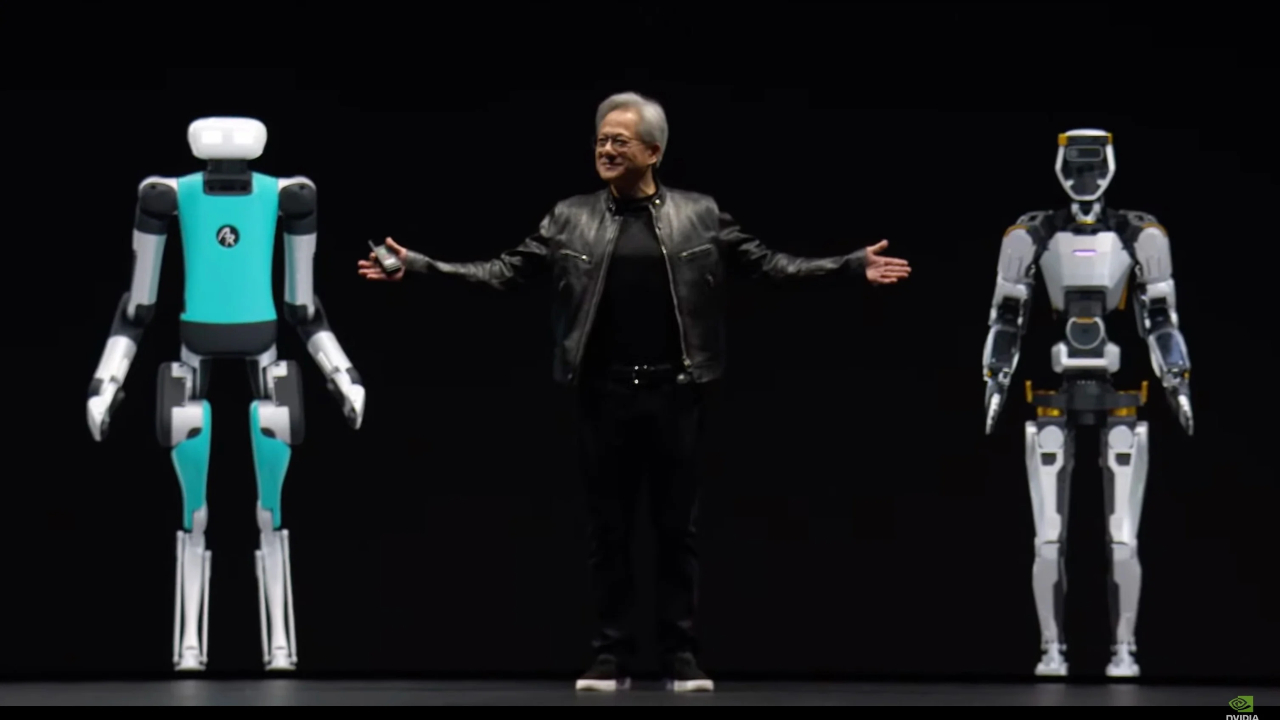
At CES 2025, Nvidia CEO Jensen Huang revealed several groundbreaking products, showcasing the company’s ambitions to expand its business across robotics, gaming, and automotive technology. The announcements highlighted innovations in AI, gaming chips, and collaborations, including a new deal with Toyota.

One of the key highlights was the introduction of Nvidia’s Cosmos foundation models, which use artificial intelligence to generate photo-realistic video for robot and self-driving car training. By creating “synthetic” training data, these models simulate physical environments much more affordably than traditional data collection methods. Unlike the typical approach of placing cars on the road or having humans demonstrate tasks, Cosmos can generate videos based on a text description, adhering to the laws of physics. The models will be made available on an “open license,” much like Meta Platforms’ Llama 3 language models, which have seen widespread use in the tech industry. Huang expressed hopes that Cosmos could revolutionize robotics and industrial AI similarly to the impact Llama 3 has had on enterprise AI.

Despite the excitement, analysts, including Vivek Arya from Bank of America, raised concerns about whether the new robotics technology would substantially boost Nvidia’s sales. Arya questioned the challenge of making the products both reliable and affordable enough to create viable business models, similar to the niche opportunities of autonomous vehicles or the metaverse.

In addition to robotics, Nvidia unveiled new gaming chips, part of the RTX 50 series, that use Nvidia’s Blackwell AI technology. These chips aim to enhance gaming graphics, particularly through ‘shaders’ that add realistic imperfections to objects in video games, such as fingerprint smudges on surfaces. The new chips are also designed to improve the realism of human faces, which is a critical area of focus for developers. Prices for the chips range from $549 to $1,999, with the high-end models set to launch on January 30, followed by lower-tier models in February. Analysts, including Ben Bajarin of Creative Strategies, expect these chips to drive short-term sales growth for Nvidia.

Nvidia also debuted its first desktop computer, Project DIGITS, which is designed for software developers rather than regular consumers. Priced at $3,000, the computer runs on Nvidia’s Linux-based operating system and includes the same AI chip used in the company’s data center products. The desktop, which features a central processor co-designed with Taiwan’s MediaTek, is expected to help individual developers quickly test their AI systems. Project DIGITS will be available in March.

Additionally, Huang announced that Toyota Motor will integrate Nvidia’s Orin chips and automotive operating system into several of its models to power advanced driver assistance features. Although the company did not specify which models would feature the technology, the partnership signifies a growing presence in the automotive sector. Nvidia projects automotive hardware and software revenue will reach $5 billion by fiscal 2026, up from an expected $4 billion in the current year.

Nvidia’s stock surged to a record high of $149.43, increasing its market valuation to $3.66 trillion, making it the second-most valuable listed company in the world, behind Apple.