Yazılar

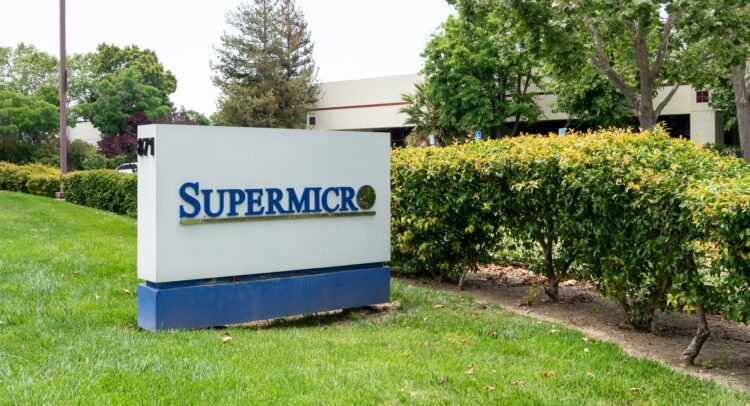
Super Micro Gains Nasdaq Extension, Aims to File Financials by February

Super Micro Computer announced on Friday that it received an extension from Nasdaq, giving the company until February 25, 2025, to file its overdue financial reports and maintain its listing on the stock exchange.

This extension provides some breathing room for the embattled server manufacturer, which has faced delisting risks due to delays in filing its audited year-end financials and quarterly results with the U.S. Securities and Exchange Commission (SEC).

“The Company’s common stock will remain listed on the Nasdaq Global Select Market during the exception period,” Super Micro stated in a press release. The company expressed confidence in meeting the new deadline and filing all required reports.


Market Reaction and Current Challenges

The announcement boosted investor confidence, with Super Micro’s stock rising 7% in extended trading on Friday. However, the company remains under scrutiny following a series of challenges:

  1. Accounting Issues:
    Super Micro’s reputation suffered a blow in August when activist investor Hindenburg Research accused the company of accounting irregularities. Though an internal probe, led by a board member, found no evidence of misconduct, the allegations added to investor uncertainty.
  2. Auditor Changes:
    Ernst & Young resigned as the company’s auditor in October, prompting Super Micro to appoint BDO as its new auditor last month.
  3. Leadership Shake-Up:
    Earlier this week, Super Micro announced it would replace its Chief Financial Officer, David Weigand, and appointed a new accounting chief as part of efforts to restore confidence.

Performance Highlights Amid Turmoil

Despite these challenges, Super Micro has enjoyed significant business growth, driven by its position as a key supplier of Nvidia-based computer clusters for artificial intelligence (AI). The company forecasts a remarkable 67% sales growth, targeting approximately $25 billion in revenue for fiscal 2025.

Super Micro’s stock soared over 14-fold from the end of 2022 to March 2023, bolstered by strong AI-related demand and its inclusion in the S&P 500. However, the stock has since lost about 60% of its value amid ongoing controversies and market volatility.


Previous Nasdaq Delisting and Current Risk

This is not the first time Super Micro has faced Nasdaq delisting. The company was previously removed from the exchange in 2018 for similar financial filing issues. The current delisting process, which typically spans about a year, has cast a shadow over the company’s stock despite Friday’s extension.

Super Micro now has a crucial opportunity to resolve its financial reporting issues and reassure investors. Should the company meet the February 25, 2025, deadline, its listing on the Nasdaq Global Select Market will remain intact, provided it complies with all other Nasdaq rules.

Intel CEO Pat Gelsinger Steps Down Amid Board’s Lack of Confidence in Turnaround Plan

Intel CEO Pat Gelsinger has resigned after nearly four years in office, following a board decision to replace him due to dissatisfaction with his ambitious turnaround strategy. The decision comes at a pivotal time for the chipmaker as it struggles to regain its competitive edge in the semiconductor market.

Key Details

  • Departure Circumstances: Gelsinger was asked to step down after a recent board meeting where his progress was deemed insufficient. The board offered him the option to retire or be removed, and he chose to resign.
  • Interim Leadership: Intel has appointed CFO David Zinsner and senior executive Michelle Johnston Holthaus as interim co-CEOs while a search for a permanent successor is underway.
  • Challenges During Tenure: Gelsinger inherited significant operational issues and faced market setbacks, including a failed AI-chip strategy and declining stock performance. Intel shares have fallen by over 60% under his leadership, losing its position in the Dow Jones Industrial Average to rival Nvidia.
  • Spending Spree and Fallout: Gelsinger’s ambitious $20 billion investment in new factories coincided with a downturn in the PC and laptop markets. The spending spree led to margin pressure, layoffs, and consideration of asset sales.

Strategic Missteps

  • Lagging AI Initiatives: Gelsinger’s Intel failed to deliver a viable AI chip competitor to Nvidia, a leader in the booming artificial intelligence sector.
  • Foundry Business Struggles: While the company pursued a shift to contract manufacturing, it secured only a few clients like Microsoft and Amazon, falling short of generating the volumes needed for profitability.
  • Board Tensions: Disagreements over Gelsinger’s strategy caused friction among board members, leading to the departure of Lip-Bu Tan, a key director with a track record of turning around chip firms.

Market and Industry Impact

  • Stock Performance: Intel’s shares fell by 0.5% following the announcement, while rivals AMD and Nvidia saw gains amid broader semiconductor index growth.
  • Competitor Dominance: Nvidia continues to dominate the AI-chip market, while AMD advances in innovative chip solutions, leaving Intel trailing in a competitive industry.

Next Steps

The board, chaired by Frank Yeary, has emphasized its commitment to restoring investor confidence and ensuring Intel’s manufacturing competitiveness. However, Gelsinger’s departure leaves questions about the future of Intel’s strategic direction and its ability to compete in a rapidly evolving semiconductor landscape.


Nvidia’s AI Chip Demand Soars Amid Slowing Revenue Growth

Key Highlights

  • Nvidia, a leader in AI chip technology, forecast its slowest revenue growth in seven quarters, raising concerns among investors accustomed to its remarkable financial performance.
  • Despite the slowdown, Nvidia continues to dominate the AI chip market, with high demand driven by advancements in generative AI technologies.
  • The company’s stock, valued at $3.6 trillion, has seen unprecedented growth but faces heightened scrutiny due to lofty market expectations.

Performance Overview

  • Revenue Projections: Nvidia predicts $37.5 billion (±2%) in Q4 revenue, aligning with but not significantly surpassing analyst expectations of $37.09 billion.
  • Growth Rates: Q4 growth is estimated at 69.5%, a notable decline from the 94% reported in Q3 and previous quarters where revenues often doubled.
  • Market Reaction: Shares fell 5% initially after results but recovered partially, reflecting investor ambivalence.

AI Chip Leadership and Challenges

  • Blackwell AI Chips: Nvidia is rolling out its new Blackwell family of AI processors, initially carrying gross margins in the low 70% range but projected to improve with scaled production.
  • Supply Chain Issues: Limited advanced manufacturing capacity at TSMC, Nvidia’s fabrication partner, has created bottlenecks. Nvidia addressed a design flaw in Blackwell chips and expects improved yields and cycle times as production ramps.
  • Customer Adoption: Major players like Microsoft, Oracle, and CoreWeave are adopting Nvidia’s new systems. CEO Jensen Huang dismissed reports of overheating issues in the liquid-cooled server models, emphasizing the robust engineering behind the products.

Financial and Market Metrics

  • Earnings: Nvidia posted adjusted Q3 earnings of 81 cents per share, exceeding estimates of 75 cents.
  • Data Center Segment: Revenue grew 112% to $30.77 billion, supported by cloud providers expanding their infrastructure to meet generative AI demands. This marks a deceleration from the 154% growth in the prior quarter.
  • Margins: Adjusted gross margin contracted slightly to 75%, with expectations of exceeding 75% as production efficiencies improve.

Market Sentiment

  • Stock Performance: Nvidia shares, which have nearly quadrupled in 2023 and risen ninefold over two years, remain a high bar for investor expectations.
  • Analyst Insights: While Nvidia’s results showcase strong fundamentals, achieving the “huge beats” investors anticipate is becoming increasingly challenging, noted Carson Group’s Chief Market Strategist Ryan Detrick.

Future Outlook

  • Nvidia remains well-positioned as the market leader in AI chips, with continued demand driven by generative AI applications.
  • Challenges include supply chain constraints, high market expectations, and increasing competition as the AI industry matures.