Yazılar

Xiaomi to Launch Self-Developed XringO1 Mobile Chip in Late May

Xiaomi is set to unveil its latest in-house mobile chip, the XringO1, in late May, marking a renewed push into proprietary silicon development as competition heats up in China’s smartphone market. The announcement came from CEO Lei Jun on Weibo, though technical details remain limited.

Key Developments:

  • The XringO1 chip was reportedly built using ARM architecture and manufactured by TSMC using its advanced 3-nanometer (3nm) nodecurrently one of the most cutting-edge fabrication processes.

  • This move signifies Xiaomi’s return to high-end chip design, following earlier efforts like the Pengpai S1 in 2017, which was ultimately discontinued due to cost and complexity.

  • Xiaomi had since shifted focus to image sensors and power management ICs, but resumed processor development in 2021, according to sources familiar with the project.

Strategic Significance:

The launch positions Xiaomi to compete more directly with Apple and Huawei, both of which use custom-designed chips to drive hardware-software integration and performance optimization:

  • Apple has long utilized its own A-series and M-series chips, creating a tightly controlled ecosystem.

  • Huawei, despite U.S. sanctions, has pushed ahead with its Kirin chip series via SMIC.

Xiaomi’s goal is to use the XringO1 chip in its premium smartphones and tablets, potentially phasing in custom silicon to reduce dependency on foreign suppliers such as Qualcomm, which remains Xiaomi’s primary chip partner.

Market & Political Context:

  • The Xiaomi 15 Ultra, launched earlier this year, uses Qualcomm’s Snapdragon 8 Elite, but future models could see a transition to Xiaomi silicon.

  • While U.S. export restrictions now limit TSMC’s ability to produce AI chips for Chinese clients at advanced nodes, smartphone chips — such as XringO1 — are currently exempt from those restrictions.

Xiaomi ranks as the world’s third-largest smartphone manufacturer, and its expansion into EVs, home appliances, and AI devices makes chip autonomy increasingly strategic.

Neither Xiaomi nor Qualcomm responded to requests for comment at the time of reporting.
Computex 2024 to Spotlight AI Innovations, Nvidia’s Jensen Huang Takes Center Stage

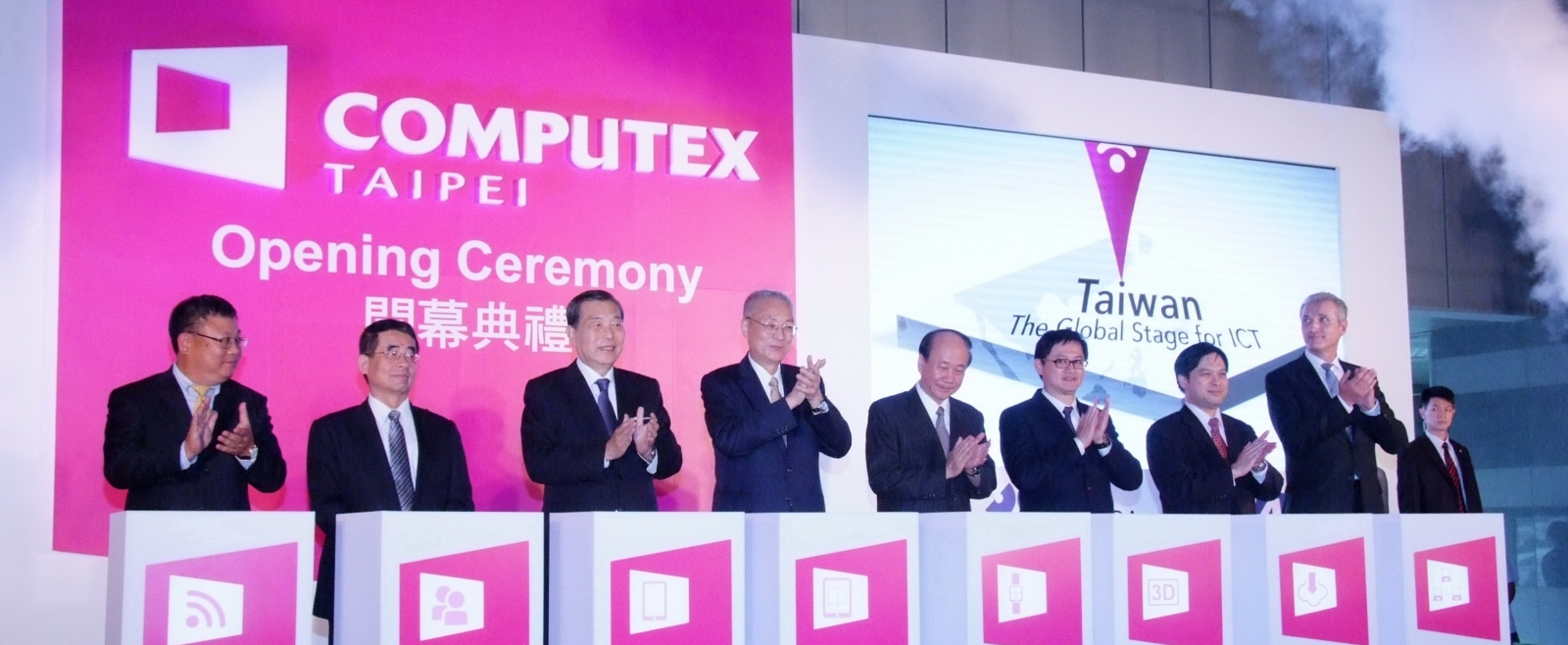
Taiwan’s Computex trade show, set for May 20–23, will once again shine a spotlight on artificial intelligence, with Nvidia CEO Jensen Huang expected to headline the event. With 1,400 exhibitors lined up, this year’s focus extends beyond AI-powered devices to global economic shifts and the geopolitical implications of U.S. tariffs.

Huang, known for sparking “Jensanity” at last year’s event, will deliver the keynote speech Monday. He’s anticipated to announce expanded partnerships with leading Taiwanese AI server manufacturers like Foxconn and Quanta. Analysts believe Huang may also reference recent U.S. policy changes, including trade tariffs and the ongoing effort to reduce supply chain dependence on China.

Obviously, Nvidia relies a lot on the Taiwanese ecosystem to deliver,” said Ian Cutress, chief analyst at More Than Moore. Nvidia recently pledged to produce $500 billion worth of AI servers in the U.S. over the next four years, in collaboration with TSMC, Foxconn, and Wistron.

Other tech giants will also make major appearances:

  • Qualcomm will present developments in AI PCs.

  • MediaTek is set to unveil its strategy for edge and cloud AI.

  • AMD will showcase advancements in gaming and AI-powered personal computing.

  • Intel’s new CEO, Lip-Bu Tan, while skipping a public speech, will meet privately with key Taiwanese partners.

  • Advantech, a leader in industrial computing, returns after a decade to reveal new AI systems for business applications.

The event arrives amid concerns over tightened export controls on advanced AI chips to China and heightened pressure from the U.S. to relocate manufacturing stateside. These dynamics have shifted the industry’s focus from traditional B2C electronics to enterprise-level AI and industrial innovation.

Taiwan has also changed,” said Advantech Chairman K.C. Liu. “The industry has shifted toward AI. It’s no longer enough to focus solely on consumer goods.”

Computex 2024 is expected to serve not only as a showcase for the latest AI breakthroughs but also as a barometer of how companies are navigating complex global supply chains and political risks in the tech sector.

Qualcomm Acquires MovianAI, VinAI’s Generative AI Arm, to Boost AI Capabilities

Qualcomm Acquires MovianAI to Strengthen Its Generative AI Portfolio

Qualcomm has officially announced the acquisition of MovianAI Artificial Intelligence Application and Research JSC, marking a strategic move to deepen its investment in generative AI. MovianAI was previously the generative AI division of VinAI, a prominent AI research subsidiary under Vietnam’s Vingroup. With this acquisition, Qualcomm secures a 65 percent stake in the company, though financial details of the deal remain undisclosed. The move aligns with Qualcomm’s broader vision of accelerating the development and scaling of cutting-edge generative AI technologies.

MovianAI was formed in November 2024 following the restructuring of VinAI, which resulted in the creation of two separate entities. The newly acquired company focused on AI research and innovation, boasting a charter capital of nearly $9 million (approximately Rs. 77 crore). Qualcomm shared news of the acquisition through a newsroom post, highlighting the company’s commitment to advancing AI-based solutions through strategic collaborations and global partnerships.

The San Diego-based chipmaker emphasized its long-standing engagement with Vietnam’s tech ecosystem, citing over two decades of collaboration in areas like 5G, artificial intelligence, the Internet of Things (IoT), and automotive technologies. By integrating MovianAI’s talent and expertise, Qualcomm aims to not only boost its AI capabilities but also tap into Southeast Asia’s growing pool of tech innovation and research talent.

In a significant addition to the team, Qualcomm also announced that Hung Bui, founder and CEO of VinAI, will be joining the company as part of the acquisition. Bui brings with him extensive experience in the AI space, including a background with Google DeepMind. His leadership is expected to play a pivotal role in driving Qualcomm’s vision for next-generation AI-powered applications and expanding the company’s global innovation footprint.