Yazılar

Spain’s Sanchez: we won’t be swayed by tech oligarchs on social media ban

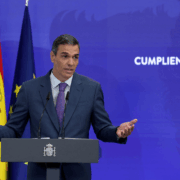
Spain will press ahead with plans to restrict young people’s access to social media and tighten regulation of online platforms, despite criticism from major technology figures, Prime Minister Pedro Sanchez said on Thursday.

Speaking at an event in Madrid, Sanchez accused what he described as “tech oligarchs of the algorithm” of attempting to influence democratic decisions by spreading misinformation through their platforms. “Democracy will obviously not be swayed by the tech oligarchs of the algorithm,” Sanchez said, adding that powerful technology executives were using their reach to mislead the public.

His comments came a day after Pavel Durov, the founder of Telegram, joined Elon Musk in criticising Spain’s proposals to ban access to social media for users under 16 and to hold platform executives legally accountable for hate speech. Durov warned in a message sent to Spanish Telegram users that the legislation could force platforms to collect data on all users and enable governments to control what content people see. Musk, meanwhile, described Sanchez on X as “a tyrant and a traitor to the people of Spain.”

The Spanish government responded by saying Durov’s mass message to Telegram users illustrated why regulation of social media and messaging apps was urgently needed to protect citizens from misleading or manipulative information.

Spain is aligning itself with a broader European push to rein in the influence of major technology platforms. Countries including Britain, Greece and France are weighing tougher restrictions on social media use by minors, following Australia’s decision last year to prohibit access for children under 16.

Sanchez has been an outspoken critic of large technology companies since early last year, when he floated proposals to end anonymity on social media and link user accounts to a common European Union digital identity wallet. His government argues such measures are necessary to protect children, safeguard democratic debate and curb the spread of harmful or deceptive content online.

Apple Ads and Apple Maps not designated under EU Digital Markets Act

The European Commission said on Thursday that Apple’s advertising and mapping services will not be designated as gatekeepers under the European Union’s Digital Markets Act, citing their relatively low usage and limited market impact across Europe.

In a statement, the Commission said it had concluded that Apple does not meet the criteria for gatekeeper status in relation to Apple Ads and Apple Maps. Regulators said neither service acts as an important gateway for business users seeking to reach end users in the European market.

“These platform services do not constitute an important gateway for business users to reach end users,” the Commission said, explaining that the DMA designation is reserved for services with significant scale, entrenched market positions and a strong ability to influence competition.

Apple welcomed the decision, saying its services face robust competition in Europe. “These services face significant competition in Europe, and we’re pleased the Commission recognized they do not meet the criteria for designation under the Digital Markets Act,” the company said in a statement.

The DMA is one of the world’s most far-reaching regulatory frameworks aimed at curbing the market power of major technology companies. It imposes strict obligations on so-called gatekeepers to prevent anti-competitive practices and to make it easier for users and businesses to switch between rival services, including social networks, web browsers and app stores.

Apple is already subject to DMA obligations for other parts of its ecosystem, including its App Store and mobile operating system. Thursday’s decision narrows the scope of additional regulatory requirements the company will face in Europe, at a time when Big Tech firms remain under intense scrutiny from EU competition authorities.

TikTok cooperates closely with EU probe into Romania election interference

TikTok is being “extremely cooperative” with the European Commission’s investigation into potential interference in Romania’s 2024 presidential election, a Commission spokesperson said. The probe focuses on whether the platform failed to adequately limit election-related risks under EU digital rules.

European Commission spokesperson Thomas Regnier said TikTok had engaged constructively with regulators and had already implemented several measures. He added that the Commission welcomes cooperation from platforms and is open to dialogue when companies show willingness to comply.

The investigation was formally launched in December 2024, when the European Commission opened proceedings over concerns that TikTok may not have done enough to curb election interference during the Romanian vote. The case forms part of broader EU scrutiny of how social media platforms handle political content and safeguard democratic processes.