
Yazılar

Marvell Shares Suffer Worst Day in 24 Years Amid Tepid AI Revenue Forecast

Marvell Technology’s (MRVL.O) shares plunged by 19.8% on Thursday, marking their worst day in over two decades. The sharp decline follows a revenue forecast for the upcoming quarter that failed to meet investor expectations, reigniting concerns about cooling demand for AI infrastructure.

The stock closed at $72.28, reaching a four-month low of $71.65 earlier in the day. Investors had been looking to Marvell’s earnings, a key supplier of custom AI chips, for indications of sustained demand in the AI sector, which has driven significant market growth since the rise of ChatGPT in late 2022. However, Marvell’s forecast for the next quarter was only slightly above analyst expectations, falling short of the more substantial beat that investors were hoping for.

TD Cowen analyst Joshua Buchalter noted that investors were anticipating stronger revenue growth, given recent comments on capital expenditures from some of Marvell’s largest customers. With over 45 million shares traded, significantly more than the 50-day average of 14 million, the market responded nervously.

The decline in Marvell’s stock price also weighed on other chipmakers, including Broadcom, which saw its shares drop nearly 7%, and Nvidia, which slid by 5%. Marvell’s performance led to a $15 billion loss in market value, and its shares are down 18% this year after an 83% rise in 2024.

Marvell’s CEO, Matt Murphy, did highlight that the company had exceeded its fiscal 2025 AI revenue target and is optimistic about surpassing its projections for fiscal 2026. However, analysts attributed the weak forecast to a slowdown in demand for on-premise data center products, as Big Tech shifts spending towards AI chips, leaving Marvell’s core networking business, which focuses on ethernet cables and fiber channels, in a weaker position.

The semiconductor sector overall has faced pressure from tariffs imposed by the U.S. government, adding to investor concerns. Analysts from Melius Research noted that sentiment around AI semiconductor stocks is currently negative, and many brokerages have cut their price targets for Marvell following the results.
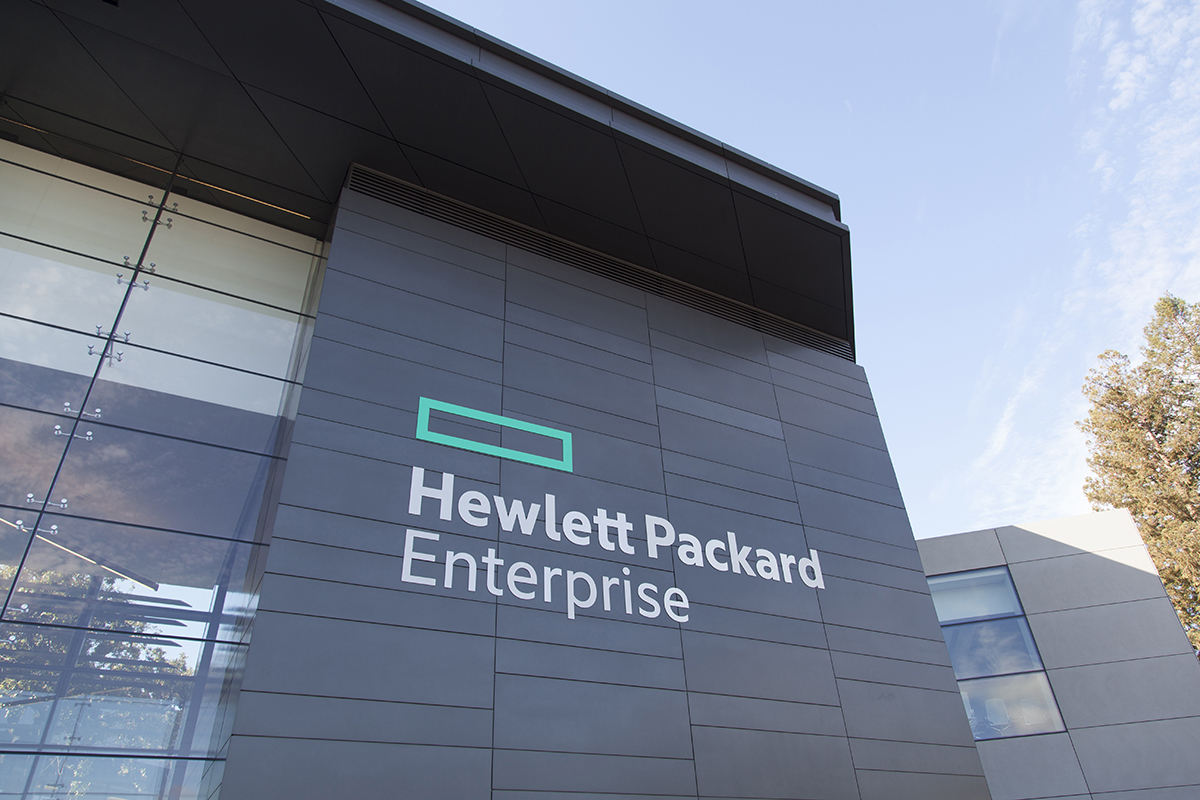
HPE Forecasts Below-Estimate Revenue Amid Tariff Impact and Cost-Cutting Measures

Hewlett Packard Enterprise (HPE) has projected quarterly revenue growth below analysts’ estimates, resulting in a nearly 20% drop in its shares in after-hours trading. The company attributed this forecast to the uncertainty created by the U.S. tariff war, which has affected its server business.

CEO Antonio Neri addressed the issue on a post-earnings call, explaining that HPE plans to adjust the prices of its products and leverage its global supply chain to mitigate the impact of both imposed and threatened tariffs. Neri added that the forecast reflects the company’s best estimate of the net effects of U.S. tariff policy.

U.S. President Donald Trump recently exempted certain goods from Canada and Mexico under a North American trade pact until April 2, temporarily easing some tariffs. However, Trump’s additional 10% duty on Chinese goods, which follows a 10% tariff imposed earlier in February, took effect this week, adding more pressure on companies like HPE.

Sales outside the U.S. account for nearly 64% of HPE’s net revenue in fiscal 2024, with key operations, including production and final assembly, based in Mexico and China. CFO Marie Myers stated that the company expects to mitigate much of the tariff impact during the second half of the year, although some effects may be felt in the second quarter as mitigation measures are gradually implemented.

HPE’s second-quarter revenue forecast falls between $7.2 billion and $7.6 billion, which is below the analysts’ expected $7.93 billion. The company’s profit forecast also missed expectations. In a bid to cut costs, HPE announced plans to lay off 5% of its global workforce, equating to approximately 2,500 jobs. These layoffs are part of a cost-saving program expected to generate about $350 million in savings by fiscal 2027. HPE had around 61,000 employees as of October 31.

Despite these challenges, the company reported first-quarter revenue of $7.85 billion, slightly surpassing analysts’ estimates of $7.82 billion. Server revenue grew by 29%, reaching $4.3 billion.

Zscaler Raises Annual Revenue Forecast Due to Rising Demand for Cybersecurity Services

Zscaler (ZS.O) raised its revenue forecast for fiscal 2025 on Wednesday, reflecting growing demand for its cloud-based cybersecurity solutions. Shares of the California-based company surged 6% in after-hours trading.

Enterprises are increasingly investing in AI-powered cybersecurity services to combat the rise in digital scams and online hacking, driving sales for companies like Zscaler. As a result, the company now expects annual revenue for fiscal 2025 to fall between $2.64 billion and $2.65 billion, up from its previous forecast of $2.62 billion to $2.64 billion.

Zscaler also raised its adjusted earnings per share forecast to a range of $3.04 to $3.09, up from the previous expectation of $2.94 to $2.99 per share.

“Growing adoption of Zero Trust and AI is driving strong demand for our platform,” said Zscaler CEO Jay Chaudhry, highlighting the increasing reliance on their services for secure cloud access.

The company projected third-quarter revenue between $665 million and $667 million, slightly below the median analyst estimate of $667.4 million.

In the face of rising cybercrimes, data breaches, online scams, and high-profile hacks, businesses are ramping up their investment in cybersecurity. Zscaler posted second-quarter revenue of $647.9 million, exceeding analysts’ forecast of $635.6 million.