Yazılar

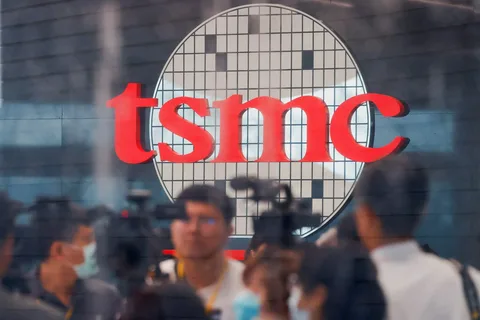
TSMC Revises First-Quarter Revenue Forecast Due to January Earthquake Impact

Taiwan Semiconductor Manufacturing Co. (TSMC), the world’s leading contract chipmaker, revised its first-quarter revenue outlook on Monday, indicating that it would be closer to the lower end of its guidance. This revision comes after the company reported an estimated $161 million loss from the earthquake that struck southern Taiwan in late January.

TSMC, which supplies major companies such as Apple and Nvidia, calculated the losses from the earthquake at approximately NT$5.3 billion ($161 million), accounting for insurance claims. Despite the financial setback, the company clarified that there was no structural damage to its production facilities, and operations have resumed as usual.

The earthquake resulted in the destruction of some semiconductor wafers, affecting production. However, TSMC is actively working to recover the lost output and confirmed that its full-year outlook remains unchanged. The revised first-quarter revenue forecast now expects to fall within the range of $25 billion to $25.8 billion, closer to the lower end of the initial estimate.

Pinterest Shares Surge on Strong AI Ad Forecasts

Pinterest’s stock soared by 20% on Friday after the company raised its first-quarter revenue forecast, indicating that its AI-driven advertisement tools will boost ad spending on the platform. The surge was driven by Pinterest’s prediction of revenue exceeding expectations, with a focus on its direct response ads, which encourage actions like app downloads or website visits.

CEO Bill Ready highlighted the success of Pinterest’s AI tools, particularly the Performance+ suite, which automates ad targeting and reduces the inputs required for campaign creation. This has been especially helpful for smaller advertisers. “Advertisers using these tools now need 50% fewer inputs to create a campaign,” Ready explained.

Bernstein analyst Mark Shmulik noted that automating the ad creation process makes Pinterest an appealing choice for advertisers, particularly smaller ones, due to the ease it offers. Shmulik also expressed confidence that Pinterest’s progress is sustainable.

In the fourth quarter, Pinterest reported record revenue, driven by strong ad spending from the retail, technology, and financial services sectors. However, advertising spend from food and beverage companies remained weak. Following the positive earnings report, at least 27 brokerages raised their price target for Pinterest.

The company’s first-quarter revenue projection of $837 million to $852 million exceeds analysts’ consensus estimate of $832.8 million. Additionally, its adjusted core earnings forecast of $155 million to $170 million also surpassed expectations.

Pinterest’s stock value could increase by over $4 billion if the gains hold, with the company’s market valuation currently sitting at $22.70 billion. Despite volatility in stock price following earnings reports, Pinterest’s outlook remains positive, with its first-quarter projections further fueling investor optimism.

Amazon Shares Drop on Weak Cloud Growth and Disappointing Forecast REWRITING TEXT:

Amazon.com shares declined by as much as 5% in extended trading on Thursday after the company reported weaker-than-expected cloud computing growth and a lower sales forecast for the first quarter of 2025. The decline erased about $90 billion in market value before stabilizing at a 4.2% drop.

Amazon Chief Financial Officer Brian Olsavsky indicated that capital expenditure for 2025 would remain consistent with last year’s fourth-quarter spending of $26.3 billion, driven primarily by investments in artificial intelligence (AI) software development.

The company forecast revenue for the first quarter in the range of $151 billion to $155 billion, falling short of analysts’ average estimate of $158 billion. This gap persists even after adjusting for a $2 billion negative impact from the absence of a Leap Day.

Amazon Web Services (AWS) posted a 19% revenue increase to $28.79 billion, narrowly missing analysts’ expectations of $28.87 billion. CEO Andy Jassy attributed the slower AWS growth to inconsistent chip supplies from third-party partners, which constrained capacity.

Investor impatience with Big Tech’s extensive capital spending on AI has grown. Daniel Morgan, senior portfolio manager at Synovus Trust, noted that slowing growth across Amazon’s cloud and retail segments is concerning, especially as competitors such as China’s DeepSeek gain ground in the AI space.

Amazon’s AI investments were showcased at its annual AWS conference in December, where the company introduced new AI models. Its Alexa generative AI voice service is also slated for release later this month after being delayed due to quality concerns.

The company’s retail business provided a cushion, with online sales growing 7% to $75.56 billion, exceeding estimates of $74.55 billion. Advertising sales rose 18% to $17.3 billion, just shy of the expected $17.4 billion.

Amazon forecast an operating profit of $14 billion to $18 billion for the first quarter, missing the average estimate of $18.35 billion. Despite the challenges, Amazon’s fourth-quarter revenue of $187.8 billion slightly surpassed expectations of $187.30 billion. The company also nearly doubled its net income to $20 billion, reporting earnings of $1.86 per share compared to estimates of $1.49 per share.