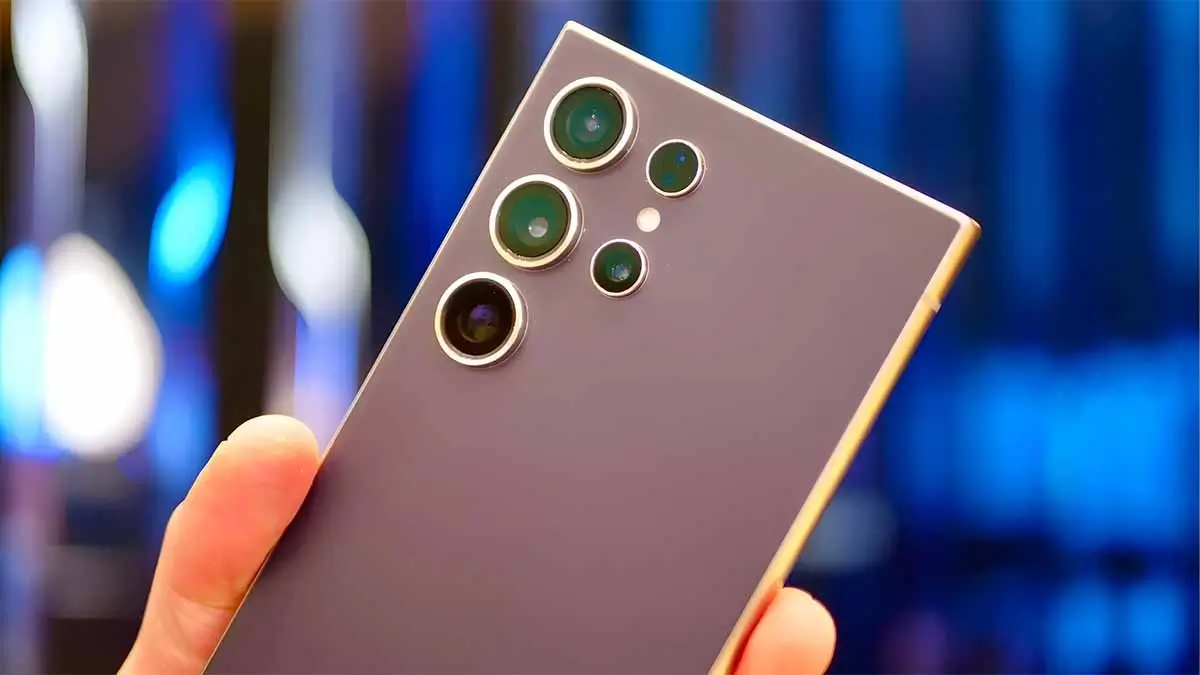
Samsung Pushes Launch of Display-Free AI Smartglasses to 2026
Samsung’s Upcoming Display-Free Smartglasses to Include Speakers, Mic, and Camera Devamını Oku
Tesla CEO Elon Musk announced that the company will streamline its AI chip research to concentrate primarily on developing inference chips designed to run AI models and enable real-time decision-making. This follows reports that Musk ordered the disbandment of the in-house Dojo supercomputer team, with its leader, Peter Bannon, leaving the company.
The Dojo supercomputer, built around custom training chips, was originally created to process vast data from Tesla electric vehicles to train its autonomous driving software. Musk stated on X that it no longer makes sense for Tesla to split resources between two distinct AI chip designs. Instead, all efforts will now focus on Tesla’s AI5, AI6, and subsequent chips, which are optimized for inference tasks and still capable of training AI models effectively.
Analysts, including Morgan Stanley’s Adam Jonas, had previously valued the Dojo supercomputer at $500 billion in 2023, viewing it as a key growth driver for Tesla beyond vehicle sales, comparable to Amazon’s cloud business. It remains unclear how this restructuring will impact Tesla’s valuation.
Industry-wide, tech companies are consolidating custom chip development to reduce latency, power consumption, and costs while focusing on fewer architectures. Tesla’s recent restructuring includes executive departures, job cuts, and a strategic pivot toward AI-driven self-driving technology and robotics, with Musk aiming for synergy across his technology ventures.
Musk has announced plans for next-generation AI5 chips targeted for production by the end of 2026 and revealed a $16.5 billion contract with Samsung Electronics to supply AI6 chips. These chips are expected to power Tesla’s autonomous vehicles and Optimus humanoid robots, with potential for broader AI applications due to their substantial compute capabilities.
According to Bloomberg, around 20 Dojo team members have already left to join the startup DensityAI, while remaining staff are being reassigned within Tesla to other compute and data center projects.
President Donald Trump announced plans to impose a roughly 100% tariff on imported semiconductor chips, aiming to incentivize companies to manufacture in the United States. However, firms that have committed to or are already producing chips on U.S. soil—such as Apple, which pledged an additional $100 billion investment in America—would be exempt from the tariff.
Trump warned that companies making false commitments to build U.S. factories would face retroactive charges if they fail to deliver. His remarks were informal and details on implementation remain unclear, with a formal national security investigation on tariffs expected to conclude by mid-August.
Reactions from the global semiconductor industry and governments varied. South Korea’s trade envoy confirmed that major chipmakers Samsung Electronics and SK Hynix will be exempt under a U.S.-South Korea trade deal. In contrast, officials from the Philippines and Malaysia expressed concern that tariffs would severely harm their industries, risking competitiveness in the U.S. market.
Taiwanese companies, notably TSMC, which have established U.S. manufacturing facilities or partnerships, are expected to avoid significant impact. This benefits key U.S. customers like Nvidia, which plans major investments in American chip production.
Experts note that the tariffs favor large, financially strong firms able to build factories domestically, emphasizing a “survival of the biggest” dynamic. The U.S. government has supported this shift with a $52.7 billion semiconductor subsidy program to boost domestic chip production, which currently accounts for about 12% of global output, down from 40% in 1990.
The European Union has agreed to a 15% tariff on most U.S. exports, including chips, and Japan secured assurances against worse tariffs than other nations on semiconductor products.
Following the announcement, shares of Asian chipmakers with U.S. manufacturing plans rose significantly, reflecting market optimism over tariff exemptions.