Yazılar

Dark Energy Spectroscopic Instrument Provides Ultimate Test for Einstein’s Theory of Relativity

A recent study from the Dark Energy Spectroscopic Instrument (DESI) project suggests that dark energy—the enigmatic force driving the accelerated expansion of the universe—may not be constant over time. This finding challenges a key assumption in cosmology but simultaneously reaffirms the accuracy of Albert Einstein’s theory of general relativity. The study, published on the DESI project’s website and arXiv, expands on earlier findings from April that pointed toward a similar conclusion. If confirmed, the results could have profound implications for our understanding of the universe’s long-term evolution.

DESI’s Revolutionary 3D Galaxy Mapping

The DESI project, based at the Kitt Peak National Observatory in Arizona, has constructed the most comprehensive 3D map of galaxies to date. By analyzing this detailed map, researchers can study the large-scale structure of the universe and how it changes over time. Unlike earlier studies that focused on baryon acoustic oscillations—echoes of sound waves from the universe’s infancy—DESI’s latest work delves into the evolution of galaxy clusters. These shifts are particularly sensitive to dark energy’s influence and could reveal changes in its behavior. Dr. Dragan Huterer, a cosmologist from the University of Michigan, noted that this approach provides critical insights into how gravitational forces and dark energy interact over cosmic timescales.

Variable Dark Energy: A Possible Shift in Paradigm

The study’s findings align with earlier DESI analyses, as well as data from other astronomical observations like the cosmic microwave background (CMB), the universe’s oldest light. Together, these data sets suggest that dark energy’s density may have fluctuated over time, rather than remaining static as traditionally assumed. Cosmologist Dr. Pauline Zarrouk of the National Centre for Scientific Research (CNRS) emphasized the importance of these results matching prior analyses, as consistency strengthens the case for a revision of existing cosmological models. If dark energy is indeed variable, it could lead scientists to reimagine the fate of the universe and refine theories about its fundamental composition.

Implications for General Relativity and Cosmology

Despite the intriguing possibility of changing dark energy, the DESI study reinforces the validity of Einstein’s theory of general relativity. The theory continues to accurately describe how gravity operates on both local and cosmic scales, even under the complex conditions observed in the universe’s evolution. However, these findings highlight the need for a deeper understanding of dark energy’s nature and role in shaping the cosmos. As DESI continues its galaxy-mapping mission, future discoveries may provide clearer answers to whether dark energy evolves over time or if alternative explanations better fit the data, potentially redefining our understanding of the universe’s structure and fate.
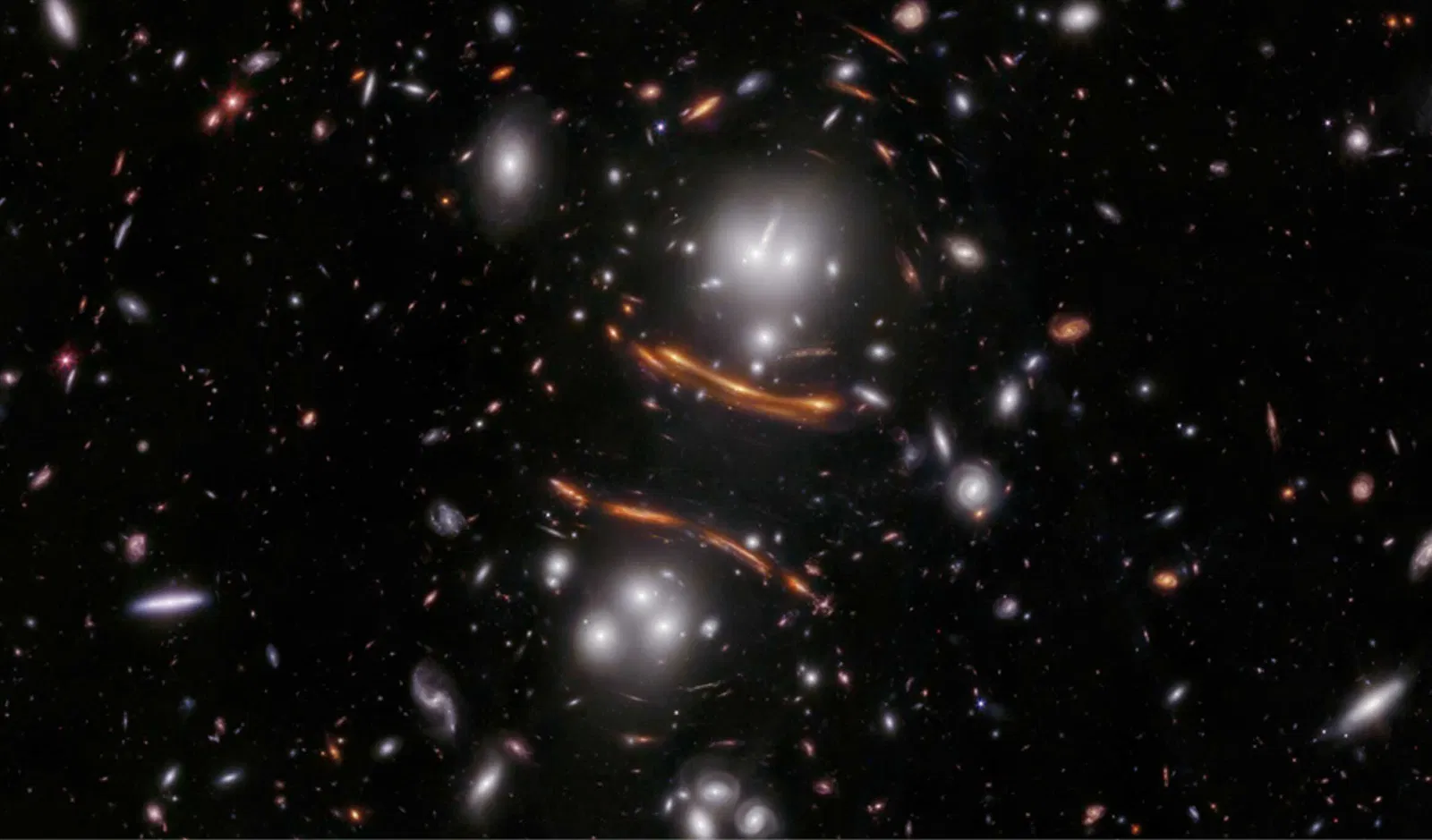
James Webb Telescope Detects First Signs of Einstein Zig-Zag Effect in a Remote Quasar

A groundbreaking study leveraging data from the James Webb Space Telescope (JWST) has unveiled a rare cosmic phenomenon termed the “Einstein zig-zag.” This effect occurs when light from a distant quasar travels through two distinct warped regions of space-time, producing multiple mirrored images. Researchers identified six duplicates of a luminous quasar, J1721+8842, providing unprecedented insights into the dynamics of gravitational lensing and offering potential solutions to long-standing questions in cosmology.

The Discovery of a Complex Quasar Configuration

Quasar J1721+8842 was first observed in 2018, appearing as four distinct mirrored points of light situated billions of light-years away. These images were attributed to gravitational lensing, a phenomenon where light from a far-off celestial object bends due to the immense gravity of an intervening galaxy. However, further observations in 2022 revealed two additional, fainter points of light, hinting at a more intricate gravitational lensing scenario involving multiple massive objects.

JWST Sheds New Light on the Phenomenon

With the high-resolution capabilities of the JWST, researchers reanalyzed the data and confirmed that all six images originated from the same quasar. As detailed in a recent study published on arXiv, the quasar’s light was bent by two massive lensing galaxies in a complex manner, forming not only the mirrored images but also a faint Einstein ring. The unique configuration, where the light traveled in opposing directions around the lenses, inspired the term “Einstein zig-zag” to describe the observed effect.

Implications for Cosmology and Gravitational Lensing

This discovery holds profound implications for the study of gravitational lensing and the structure of the universe. By analyzing the “Einstein zig-zag,” scientists can better understand the distribution of dark matter in lensing galaxies and refine models of cosmic evolution. Additionally, the intricate lensing system offers an invaluable tool for probing the nature of quasar light and testing general relativity under extreme cosmic conditions. As researchers continue to explore such phenomena with JWST, new opportunities to unlock the mysteries of the universe are emerging.

Study Reveals Human Activity Driving Mountain Lions in Los Angeles to Adopt Nocturnal Habits

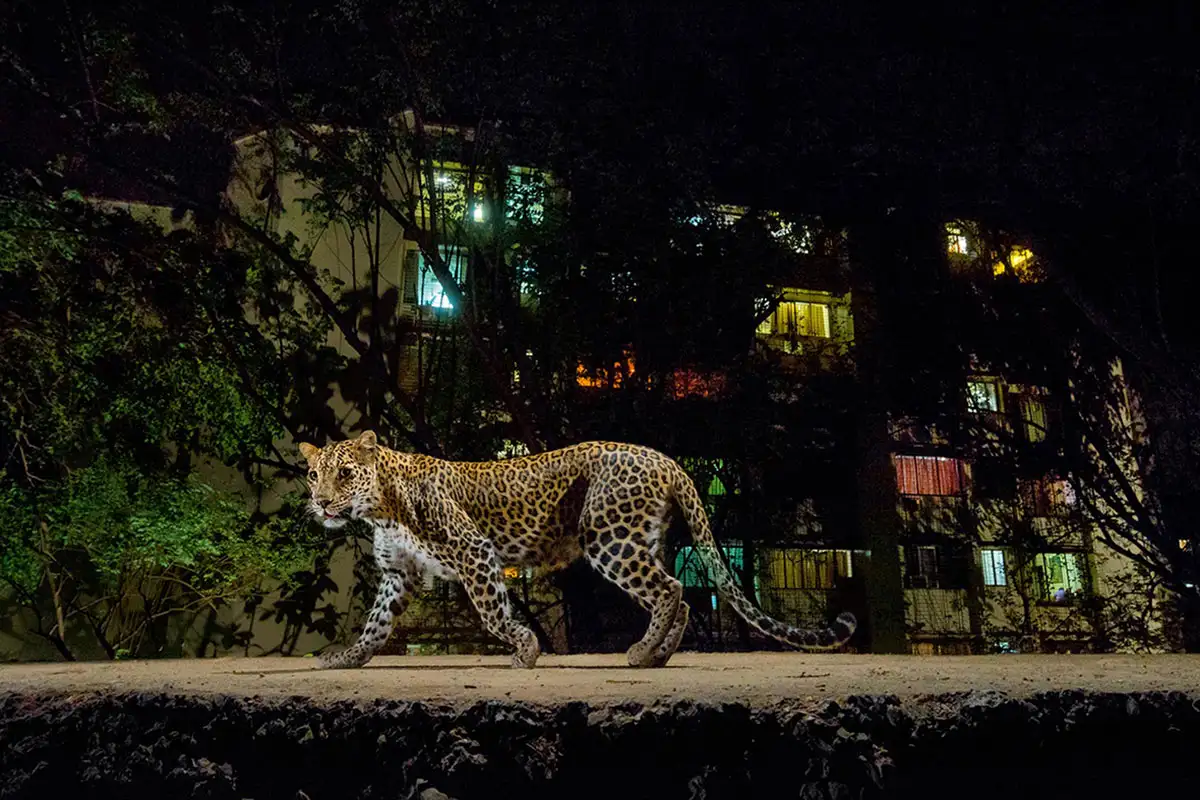
Mountain lions in the Greater Los Angeles area are increasingly altering their natural activity patterns to avoid human interaction, according to a study published on November 15 in Biological Conservation. The research sheds light on how these elusive predators, also known as pumas or cougars, are adapting to the growing presence of human recreational activities such as hiking, jogging, and cycling in their habitats. This shift in behavior illustrates the challenges of wildlife coexisting with urban populations and raises important questions about the long-term impacts of human encroachment on natural ecosystems.

The study, conducted by Ellie Bolas, a doctoral researcher at the University of California, Davis, focused on the movement patterns of 22 GPS-collared mountain lions in the Santa Monica Mountains. By combining data from the collared lions with exercise activity data from Strava, a popular fitness app, the researchers were able to map how human activity overlapped with wildlife behaviors. The data, collected between 2011 and 2018, provided detailed insights into how mountain lions navigate a landscape increasingly shaped by human presence.

One of the key findings was a notable shift in the lions’ activity patterns in areas with high human activity. Typically most active during dawn and dusk, mountain lions in these regions began shifting their peak activity to nighttime hours. This change allows them to minimize encounters with humans while still fulfilling essential needs such as hunting and patrolling their territories. Such behavioral flexibility underscores the resilience of these predators, but it also highlights the pressure they face in adapting to an environment dominated by human activity.

These findings have significant implications for wildlife management and urban planning. As human recreational activities continue to expand into natural habitats, understanding how animals like mountain lions adapt can help inform policies that balance conservation with human interests. The study also serves as a reminder of the importance of preserving wildlife corridors and minimizing disruptions to natural ecosystems, ensuring that urban growth does not come at the expense of biodiversity.