Yazılar

SEC’s ‘Crypto Mom’ affirms tokenized securities remain subject to regulations

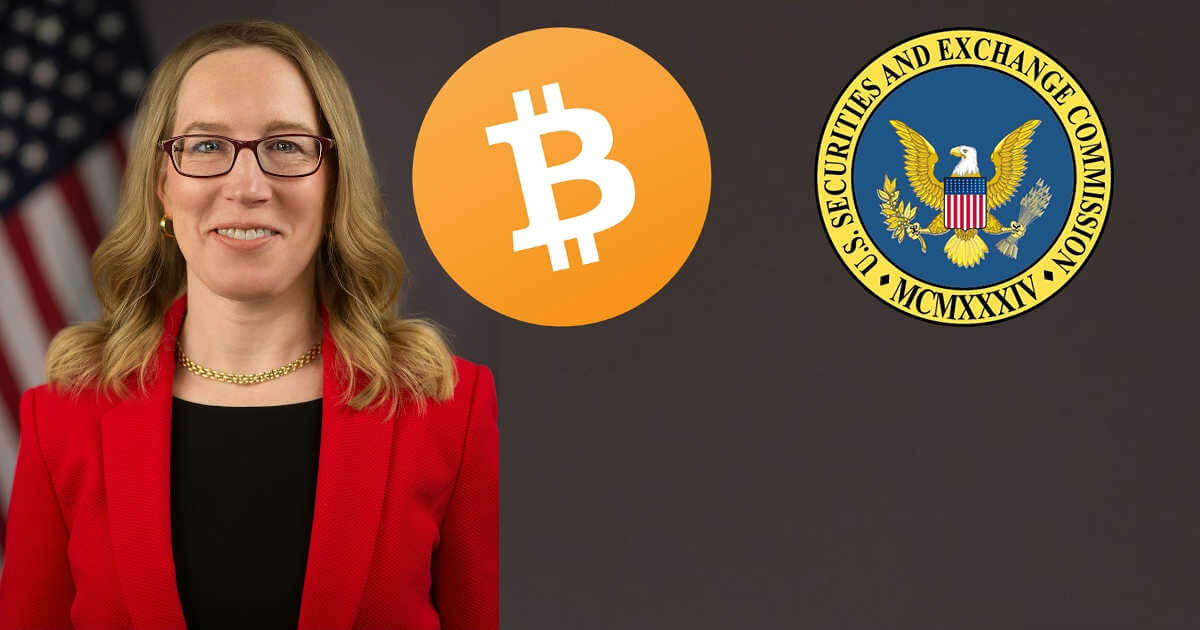
Hester Peirce, a Republican commissioner of the U.S. Securities and Exchange Commission (SEC) known as “crypto mom” for her supportive views on cryptocurrencies, emphasized on Wednesday that tokenized securities must comply with existing securities regulations.

Peirce stated, “As powerful as blockchain technology is, it does not have magical abilities to transform the nature of the underlying asset. Tokenized securities are still securities.” Tokenization refers to converting traditional shares into digital tokens traded on blockchain platforms. Investors holding these tokens own a representation of the underlying securities.

She warned that tokens issued by third parties, rather than the original security issuers, carry distinct risks for investors.

The concept of tokenized securities is gaining traction in the crypto and finance industries as a potential way to innovate trading processes. Coinbase recently revealed it is seeking SEC approval to offer blockchain-based stock trading.

SEC Chairman Paul Atkins, also a Republican, voiced support for fostering innovation but stressed regulatory oversight remains important. Critics argue that tokenization could be exploited to bypass SEC rules, putting retail investors at risk.

US SEC Issues First Guidance Toward Rules Governing Crypto ETFs

The U.S. Securities and Exchange Commission (SEC) took an important first step last week toward formalizing regulations for exchange-traded products (ETPs) linked to cryptocurrencies. The new 12-page guidance document lays out disclosure requirements for crypto ETFs, marking a shift in approach by the regulator under Republican leadership. This signals progress on approving dozens of pending applications for ETFs tied to cryptocurrencies such as Solana, XRP, and even former President Donald Trump’s meme coin.

The SEC has also formed a task force to develop detailed rules, revamped its crypto enforcement team, and stepped back from some high-profile enforcement cases previously seen as wins. This new guidance aims to create a clearer regulatory framework, helping asset managers and exchanges navigate the approval process more efficiently.

Industry experts welcomed the guidance as an essential step. Matt Hougan, CIO of Bitwise Asset Management, emphasized that its existence acknowledges crypto ETFs as part of the mainstream and begins to set “rules of the road” that benefit both issuers and the SEC. The guidance stresses issuers must explain in plain language key factors like custody arrangements and the unique risks within the competitive crypto market.

A more significant upcoming development will be a new SEC listing template to replace the current requirement for exchanges to submit a special exemption request (known as a 19(b)4 filing) for each crypto ETF listing. Eliminating this form could drastically shorten the approval timeline from up to 240 days to about 75 days, accelerating product launches.

While crypto ETFs linked to coins like XRP, Polkadot, Dogecoin, and the Trump meme coin await approval, many expect the next wave of products will focus on Solana. Some firms are already innovating around regulatory hurdles: last week, REX Financial and Osprey Funds launched the first U.S. ETF providing Solana exposure via an indirect structure involving staking—a process where crypto holders validate blockchain transactions for rewards—allowing them to bypass some commodity fund regulations.

REX’s Solana ETF raised $12 million on its first day, with CEO Greg King acknowledging ongoing regulatory uncertainty but optimistic about the SEC’s forward progress. He also hinted at plans to launch a spot Solana ETF once the SEC finalizes the relevant rules.

US SEC and SolarWinds Reach Preliminary Settlement in Cyberattack Lawsuit

The U.S. Securities and Exchange Commission (SEC) has reached a deal in principle with SolarWinds Corp and its chief information security officer, Timothy Brown, to settle litigation related to a Russia-linked cyberattack on the software company. The agreement was revealed in a court filing on Wednesday.

SolarWinds, the SEC, and Brown jointly requested a federal judge to pause court proceedings while they finalize the settlement paperwork, which the judge approved. The case centers around the “Sunburst” cyberattack, which lasted two years and targeted SolarWinds, based in Austin, Texas.

The SEC accused the company and its security officer of defrauding investors by hiding security vulnerabilities. However, much of the SEC’s case was dismissed last year by U.S. District Judge Paul Engelmayer, who criticized the claims as relying on hindsight and speculation.

Both the SEC and SolarWinds declined to comment on the settlement details beyond public filings. SolarWinds expressed satisfaction with the potential resolution and a desire to focus on its business operations moving forward.

The parties plan to file the final settlement documents or a joint status report by September 12.