Yazılar

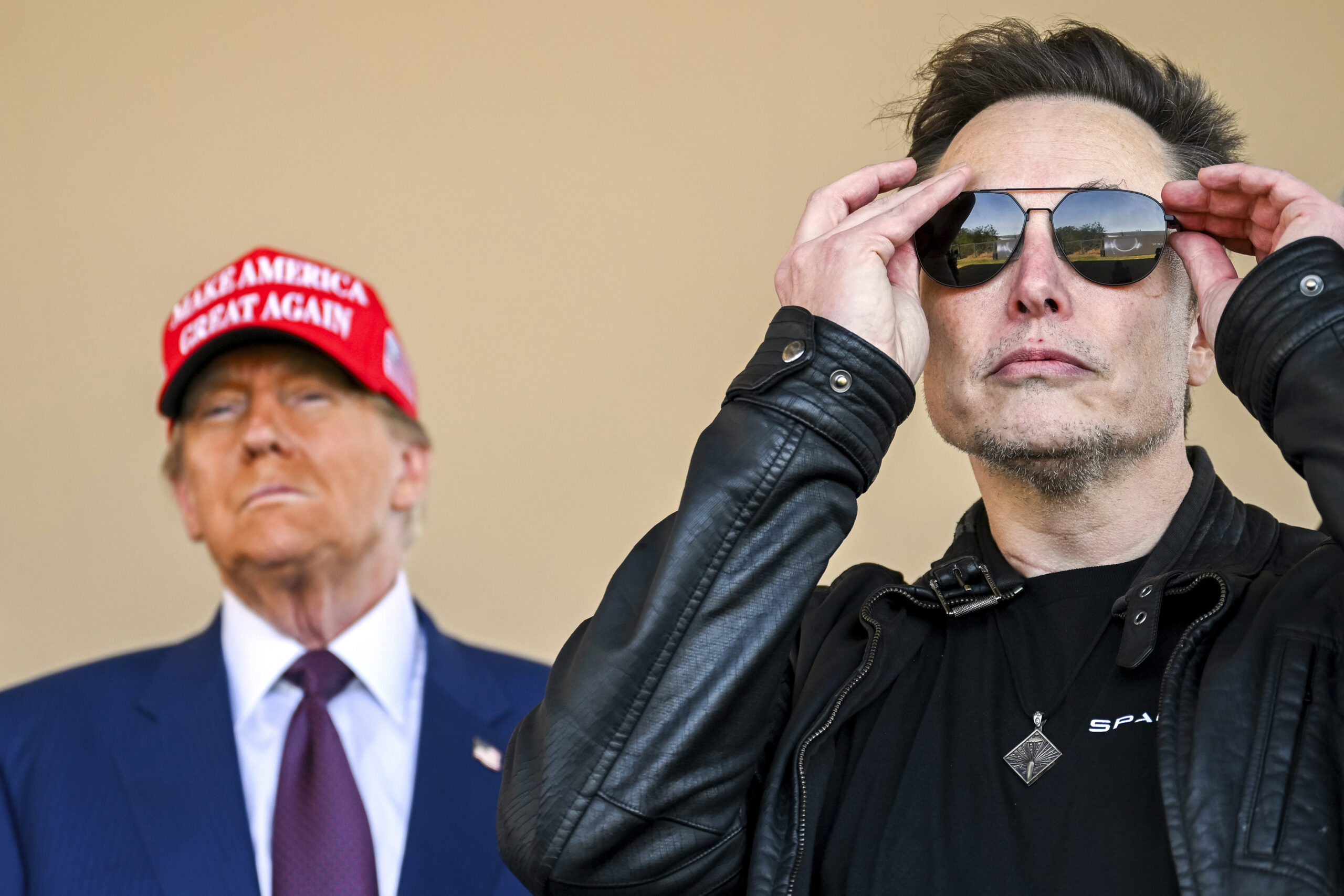
Trump-Musk Rift Raises Regulatory Risks for Elon Musk’s Business Empire

Elon Musk’s deteriorating political relationship with former President Donald Trump may expose his vast business empire to heightened regulatory scrutiny across multiple U.S. agencies. As political tensions escalate, the risk that regulators may more aggressively oversee Musk’s various companies has become a growing concern. Below is an overview of the key U.S. regulators with authority over Musk’s enterprises, and the potential challenges ahead:

Federal Communications Commission (FCC)
The FCC oversees the allocation of spectrum critical to SpaceX’s Starlink satellite internet service. In April, the FCC launched a review of its longstanding spectrum sharing rules, potentially affecting SpaceX’s access to expanded frequencies necessary to enhance its coverage. While the review aims to modernize spectrum usage, it may also result in stricter rules or delays for SpaceX, depending on the political climate and regulatory stance.

Food and Drug Administration (FDA)
The FDA regulates clinical trials for Neuralink, Musk’s brain implant company. While Neuralink has secured FDA approval for initial human trials, earlier safety concerns cited by the agency in 2023 remain relevant as trials progress. Any missteps or adverse events in ongoing studies could prompt the FDA to halt or delay the company’s development timeline.

Environmental Protection Agency (EPA)
SpaceX’s Starbase launch facility in Texas falls under the EPA’s jurisdiction for environmental compliance, particularly regarding wastewater discharge and environmental impact assessments under the National Environmental Policy Act. Rocket launches and tests, which have included multiple explosions, may invite further scrutiny, particularly if environmental groups or political adversaries exert pressure on federal agencies.

National Highway Traffic Safety Administration (NHTSA)
Tesla’s Full Self-Driving (FSD) technology remains under active investigation by NHTSA, especially regarding its performance under poor visibility conditions. The agency recently requested detailed information on Tesla’s robotaxi service set to launch in Austin, Texas, this month. Any regulatory findings could impact Tesla’s ability to scale its self-driving services.

Federal Aviation Administration (FAA)
The FAA proposed a $633,000 fine against SpaceX last year for license violations during launches. With ongoing investigations and the potential for future launch failures, the FAA holds significant leverage over SpaceX’s launch schedule and licensing requirements.

Securities and Exchange Commission (SEC)
Musk continues to face legal battles with the SEC, including litigation related to his 2022 acquisition of Twitter (now X). The regulator is also reportedly investigating Neuralink, raising additional legal exposure. Any adverse findings could impact Musk personally as well as his companies’ access to capital markets.

Federal Trade Commission (FTC)
The FTC oversees data privacy and antitrust compliance for social media platforms, including X. The agency is currently investigating whether certain media watchdog groups coordinated advertiser boycotts of X, a situation Musk claims is anti-competitive. The FTC’s broader mandate to protect consumer privacy could result in further investigations, particularly regarding data protection for minors.

Political Climate Raises Stakes
While these agencies have long held authority over Musk’s operations, his prior friendly ties to Trump may have provided a degree of political insulation. The recent breakdown in their relationship removes that buffer, potentially leaving Musk more exposed to adversarial regulatory action depending on future election outcomes and shifting political alliances.

With businesses spanning electric vehicles, space exploration, telecommunications, brain-computer interfaces, and social media, Musk’s cross-sector reach makes him uniquely vulnerable to regulatory actions from multiple federal agencies simultaneously.

Trump Hosts $148 Million Meme Coin Dinner, Drawing Global Crypto Elite and Political Backlash

Wealthy foreign investors gathered at Trump National Golf Club near Washington, D.C., on Thursday for a high-profile dinner celebrating holders of the $TRUMP meme coin, a cryptocurrency backed by the Trump family. The event attracted more than 220 guests from around the world and generated an estimated $148 million in meme coin purchases—fueling both significant profits for a select few and fierce criticism from lawmakers and watchdog groups.

As Donald Trump arrived via Marine One, protestors outside the club decried the event with signs reading “Stop crypto corruption” and “America is not for sale.” Inside, top-25 meme coin holders who spent over $111 million combined were granted VIP access, a private cocktail reception, and luxury gifts, including $100,000 Trump-branded tourbillon watches.

Among the attendees was Justin Sun, a China-born crypto billionaire and the top $TRUMP coin holder, whose $18.5 million wallet earned him first place in the coin contest. Sun is also an adviser to World Liberty Financial, the Trump family’s crypto platform, which—along with an affiliated firm—controls 80% of the remaining $TRUMP coin supply and has earned more than $320 million in fees so far.

A menu posted on social media revealed a lavish meal of filet mignon, halibut, and lava cake served on gold-lettered cards. The event culminated in an after-party dubbed “Meme The Night,” hosted by Singapore-based MemeCore. Its co-founder, “Ice,” secured second place with a $16 million wallet.

Crypto Access Meets Political Outrage

Democratic lawmakers condemned the event as a “crypto grift” with opaque attendee lists and potential national security concerns. Senator Elizabeth Warren called the event “an orgy of corruption,” while Senator Chris Murphy raised alarm over anonymous guests like “Ogle,” a masked crypto security expert and contest winner, whose $3.6 million holding earned him 22nd place.

Republicans, meanwhile, were more measured. Senator Cynthia Lummis, a vocal crypto advocate, said the event gave her “pause,” hinting at discomfort over Trump’s expanding digital asset empire, which now includes a crypto exchange, stablecoin, bitcoin mining, and ETFs.

Winners and Losers

While top holders have profited close to $1.5 billion, analytics firms like Inca Digital and Bubblemaps report that 600,000 smaller wallets have lost a total of $3.87 billion, with $117 million in losses occurring after the dinner announcement. Analysts warn of a steep wealth disparity within the token’s community.

As political scrutiny mounts, Democrats are pushing legislation to ban presidents and lawmakers from owning or promoting crypto products. But with Republicans holding congressional majorities, chances of passing such bills remain slim in the near term.

Despite the controversy, Trump appeared confident during his speech:

“The Biden Administration persecuted crypto innovators. We’re bringing them back into the USA where they belong.”

Elon Musk Faces Fraud Lawsuit Over Delayed Twitter Stake Disclosure

Elon Musk must face a fraud lawsuit after a U.S. judge ruled that shareholders sufficiently alleged that he defrauded them by delaying the disclosure of his Twitter stake, now known as X. U.S. District Judge Andrew Carter in Manhattan rejected Musk’s attempt to dismiss the case, which was brought by former Twitter shareholders, including the Oklahoma Firefighters Pension and Retirement System.

The lawsuit claims that Musk’s delayed SEC filing on his initial 5% Twitter stake, which was not disclosed until 11 days after the March 24, 2022, deadline, caused shareholders to sell their stocks at artificially low prices, ultimately costing them more than $200 million. Musk’s eventual filing revealed that he had acquired a 9.2% stake, which sent Twitter shares up by 27% in early April 2022.

Judge Carter found that Musk’s filing and his tweets about potentially creating a Twitter rival or altering the platform’s logo could have misled investors into thinking Musk was making a “passive” investment and did not intend to take over the company. While some claims were dismissed, the case will proceed to explore whether Musk’s actions were fraudulent.