Yazılar

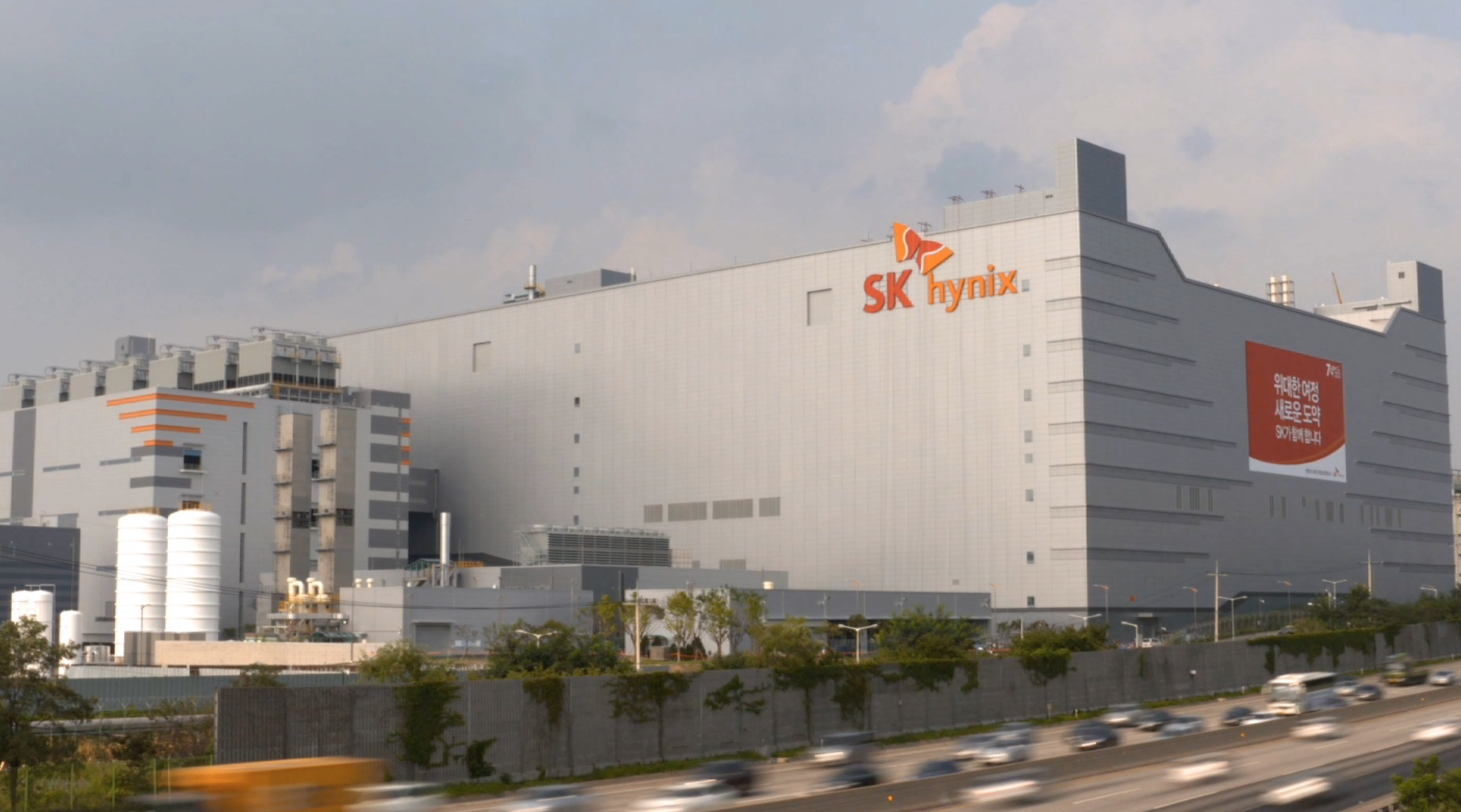
SBI Denies Report on Negotiations with SK Hynix and UMC for Japan Chip Plant

SBI Holdings (8473.T) has refuted a report from the Nikkan Kogyo newspaper that suggested the company was in talks with South Korea’s SK Hynix (000660.KS) and Taiwan’s UMC (2303.TW) to collaborate on a chip manufacturing plant in Japan’s Miyagi prefecture. A spokesperson for the financial firm clarified on Friday that the report was inaccurate.

According to the Nikkan Kogyo report, which did not specify sources, SBI was purportedly negotiating partnerships with SK Hynix for back-end DRAM processes and UMC for chips intended for the automotive sector. However, SBI has firmly denied these claims, stating that no such discussions are taking place.

Earlier, in September, SBI announced it was dissolving its joint venture with Taiwan’s Powerchip Semiconductor Manufacturing Corp (6770.TW). The companies had previously been working toward securing government subsidies to build a foundry in northern Japan. Following the dissolution of this partnership, SBI indicated that it would explore potential collaborations with other firms in the semiconductor industry.

Broadcom Shares Surge on Strong AI Chip Demand and Positive Forecast

Broadcom’s shares surged in after-hours trading on Thursday, jumping 14% following a solid second-quarter forecast that alleviated investor concerns over AI chip demand. The surge came after the company reported better-than-expected revenue and a strong outlook, especially in its AI semiconductor segment. The upbeat forecast contrasts with Marvell Technology’s disappointing outlook earlier in the week, which had spooked the market.

Broadcom expects revenue of approximately $14.90 billion for the second quarter, surpassing analyst estimates of $14.76 billion, according to data compiled by LSEG. CEO Hock Tan reassured investors that demand for its custom AI chips is robust, particularly from cloud computing companies seeking alternatives to Nvidia’s expensive processors. Broadcom anticipates second-quarter revenue from its AI semiconductors to reach $4.4 billion, driven by significant investments from hyperscale customers for data center expansion.

Broadcom is increasingly benefiting from the trend of large tech companies moving away from off-the-shelf chips toward custom-made processors to meet the growing complexity of AI tasks. CEO Tan revealed that the company now has four additional hyperscale customers working closely with it to develop custom chips, joining the three existing customers using its AI processors. This growing customer base has contributed to Broadcom’s estimated revenue potential of $60 billion to $90 billion by 2027.

Notably, Broadcom is working with OpenAI to finalize the first custom chip design to reduce its reliance on Nvidia. Analysts like Anshel Sag from Moor Insights & Strategy have noted that Broadcom is positioning itself as a key player for hyperscalers and other companies wanting to control their AI designs and costs by developing their own custom AI accelerators.

In terms of manufacturing, Broadcom is exploring Intel’s most advanced process, 18A, through test wafers. Summit Insights analyst Kinngai Chan highlighted that Broadcom is better positioned than many of its peers due to its diversified exposure to the AI market, with multiple AI-specific customers for its chips.

In its first-quarter earnings report, Broadcom posted revenue of $14.92 billion, surpassing analysts’ expectations of $14.61 billion. The company’s AI revenue saw a remarkable 77% increase, reaching $4.1 billion, driven by the growing adoption of its custom accelerators. Broadcom’s infrastructure software segment also experienced strong growth, with revenue rising by over 47% to $6.70 billion, beating the $6.49 billion anticipated by analysts.

Taiwan’s Legacy Chip Industry Faces Competition as China Expands Market Share

Taiwan’s legacy chipmakers, once dominant in the production of mature node chips, are grappling with increased competition from Chinese foundries that are rapidly expanding their market share. The shift began in 2015 when Taiwan’s Powerchip Technology entered a deal with China’s Hefei city to establish a foundry, Nexchip. Initially hoping to access the promising Chinese market, Powerchip now faces Nexchip as a major competitor, leveraging Beijing’s support and steep price discounts. This rivalry is most prominent in the $56.3 billion market for 28-nanometer chips, which are commonly used in sectors like automotive and display panels.

Chinese foundries, including Nexchip, Hua Hong, and SMIC, have aggressively expanded production capacities and undercut Taiwanese prices, further intensifying competition. The increased Chinese capacity has prompted concerns in Taiwan’s chip industry, with Powerchip and other Taiwanese companies like UMC and Vanguard International now focused on more advanced or specialized chip technologies.

Taiwanese chipmakers are struggling to maintain their foothold in the mature node segment as Chinese firms benefit from substantial state backing and lower margins. According to TrendForce, in 2024, China is projected to control 34% of global legacy chip production, surpassing Taiwan’s 43% share by 2027. The situation is made worse by the U.S. trade tensions, with U.S. President Donald Trump proposing up to 100% tariffs on semiconductors produced outside the U.S., which could impact Taiwanese exports.

Chinese foundries have become more aggressive in their efforts to capture business from Taiwanese clients. Many Chinese customers, particularly in consumer sectors like display panels, are increasingly opting to use Chinese fabs, following Beijing’s push for domestic supply chain localization. Taiwanese chip designers have acknowledged that they must adapt to survive, with some already shifting focus to more advanced technologies like 3D stacking, which combines logic and DRAM chips to enhance performance.

Despite the growing Chinese competition, some relief may come from the U.S. efforts to restrict China’s chip industry, particularly in light of rising geopolitical tensions. Taiwanese chipmakers are beginning to receive orders from international clients asking for chips to be made outside of China, a shift away from previous reliance on Chinese foundries.