Yazılar

Nvidia Says No Upfront Payment Required for H200 AI Chips

Nvidia said on Tuesday it does not require upfront payment for its H200 artificial intelligence chips, pushing back against reports that it had imposed unusually strict payment terms on Chinese customers.

In a statement to Reuters, Nvidia said it “would never require customers to pay for products they do not receive,” responding to a January 8 report that suggested the company was demanding full advance payment from Chinese buyers seeking access to its AI processors.

According to a source familiar with the matter, Nvidia’s standard commercial terms for Chinese clients have previously included advance payment requirements, though customers were sometimes permitted to place a deposit instead of paying the full amount upfront. The source added that, for the H200 chip, Nvidia has been more cautious in enforcing its conditions due to uncertainty over whether Chinese regulators would approve shipments.

Concerns over regulatory approval have been heightened by ongoing geopolitical tensions and export controls affecting advanced semiconductors. Any requirement for full prepayment would effectively shift financial risk from Nvidia to customers, forcing them to commit capital without assurance that Beijing would authorize the imports or that the chips could be deployed as planned.

The H200 is one of Nvidia’s most advanced AI accelerators, designed for large-scale data center workloads, and demand for the chip has surged globally as companies race to expand AI computing capacity.

Physical AI Takes Centre Stage at CES, but Humanoid Helpers Remain Distant

Just four years after the launch of ChatGPT brought artificial intelligence into the mainstream, CES in Las Vegas this week was dominated by talk of “physical AI” — robots, humanoids and autonomous systems that move AI beyond software and into the real world.

The annual technology show highlighted a clear shift by the global tech and auto industries from pure AI software toward hardware-driven applications. From robotics and autonomous driving to AI-powered home devices, exhibitors showcased visions of how AI could reshape daily life in the coming years.

Chip designer Arm Holdings said AI is fuelling a fresh wave of innovation and demand. Arm told Reuters it has reorganised its business to create a dedicated physical AI unit aimed at expanding into robotics. “AI is really driving a whole innovation and demand cycle,” said Chris Bergey, head of Arm’s PC and mobile unit.

Humanoid robots drew particular attention. Machines from companies including LG Electronics played poker, folded paper and danced with visitors. But their slow, carefully scripted movements underlined persistent hurdles such as limited processing power, battery constraints and difficulty handling real-world situations beyond pre-programmed tasks. Analysts said affordable, capable humanoid assistants remain years away.

AI HARDWARE MEETS SOFTWARE
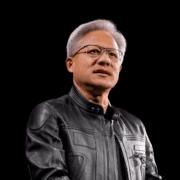
Major tech players used CES to underline the convergence of AI hardware and software. Lenovo hosted a high-profile event featuring Jensen Huang and Lisa Su, unveiling its Qira AI assistant designed to work across PCs, phones and wearables, including services from companies such as Expedia.

Meta Platforms showcased upgrades to its Ray-Ban Display glasses and Neural Band, while Google introduced its Gemini AI model for TVs and smart home devices.

Alongside headline products, CES also featured more questionable AI applications. From AI-powered hair clippers and dry-cleaning gadgets to digital pets and talking avatars, analysts noted that many devices previously branded as “smart” now simply carried the AI label.

CHIPS UNDER THE HOOD
Behind the scenes, chipmakers stressed the need to move AI workloads from the cloud onto devices to control costs. Intel launched its Panther Lake laptop chip, built using its new 18A manufacturing process, while AMD unveiled new processors for AI PCs.

Still, questions remain over consumer demand. “The general consumer is still not aware of what an AI PC really means,” said Ben Bajarin of Creative Strategies, adding that it could take time before the benefits become clear.

While CES made clear that physical AI is the industry’s next big push, experts agreed that truly useful, affordable humanoid servants are still a long way off.

TSMC Fourth-Quarter Revenue Jumps 20%, Beating Market Forecasts

TSMC, the world’s largest contract chipmaker, reported a 20.45% year-on-year rise in fourth-quarter revenue on Friday, beating market expectations as booming demand for artificial intelligence applications lifted sales.

Revenue for the October–December period reached T$1.046 trillion ($33.11 billion), based on Reuters calculations from the company’s monthly disclosures, up from T$868.46 billion a year earlier. The result topped an LSEG SmartEstimate of T$1.036 trillion and came within the company’s previous guidance range of $32.2 billion to $33.4 billion issued in October.

TSMC has been one of the biggest beneficiaries of the global AI boom, supplying advanced chips to customers such as Nvidia and Apple. Strong AI-related demand has more than offset softer orders for chips used in consumer electronics, where pandemic-driven demand has faded.

The company is scheduled to report full fourth-quarter earnings on January 15, when it is expected to provide updated guidance for the current quarter and the full year. Investors will be watching closely for details on capital expenditure plans and revenue growth expectations.

TSMC’s Taipei-listed shares rose 44.2% in 2025, significantly outperforming the broader Taiwanese market, which gained 25.7%. The strong performance mirrors broader momentum in the semiconductor supply chain driven by AI. Earlier this week, Foxconn, the world’s largest contract electronics maker and a key Nvidia server supplier, also reported robust fourth-quarter sales.