Yazılar

China Threatens Legal Action Over U.S. Chip Restrictions Targeting Huawei

China has issued a sharp warning, stating that it may pursue legal consequences against individuals or organizations that participate in enforcing or complying with U.S. restrictions aimed at limiting the use of advanced Chinese semiconductors.

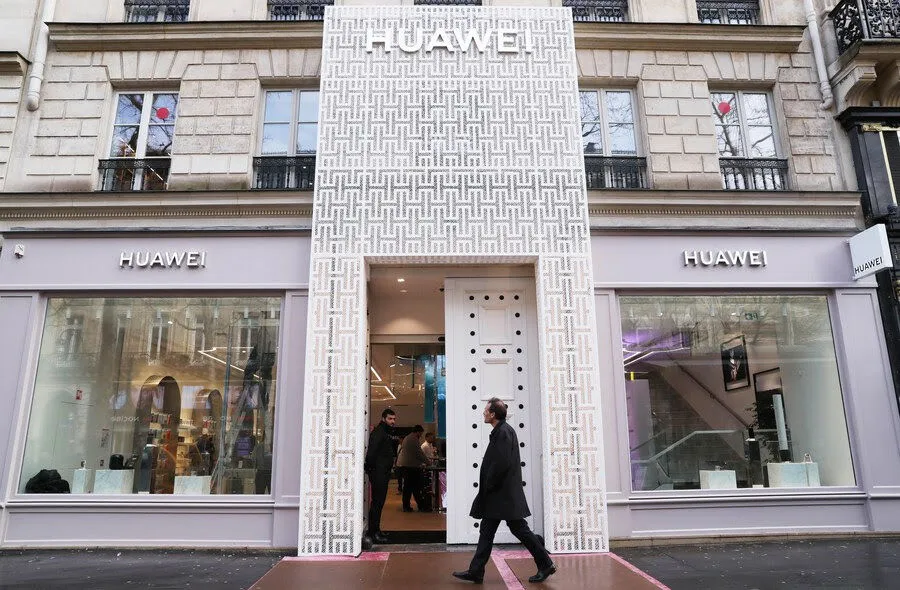
The statement, released by China’s Ministry of Commerce, comes in response to new U.S. guidance issued last week. That guidance warned companies they may violate U.S. export controls if they use Ascend AI chips made by Shenzhen-based tech giant Huawei.

China accused the U.S. of engaging in “discriminatory restrictive measures” and warned of “corresponding legal liabilities” for those who assist or implement such policies. The ministry urged Washington to respect international trade laws and to stop actions that disrupt global supply chains or unfairly target Chinese firms.

The escalation reflects mounting tensions in the global tech war between the U.S. and China. Huawei, which has long been a focal point in this dispute, continues to face export restrictions over alleged national security concerns. The new U.S. advisory targets the AI segment — a crucial area of technological competition — where Huawei’s Ascend chips are gaining traction.

While the Chinese statement did not specify what form legal action might take, the warning suggests that Beijing could respond with domestic legal challenges or retaliatory trade and regulatory measures against companies perceived as cooperating with U.S. sanctions.

Micron’s Shares Drop as Margin Forecast Dampens AI Prospects

Micron Technology’s shares dropped 8% on Friday after the company issued a disappointing margin forecast, overshadowing strong quarterly revenue expectations driven by growing demand for its semiconductors used in artificial intelligence applications.

Despite being one of only three major suppliers of high-bandwidth memory (HBM) chips for data-heavy AI tasks, Micron’s forecast for adjusted gross margin fell below expectations. The company cited lower pricing for consumer memory chips, particularly NAND flash, as a key factor affecting profitability. NAND flash memory chips, used in products like smartphones and personal computers, remain in oversupply due to aggressive buying during the pandemic, which has led to weak pricing.

Micron projected a third-quarter adjusted gross margin of around 36.5%, slightly below analysts’ forecast of 36.9%. This would represent a 3 percentage-point drop from the previous quarter. The company’s chief business officer, Sumit Sadana, acknowledged the ongoing challenges in the NAND market, with the oversupply continuing to put pressure on margins. Micron has also been reducing NAND production, which has led to underutilization and higher fixed costs per unit.

However, the company’s prospects in AI remain strong, with a forecasted revenue boost driven by high demand for its HBM chips, particularly from key players like Nvidia. Morningstar analysts highlighted HBM as a key growth driver for Micron, with AI and data center demand expected to continue.

Korea’s NH Venture Targets Investments in Israeli Tech Startups

NH Venture Investment, a branch of NongHyup Financial Group (NH), is looking to invest millions of dollars in Israeli tech startups, aiming to combine Israel’s innovative technologies with Korea’s manufacturing capabilities to create larger global companies. Established in 2019, NH Venture seeks to build on Israel’s deep-tech expertise, including areas such as artificial intelligence, semiconductors, defence, healthcare, and quantum computing.

In July 2024, NH Venture teamed up with OurCrowd, an Israeli investment platform, to establish the Trepont Fund—an $80 million initiative designed to invest in 30 startups across Israel, Korea, and Silicon Valley. CEO Hyun Jin Kim confirmed that NH Venture plans to invest at least $40 million of the fund specifically in Israeli startups. One of the company’s notable investments is in Kardome, an AI voice recognition company that collaborates with Korean giants LG and Hyundai Motors.

During his recent visit to Israel, Kim met with several startups, including Hailo, an Israeli unicorn in the AI space. Kim emphasized the potential for strong collaboration between Israeli innovation and Korean manufacturing, particularly to penetrate the U.S. market. Despite concerns around the ongoing Israel-Hamas conflict, Kim noted that innovation has remained constant in the region, and NH Venture is not deterred by the situation.

The fund is specifically targeting early-stage companies that have already developed proven products. Ely Razin, a partner at OurCrowd, highlighted that Korean interest in Israeli startups has grown, especially following the Israel-Hamas ceasefire.

The relationship between Israel and Korea is well-established, with Samsung, LG, and Hyundai all having venture arms in Israel. Both countries are among the global leaders in research and development.

Seong Ryong Kang, CEO of the Korea-Israel Industrial R&D Foundation, believes the cooperation between the two countries is more seamless compared to other Asian nations due to their complementary industries, and the presence of Korean venture firms in Israel underscores a strong willingness to collaborate.