Yazılar

India Rebukes X Over “Tom, Dick, and Harry” Remark in Ongoing Court Battle on Content Takedowns

A legal clash between Elon Musk’s X (formerly Twitter) and the Indian government intensified on Tuesday after X’s lawyer made a controversial remark suggesting that “every Tom, Dick, and Harry” government official could issue takedown orders on online content. The statement drew a sharp and immediate rebuke from India’s Solicitor General Tushar Mehta, escalating a long-standing standoff over digital content regulation.

The remark came during a hearing at the Karnataka High Court, where X is challenging a government-run website that it alleges serves as a “censorship portal.” The Indian government, however, defends the portal as a tool for swiftly notifying social media platforms of legal obligations under content moderation laws.

X’s lawyer, K.G. Raghavan, cited a recent example where the Indian Railways ordered the takedown of a video showing a car being driven on a railway track—content X considered newsworthy. “This is the danger… if every Tom, Dick, and Harry officer is authorised,” he argued.

Solicitor General Mehta strongly objected, stating, “Officers are not Tom, Dick, or Harry… they are statutory functionaries.” He further defended India’s regulatory approach, saying, “No social media intermediary can expect completely unregulated functioning.”

The Indian Information Technology Ministry and X did not issue public responses to Reuters’ inquiries following the courtroom exchange.

India has become a strategically important market for Musk’s expanding empire, particularly with upcoming plans to launch Starlink and Tesla in the country. However, X’s friction with Prime Minister Narendra Modi’s administration over content moderation continues to cast a shadow over those ambitions.

The roots of the conflict trace back to 2021, when X refused to comply with Indian orders to block specific tweets. Although it eventually yielded to the demands, the platform has continued to contest the legality of those directives in Indian courts.

Tuesday’s court exchange underscores the ongoing tension between tech giants and sovereign governments over who has the final say in regulating online content—and how far that power should extend.
EU Probes Corporate Structure of Elon Musk’s X Months After xAI Acquisition

The European Union announced on Thursday that it is seeking further information from Elon Musk’s social media platform X regarding recent changes to its corporate structure. This inquiry comes months after the platform was acquired by Musk’s xAI in a $33 billion deal.

A spokesperson for the European Commission, the EU’s executive branch, stated, “We are following closely changes in the corporate structure of X, as we would changes in any other designated platform.” However, the spokesperson did not confirm Bloomberg News reports suggesting that regulators are considering potential fines against X under the Digital Services Act (DSA).

Bloomberg reported that the regulator might announce a fine on X before its summer recess in August for alleged violations under the DSA, though such a timeline could be delayed.

Representatives from both xAI and X did not immediately respond to Reuters’ requests for comment.

Under the DSA, companies found in breach can face fines of up to 6% of their global turnover, with repeat offenders potentially banned from operating within Europe.

Earlier this month, X updated its blue checkmark disclaimer to preempt a possible substantial fine from EU antitrust authorities. The European Commission had issued preliminary findings in July last year stating that X violated the DSA’s rules on deceptive design by converting the blue checkmark into a paid verification, thereby misleading users about credibility. X has disputed this assessment.

Brazil’s Supreme Court Moves Toward Holding Social Media Platforms Accountable for User Posts

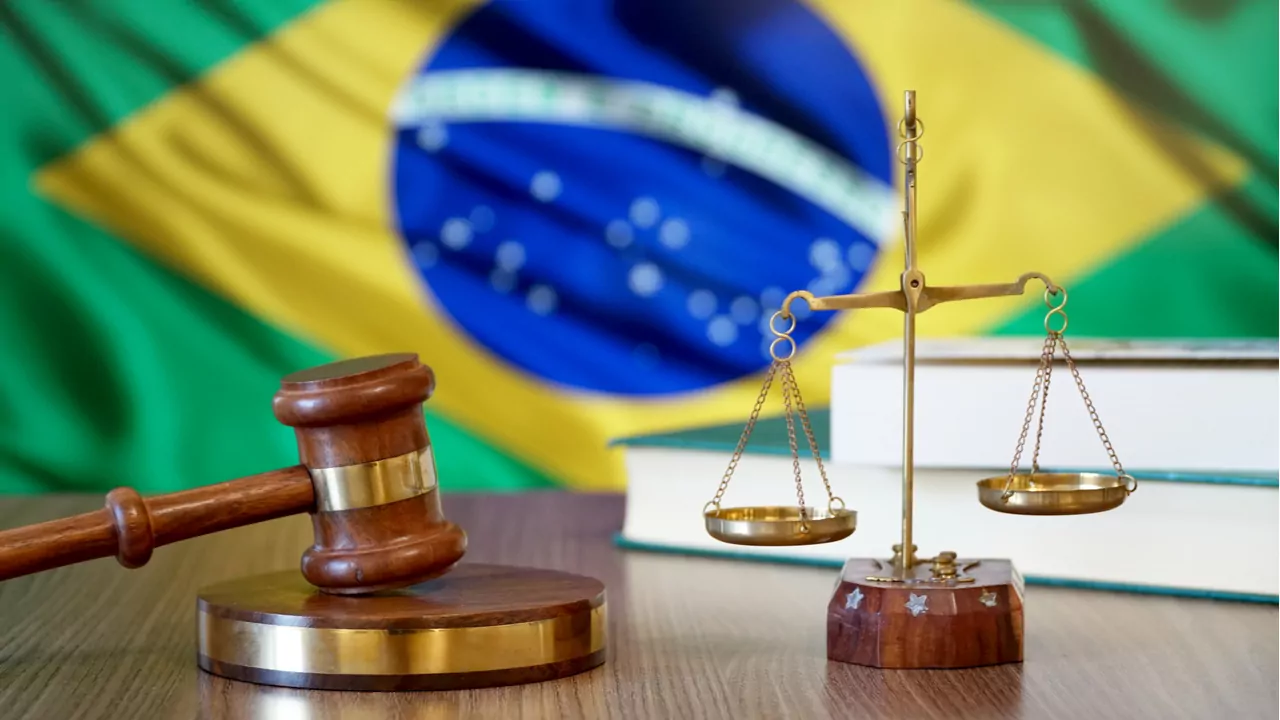
Brazil’s Supreme Court ruled on Wednesday that social media platforms may be held responsible for certain illegal content posted by users on their sites, though key details of the ruling remain unresolved. In a preliminary vote, six of the 11 justices favored holding platforms accountable, which could lead to fines for companies that fail to remove unlawful posts.

This decision affects major players like Meta’s Facebook and Instagram, TikTok, Elon Musk’s X, and Alphabet’s Google in Brazil’s vast market of over 200 million users. Currently, under Brazilian law, platforms are only liable if they ignore a court order to remove content. The court majority sees this as a “veil of irresponsibility,” as Justice Gilmar Mendes stated, since companies are not presently held accountable even when aware of illegal content.

Meta warned in a 2024 statement that such a ruling could make platforms liable for nearly all types of content without prior notification. Google expressed openness to improving the law but emphasized the need for clear procedures to avoid legal uncertainty and indiscriminate content removal. TikTok and X representatives in Brazil did not respond to requests for comment.

The court has yet to define which content types would be considered illegal and is working towards consensus. Four judges are yet to vote in this ongoing trial, with the next session scheduled for Thursday. Changing earlier votes is possible but rare.