Yazılar

Trump–Xi call breathes life into TikTok U.S. asset sale talks

A call between U.S. President Donald Trump and Chinese President Xi Jinping has revived hopes for a deal that would see ByteDance divest TikTok’s U.S. assets, though key details remain unsettled.

Trump posted on Truth Social that he appreciated Xi’s “approval of the TikTok deal,” though China’s readout stopped short of endorsing a sale. Beijing instead emphasized respect for market-based negotiations that comply with Chinese law. Analysts said the difference in tone suggests both leaders want to project progress while keeping leverage in ongoing talks.

The tentative breakthrough comes after months of deadlock. Congress mandated ByteDance sell TikTok’s U.S. assets by January 2025 or face a nationwide ban, but Trump has repeatedly extended deadlines, citing TikTok’s popularity with American voters and its political value. The latest extension runs until December 19.

Still, major hurdles remain: the ownership structure, the degree of Chinese control over TikTok’s algorithm, and whether Congress will sign off. Reuters has reported that any U.S. version of TikTok under new ownership would likely continue using ByteDance’s algorithm, a sticking point for lawmakers worried about data security and influence operations.

China blocked a similar deal earlier this year amid trade tensions, and experts say it may do so again if U.S. demands cross Beijing’s red lines. “The contours of the conversation better align with China’s interests than U.S. interests,” said Scott Kennedy of CSIS, noting structural reforms were not on the table.

Wendy Cutler of the Asia Society Policy Institute called the talks “positive and constructive” but stressed that the algorithm question remains unresolved.

For now, the deal remains fragile: Beijing wants to protect its tech assets, Washington wants to claim victory on national security, and Trump is balancing political calculations against congressional pressure. Months of negotiations still lie ahead.

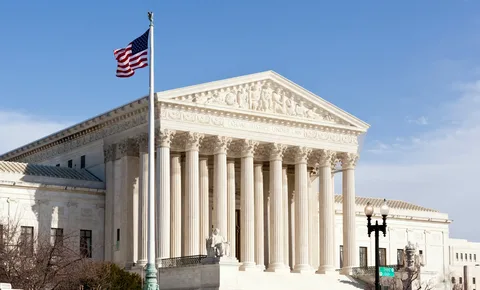
U.S. Supreme Court Lets Mississippi Social Media Age-Check Law Stand for Now

The U.S. Supreme Court on Thursday declined to temporarily block a Mississippi law requiring social media users to verify their age and obtain parental consent for minors, in a challenge filed by NetChoice, a trade group representing companies including Meta (META.O), Alphabet’s YouTube (GOOGL.O), and Snapchat (SNAP.N). The law remains in effect while NetChoice’s broader legal challenge, which argues it violates the First Amendment, continues in lower courts.

Justice Brett Kavanaugh noted in a statement that the Mississippi law is likely unconstitutional but said NetChoice had not met the high standard needed to halt enforcement at this stage. Paul Taske, co-director of the NetChoice Litigation Center, described the Supreme Court’s decision as “an unfortunate procedural delay” but expressed confidence that the challenge would ultimately succeed.

Mississippi’s attorney general welcomed the order, saying it allows “thoughtful consideration” of the law. The legislation, passed unanimously by the state legislature, requires platforms to obtain “express consent” from a parent or guardian before a minor can open an account and mandates “commercially reasonable” age verification. Violations can carry civil penalties of up to $10,000 per incident and potential criminal penalties under state deceptive trade practices laws.

The case comes after U.S. District Judge Halil Suleyman Ozerden initially blocked enforcement for some NetChoice members, but the 5th U.S. Circuit Court of Appeals allowed the law to take effect. Similar measures have been blocked in courts in seven other states. Technology companies maintain that their platforms already include extensive content moderation and parental controls to protect minors.

Mississippi defended the law as a “common” method to safeguard children online, emphasizing parental consent and age verification as key protective measures.

Pinterest Profit Miss Overshadows Strong Gen Z User and AI-Driven Growth

Pinterest reported second-quarter results that missed profit expectations, causing shares to drop over 11% in after-hours trading despite strong revenue and user growth. The company posted adjusted earnings per share of 33 cents, below analysts’ estimate of 35 cents.

Pinterest’s revenue grew 17% year-over-year to $998.2 million, surpassing expectations of $974.8 million. The platform’s user base has expanded significantly, with Gen Z now making up more than half of its users, fueling growth. Additionally, Pinterest’s AI-powered advertising suite, Performance+, has gained traction among mid-market advertisers, cutting campaign creation times by half.

Looking ahead, Pinterest forecast third-quarter revenue between $1.03 billion and $1.05 billion, roughly in line with analyst expectations but signaling no acceleration from the previous quarter’s growth rate. Analysts noted that high market expectations may have contributed to the selloff following the earnings report.

The company faces competitive pressure from peers like Meta and Reddit, which reported strong quarterly results, while Snap saw its slowest revenue growth in over a year. Changes in U.S. import duty rules also tightened advertising budgets for smaller platforms like Snap, indirectly benefiting larger platforms like Pinterest.

Pinterest’s ad pricing fell 25% year-over-year, impacted by a growing share of international ad impressions where rates are lower. The company’s monthly active users (MAUs) reached 578 million, up 11% year-over-year and beating estimates, though user growth slowed compared to the previous quarter.

Analysts suggest that Pinterest’s user base may be nearing saturation despite ongoing AI enhancements aimed at driving growth.