
Yazılar

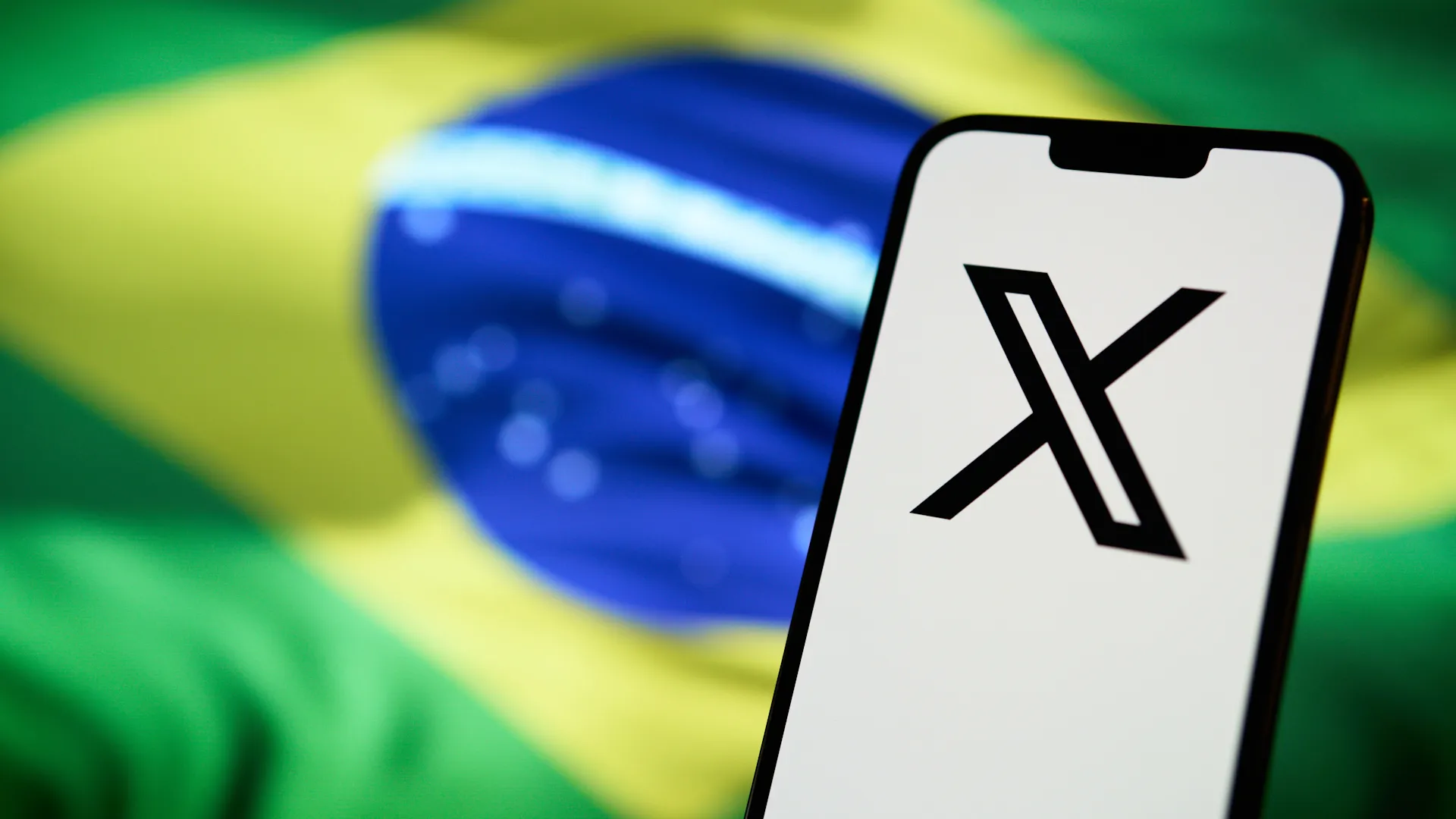
Brazil Orders Suspension of Elon Musk’s X Platform Amid Legal Feud

Brazil’s telecommunications regulator announced on Friday that it is moving to suspend access to Elon Musk’s X platform, formerly known as Twitter, following a court order from Supreme Court Justice Alexandre de Moraes. This suspension was triggered after X missed a deadline to appoint a legal representative in Brazil, as required by law.

Musk has fiercely opposed the court’s ruling, accusing Justice Moraes of attempting to enforce unjustified censorship. Moraes, however, has maintained that regulation is necessary to curb hate speech on social media platforms. The judge’s decision is the latest development in a prolonged dispute with Musk, which has now escalated to the point of a potential shutdown of X in one of its largest markets.

Despite the court order, X remained accessible in Brazil late on Friday. Some users, however, reported that their access had already been blocked by local telecommunications carriers, which planned to fully enforce the suspension by midnight.

In addition to the suspension, the court also froze the bank accounts of Musk’s satellite internet provider, Starlink, in Brazil. The judge has ordered X to pay more than $3 million in fines and to comply with other legal mandates before service can be restored in the country. Telecommunications regulator Anatel has been tasked with implementing the suspension, which will require telecommunication companies to block X’s traffic and prevent users from bypassing the ban using virtual private networks (VPNs). Moraes warned that those who continued to access X via VPNs could face daily fines of up to 50,000 reais (around $9,000).

Picture background

While Apple and Google were initially ordered to remove X from their app stores and implement anti-VPN measures, Justice Moraes later reversed this part of the order. Both companies declined to comment.

Brazil’s Supreme Court judges wield considerable power to make unilateral decisions, and in this case, Moraes’ stance has been supported by a majority of the 11-member court. The roots of the conflict trace back to a previous Moraes order demanding X block accounts accused of spreading misinformation and hate speech, which Musk criticized as censorship. Although Musk closed X’s offices in Brazil in response, he has continued to make the platform available to users in the country.

Musk, who also owns 40% of SpaceX and leads electric vehicle giant Tesla, derided Brazil’s President Luiz Inacio Lula da Silva as Moraes’ “lapdog,” further heightening tensions. President Lula responded firmly, stating that all companies, regardless of their wealth or influence, must comply with Brazilian law.

The situation remains tense as Brazil pushes for compliance from Musk’s ventures, with no signs of backing down from the court or government.

Elon Musk’s X Lawsuit Against Media Matters Advances to Trial After Texas Judge Denies Dismissal Request

A federal judge in Texas has ruled that Elon Musk’s X, the social media platform formerly known as Twitter, can proceed to trial in its lawsuit against the media watchdog group, Media Matters. U.S. District Judge Reed O’Connor denied a request from Media Matters to dismiss the lawsuit, clearing the way for the case to be heard in court with a trial date set for April 7.

X’s lawsuit stems from a report published by Media Matters in November, which claimed that advertisements from major brands such as Apple, IBM, and Disney were appearing alongside hateful content on the platform. Following the report, several of these companies suspended their advertising campaigns on X, prompting the lawsuit. X’s legal team has accused Media Matters of fabricating the report to mislead advertisers, alleging that the publication had a financial motive in its portrayal of the platform and its content.

X’s attorneys argue that Media Matters’ report was not only misleading but also intentionally deceptive, causing financial harm to the platform by driving away advertisers. They claim the publication was designed to damage X’s reputation and undermine its advertising revenue. As a result, X is seeking damages from Media Matters and two of its staff members, accusing them of contributing to the financial losses incurred by the platform due to the paused advertising campaigns.

Picture background

Media Matters, however, has dismissed the lawsuit as “frivolous.” Angelo Carusone, the president of Media Matters and one of the defendants in the case, stated that the lawsuit was an attempt by Musk to intimidate critics and suppress their freedom of speech. Carusone argued that the legal action was part of a broader effort by X to silence media outlets that scrutinize its practices.

Judge O’Connor’s decision marks a significant victory for X, allowing the platform’s claims to be heard in court. In his ruling, O’Connor stated that X had sufficiently detailed its case, justifying its claims against the media watchdog. This is not the first time O’Connor has been involved in legal disputes surrounding X and its operations. Earlier this year, the judge dismissed a separate attempt by Media Matters to compel Musk to disclose Tesla’s involvement in the case, rejecting the argument that Tesla had a direct financial stake in the outcome.

In another legal matter, O’Connor recently recused himself from an antitrust lawsuit filed by X against a global advertising association and its member companies, including Unilever, Mars, and CVS Health. His recusal followed the disclosure that he held investments in Unilever, which prompted questions of a potential conflict of interest.

As the trial approaches, it will bring further attention to the ongoing legal battles Musk’s platform faces, particularly surrounding its efforts to balance free speech and advertising on its platform.

The “Raw-Dogging” Trend: Is Enduring Long Flights Without Entertainment a Sign of Resilience or Foolishness?

Recently, a growing travel trend known as “raw-dogging” has captured the attention of social media users and health experts alike. This trend involves passengers enduring long flights without any in-flight entertainment, books, music, or even basic comforts like food and water. Advocates of this practice view it as a test of mental fortitude and resilience, while critics warn of its potential health risks.

Damion Bailey, a 34-year-old from Miami, Florida, recently boasted about his personal achievement of enduring a 13-and-a-half-hour flight from Shanghai to Dallas without any distractions. “It’s quite tough, honestly,” Bailey shared on Instagram, highlighting the challenge he sets for himself. Similarly, Australian music producer Torren Foot showcased his own experience on TikTok, describing a 15-hour flight to Melbourne with “no music, no movies, just flight map.”

This trend also sees some participants going to extremes, such as avoiding food, water, and even bathroom breaks. Manchester City footballer Erling Haaland recently joined the conversation, claiming he survived a seven-hour flight with “no phone, no sleep, no water, no food,” although his adherence to these self-imposed rules was questioned by some.

The appeal of “raw-dogging” seems to lie in its promise of proving one’s mental strength and ability to handle discomfort. For many, it offers a way to disconnect from the constant barrage of modern technology and reflect quietly. The term “raw-dogging,” which originally had a different connotation, has come to symbolize doing something without any external support or comfort.

However, health experts are raising alarms about the risks associated with this trend. Dr. Gill Jenkins, a GP and medical escort, criticizes the practice, noting that it disregards essential health precautions for long-haul flights. She warns that dehydration and prolonged immobility can lead to deep vein thrombosis, especially when combined with neglecting basic needs like using the restroom.

Conversely, some argue that embracing solitude and boredom during a flight can be beneficial. Business psychologist Danielle Haig suggests that “raw-dogging” reflects a broader desire for balance and mental clarity in a technology-driven world. She believes it allows individuals to reconnect with themselves and gain new perspectives.

Sandi Mann, an academic and author, also supports the idea of embracing boredom as a way to enhance relaxation and creativity. She acknowledges, however, that while limited stimulation can be good, it is crucial to balance this with practical health considerations. “Allowing yourself to be bored for a few hours is beneficial,” she says, but emphasizes that health risks should not be ignored.

The trend is not universally embraced. Critics describe it as “self-inflicted torture” and question the authenticity of claims made by participants. Some social media users have expressed disappointment, labeling the experience as overrated and mentally taxing.

In summary, while “raw-dogging” long flights might appeal to those seeking a test of personal endurance or a break from constant stimulation, it also presents significant health risks. Balancing the mental benefits with practical considerations remains crucial for anyone considering this trend.