Yazılar

India Grants Conditional Approval for Starlink’s Satellite Internet Services

India has granted conditional approval to SpaceX’s Starlink to begin offering satellite-based internet services in the country, according to a report by CNBC-TV18 on Thursday.

Key Developments:

  • The conditional nod allows Starlink to progress toward commercial operations, pending fulfillment of regulatory requirements.

  • Starlink had been awaiting licenses since 2022, with delays linked to national security concerns and policy disagreements over satellite spectrum allocation.

  • The decision follows Starlink’s March agreements with major Indian telecom providers: Bharti Airtel, Vodafone Idea, and Reliance Jio.

Background:

  • A policy tussle between Elon Musk and Mukesh Ambani over satellite spectrum allocation had stalled progress. The Indian government ultimately supported the open allocation model advocated by Musk.

  • India, the world’s most populous nation, presents a massive market opportunity for expanding high-speed connectivity, especially in rural and remote areas.

The conditional approval paves the way for Starlink to compete with Amazon’s Project Kuiper and OneWeb (backed by Bharti) in a race to dominate India’s satellite broadband future.

SpaceX Launches Europe’s First Reentry Capsule into Orbit on Bandwagon-3 Rideshare Mission

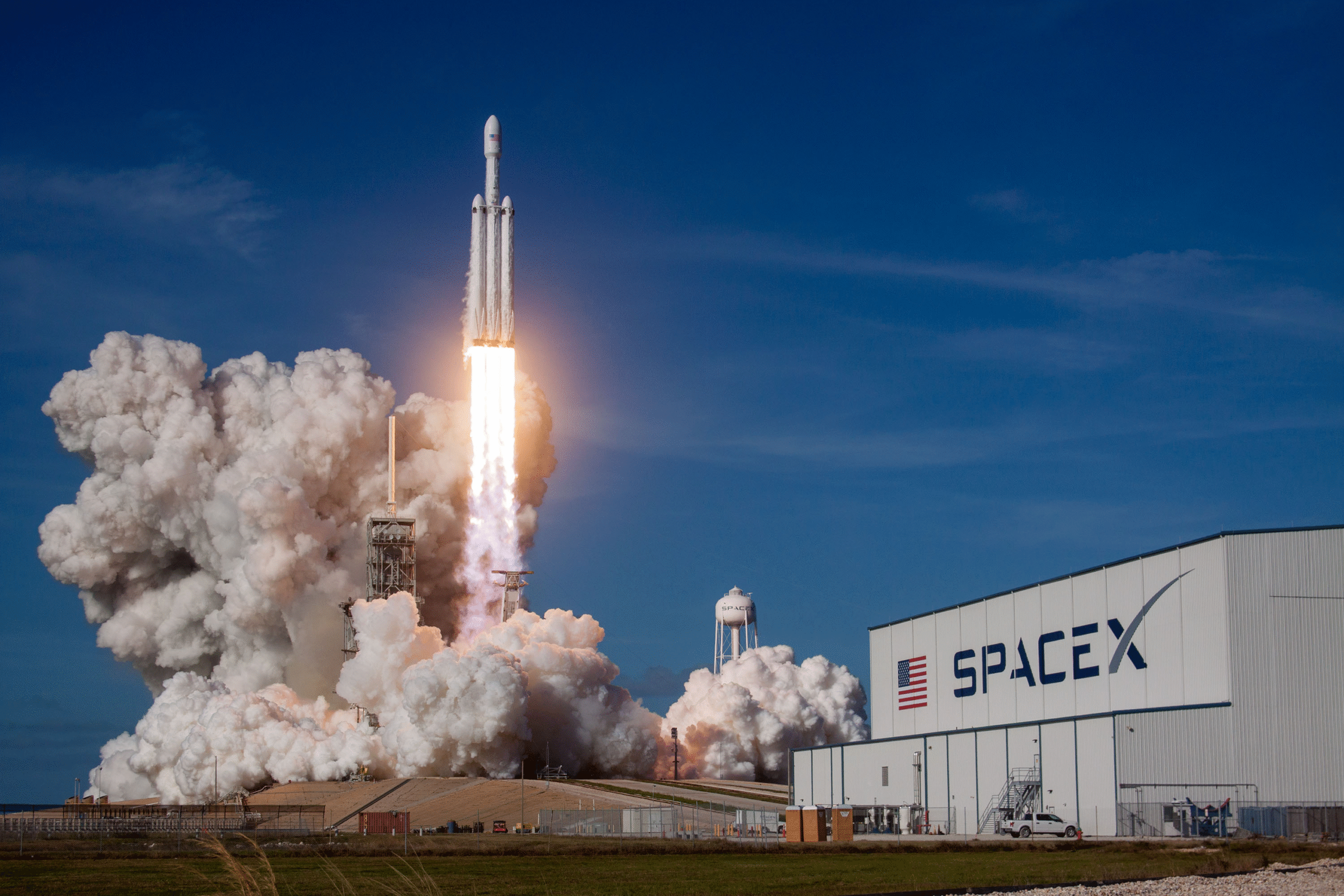
SpaceX launched the Bandwagon-3 mission from Cape Canaveral Space Force Station, marking a significant milestone in European space exploration. A Falcon 9 rocket carried multiple payloads into orbit, including Phoenix 1, Europe’s first private reentry capsule developed by the German company Atmos Space Cargo. This historic mission is set to make Phoenix 1 the first European capsule designed to return from space after just one orbit, splashing down approximately 1,200 miles offshore of Brazil. This achievement positions Europe at the forefront of private space reentry technology.

Phoenix 1 is a critical development in European aerospace, as it marks the first-ever atmospheric reentry attempt by a European private entity. The capsule is equipped with innovative technologies, including Atmos Space Cargo’s inflatable heat shield, designed to safely return high-value cargo from space. The company’s mission aims to revolutionize space logistics, enabling advancements in areas such as microgravity research, in-orbit manufacturing, defense, and life sciences. The successful reentry and splashdown of Phoenix 1 would lay the groundwork for future commercial applications, boosting the European space sector’s capabilities in these critical fields.

The Bandwagon-3 mission also carried several other significant payloads, including 425Sat-3, operated by South Korea’s Agency for Defence Development, and Tomorrow-S7, a weather satellite from Tomorrow Companies Inc. These diverse payloads demonstrate SpaceX’s continued commitment to providing affordable and flexible access to low Earth orbit through its rideshare program. The Bandwagon series, which began in April 2024, complements SpaceX’s established Transporter series, further enhancing the company’s ability to support various space missions, whether large or small, and reinforcing the trend toward cost-effective space exploration.

Phoenix 1’s launch on the Bandwagon-3 mission highlights a shift in European space logistics towards scalable reentry missions. The success of Phoenix 1 could have profound implications for European space companies, proving the feasibility of private space reentry capabilities. This demonstration would not only validate the Phoenix program but also open the door for future collaborations between commercial entities and research institutions, paving the way for a new era of space exploration and logistics with a focus on reusability and cost efficiency.

SpaceX Set to Launch NASA Cargo Mission to the International Space Station This Month

NASA has officially scheduled the next commercial resupply mission to the International Space Station (ISS), with SpaceX once again taking the lead. The mission, known as CRS-32, is set to launch on April 21, 2025, at 4:15 a.m. EDT (1:45 p.m. IST). SpaceX’s Dragon spacecraft will be packed with more than 6,400 pounds (about 2,902 kilograms) of supplies, science tools, and hardware vital for ongoing experiments aboard the ISS. The spacecraft will ride atop a Falcon 9 rocket launching from NASA’s Kennedy Space Center in Florida, continuing a crucial partnership that supports the station’s research and daily operations.

The CRS-32 mission carries an impressive array of scientific equipment aimed at pushing the boundaries of space research. A major highlight is a robotic maneuvering demonstration that will test improvements to free-floating robots, enhancing autonomous operations in microgravity. Additionally, the Dragon capsule will deliver an air quality monitoring system designed to safeguard astronaut health during future missions to the Moon and Mars. Another important payload includes two atomic clocks, which will help verify Einstein’s theory of relativity and advance the precision of timekeeping technologies critical for deep-space navigation.

Following its launch, the Dragon spacecraft is expected to reach the ISS the next day. After lifting off, Dragon will approach the space station and is scheduled to dock autonomously at the zenith port of the Harmony module by 6:45 a.m. EDT on April 22. NASA will provide full coverage of the launch and docking events through its NASA+ streaming platform, beginning at 3:55 a.m. EDT on launch day. Mission controllers will closely monitor every phase of the journey to ensure a smooth arrival and successful integration with the ISS.

For those eager to witness a piece of space history, NASA is offering a front-row seat via its live broadcast. The livestream will capture both the thrilling launch and the intricate docking process in real-time, offering viewers an inside look at how SpaceX and NASA are collaborating to sustain human presence in low Earth orbit. With so many scientific advancements riding aboard CRS-32, this mission represents not just a resupply effort, but a major step forward in humanity’s journey into deeper space.