Yazılar

German Startup’s Space Rocket Explodes After Takeoff from Norway

A test launch by the German space startup Isar Aerospace ended in failure on Sunday, with its Spectrum rocket exploding 40 seconds after liftoff from Norway’s Andøya Spaceport. The uncrewed rocket, designed for small and medium-sized satellites, was a part of an initial test intended to kickstart satellite launches from Europe, aiming to compete in the growing commercial space market.

The Spectrum rocket, which had no payload on its maiden flight, was designed to carry satellites weighing up to one metric tonne into orbit. Despite the failure, Isar Aerospace emphasized that the test generated valuable data to improve future launches. The company had previously warned that the first launch might end prematurely.

The test launch marked a significant step toward Europe’s ambition to establish a stronger presence in space exploration, especially as the continent seeks to reduce reliance on global space giants like SpaceX and ArianeGroup. Europe’s aspirations include ensuring greater autonomy in satellite launches, with countries like Sweden, the UK, and Norway working on establishing their own spaceports.

Despite the setback, industry observers, including the German aerospace association BDLI, remain optimistic. BDLI Managing Director Marie-Christine von Hahn highlighted the need for European sovereignty in space to provide alternatives to Musk’s Starlink service.

Isar Aerospace is among several European companies vying for a share of the satellite launch market, with rivals such as Sweden’s Esrange and the UK’s SaxaVord Spaceport also working on their first orbital missions. Isar’s next steps will be closely watched as it continues to refine its space launch technology.

NASA’s EZIE Satellites Launch Mission to Study Auroral Electrojets and Space Weather

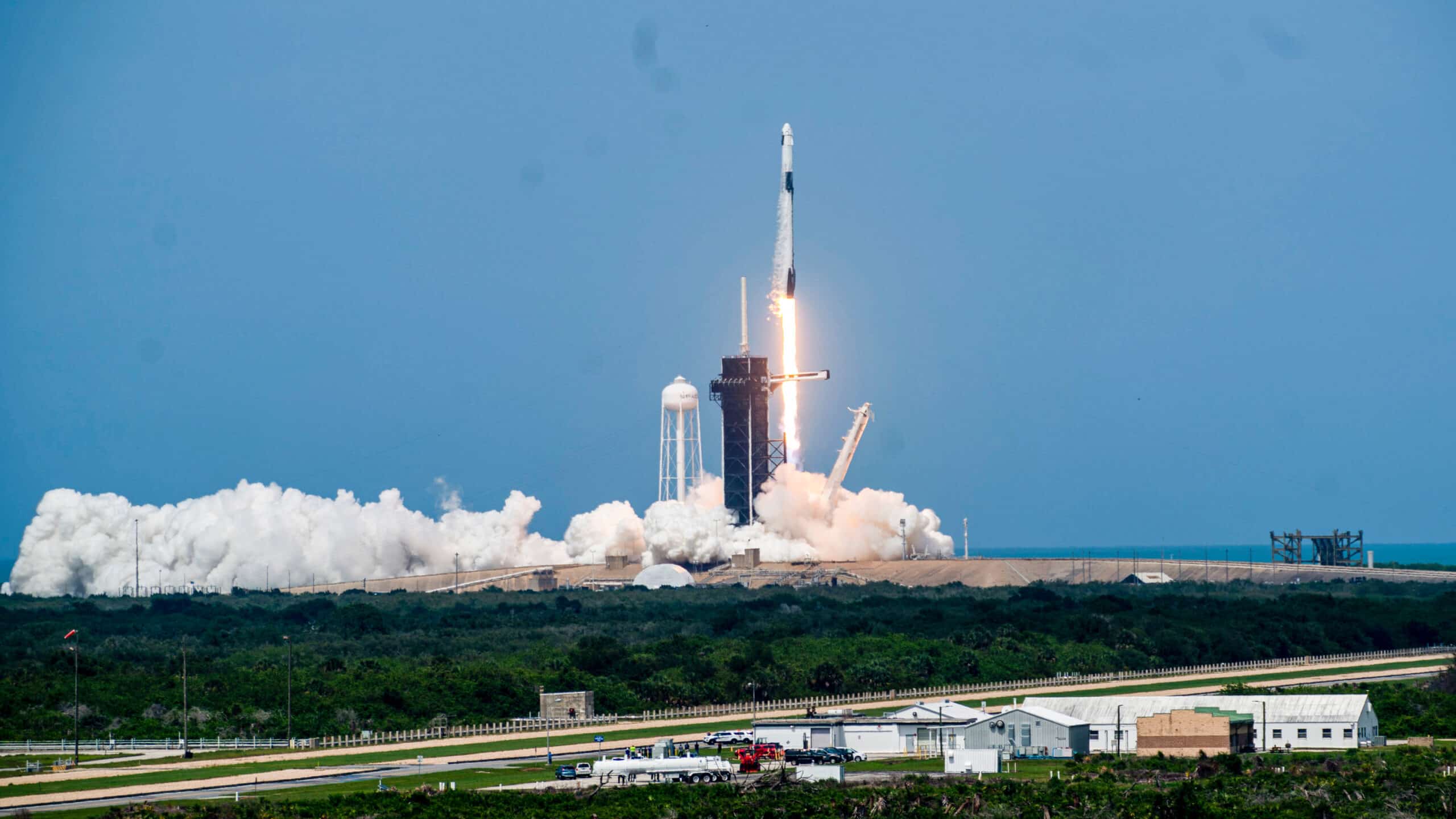
NASA’s Electrojet Zeeman Imaging Explorer (EZIE) mission successfully launched from Vandenberg Space Force Base in California on March 14, 2025, aboard a SpaceX Falcon 9 rocket. This launch marks the beginning of a groundbreaking mission designed to study auroral electrojets—intense electrical currents that flow through Earth’s upper atmosphere, particularly in polar regions. The mission’s three small satellites were deployed into orbit shortly after launch, with signals confirming their proper deployment by 2 a.m. PDT on March 15. Over the next several days, the satellites will undergo testing to ensure they are fully operational before beginning their 18-month mission.

The primary goal of the EZIE mission is to map the auroral electrojets and better understand their role in space weather. These currents, which are closely tied to solar storms, have a direct impact on Earth’s magnetic field and auroras. They also influence satellite communications and operations. The EZIE satellites will fly in a unique “pearls-on-a-string” formation, orbiting between 260 and 370 miles above Earth. This innovative approach will allow researchers to track the currents more precisely, potentially improving forecasting of space weather events that affect modern technology. As Jared Leisner, Program Executive for EZIE, noted, small-scale missions like EZIE offer invaluable scientific insights despite the inherent risks, contributing to broader research on planetary magnetic fields beyond Earth.

In contrast to traditional propulsion systems, the EZIE satellites will rely on atmospheric drag to adjust their orbits. This method of orbit control is a departure from previous studies of auroral electrojets, which have typically used either large or small-scale observations. By employing this new technique, EZIE will offer fresh perspectives on how these electrical currents form and evolve over time, providing key insights into the dynamics of space weather. NASA’s Goddard Space Flight Center’s Larry Kepko emphasized how this approach will yield valuable data to further understand the complex magnetic interactions in Earth’s atmosphere and beyond.

To enhance public engagement and educational outreach, NASA is distributing EZIE-Mag magnetometer kits to students and science enthusiasts. These kits allow participants to collect data on Earth’s electrical currents, which will then be integrated with measurements taken by the EZIE satellites. This collaboration between space-based research and citizen science aims to deepen understanding of the planet’s electrical environment. The EZIE mission is managed by NASA’s Goddard Space Flight Center’s Explorers Program Office, with support from the Johns Hopkins Applied Physics Laboratory, Blue Canyon Technologies, and NASA’s Jet Propulsion Laboratory.

NASA and SpaceX Crew-9 Return to Earth on Crew Dragon Freedom After 171 Days in Space

NASA and SpaceX have successfully brought Crew-9 astronauts back to Earth aboard the Crew Dragon Freedom spacecraft after 171 days in space. The mission’s splashdown occurred on March 18 at around 5:57 p.m. EDT in the Gulf of Mexico, off the coast of Florida. Initially planned for March 19, the return was rescheduled due to weather concerns. The event was broadcast live, with coverage beginning at 4:45 p.m. EDT, capturing the final moments of the mission. The crew’s return marked the end of a long-duration stay aboard the International Space Station (ISS), and the astronauts were greeted with enthusiasm as they made their way home.

The Crew-9 mission, which launched on September 28, 2024, included NASA astronauts Nick Hague and Aleksandr Gorbunov. They were joined on their return journey by Sunita Williams and Barry Wilmore, who had originally arrived at the ISS aboard Boeing’s Starliner spacecraft on June 5, 2024. Due to technical issues encountered during the Starliner’s mission, NASA and SpaceX decided to bring the astronauts back aboard the Crew Dragon Freedom instead, a decision that ensured their safe return to Earth. The Crew Dragon undocked from the ISS’s Harmony module at 1:05 a.m. EDT, beginning their journey back to Earth.

The Crew Dragon’s re-entry process included a deorbit burn scheduled for 5:11 p.m. EDT, which was the final step before the spacecraft descended toward the Earth’s surface. By the time of splashdown, Crew Dragon Freedom will have completed 171 days in space, with Hague and Gorbunov covering approximately 72.5 million statute miles and completing 2,736 orbits around Earth. Williams and Wilmore, who had been in space for a longer duration, will have spent a total of 286 days in orbit, covering over 121 million statute miles during their time aboard the ISS.

The designated landing site for the Crew Dragon Freedom was the Gulf of Mexico, a location chosen for its proximity and safety for splashdowns. Future crew landings under NASA’s commercial crew program are expected to occur in the Pacific Ocean, a change from the Gulf landing site. This successful return marks another significant milestone for NASA’s collaboration with SpaceX, further solidifying the reliability of the Crew Dragon spacecraft in transporting astronauts to and from the ISS.