Yazılar

SpaceX’s $1.75 Trillion Valuation Raises Questions Ahead of IPO

SpaceX is targeting a $1.75 trillion valuation in its anticipated IPO, a figure that would place it among the most valuable companies globally and ahead of firms like Meta Platforms and Berkshire Hathaway.

Despite the scale, investor demand appears strong. The company could raise more than $75 billion, potentially setting a record for a public offering. Interest has already spilled into secondary markets, where investors are seeking early exposure.

Valuation Drivers

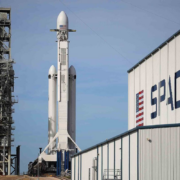
The primary foundation of SpaceX’s valuation is its Starlink business, which has over 10 million users and accounts for a significant share of revenue. The company’s launch division also plays a key role, with its reusable rocket program—particularly the Falcon 9—dramatically reducing launch costs and increasing frequency.

In 2025, SpaceX generated approximately $15–16 billion in revenue and about $8 billion in EBITDA, reflecting strong growth. However, much of the valuation also depends on future projects such as the Starship program and integration with AI ventures like xAI.

Stretching Traditional Metrics

Using aggressive growth assumptions, SpaceX would trade at roughly:

  • 56× price-to-revenue
  • 109× price-to-EBITDA

These multiples significantly exceed even high-growth tech companies such as Tesla and Palantir Technologies, indicating that investors are pricing in substantial future expansion.

Risks and Uncertainty

The valuation depends heavily on continued growth in Starlink and successful execution of unproven initiatives. Delays in the Starship program or slower-than-expected adoption of satellite-based data services could pressure future performance.

Additionally, unlike publicly traded peers, SpaceX lacks transparent consensus forecasts, making valuation comparisons less precise.

Market Context

The company’s dominance in low-Earth orbit satellite deployment and launch frequency gives it a structural advantage. However, competitors such as Amazon are investing heavily in rival satellite networks.

Overall, SpaceX’s valuation reflects not only current performance but also investor confidence in founder Elon Musk and the company’s long-term role in space infrastructure, global connectivity and AI-driven services.
US Moves to Ease Satellite Power Limits, Boosting Space Broadband

The Federal Communications Commission is preparing to relax long-standing power limits on satellite spectrum usage, a move expected to significantly enhance space-based broadband services.

The proposed rule changes, scheduled for a vote on April 30, would allow more intensive use of wireless spectrum for satellite operations. According to the FCC, this could increase broadband capacity by up to seven times current levels, enabling faster speeds, lower latency and improved reliability.

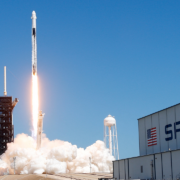
The decision is seen as a major boost for companies such as SpaceX and its Starlink network, which already operates the world’s largest satellite constellation with over 10,000 satellites.

Current regulations, dating back to the 1990s, impose strict limits on transmission power. Regulators argue that these constraints are outdated and restrict the performance of next-generation satellite systems. The FCC estimates the updated framework could generate up to $2 billion in economic benefits.

The changes are particularly relevant for rural and remote areas, where satellite broadband often serves as the primary connectivity option. Higher power levels would allow stronger signals and more consistent service in underserved regions.

However, the proposal has drawn opposition from competitors such as Viasat and DirecTV, which have raised concerns about potential signal interference and orbital congestion.

SpaceX has argued that current rules unnecessarily constrain innovation and limit service quality for millions of users. The company has also been expanding its network, including approval earlier this year to deploy thousands of additional next-generation satellites.

If adopted, the regulatory shift would mark a structural change in satellite communications policy, potentially accelerating the global expansion of space-based internet services and intensifying competition in the broadband market.

Amazon Eyes $9B Globalstar Deal to Challenge Starlink

Amazon is reportedly in talks to acquire satellite communications firm Globalstar in a deal valued at around $9 billion, as it accelerates efforts to compete in the low-Earth-orbit satellite market.

Globalstar, which provides voice, data and asset-tracking services through its satellite network, has seen its market value rise sharply over the past year. The potential acquisition would strengthen Amazon’s position in space-based connectivity as it expands its satellite initiative, known as Project Kuiper.

A key complication in the negotiations is Apple’s roughly 20% stake in Globalstar, requiring coordination between Amazon and Apple as part of any potential agreement.

The move is widely seen as a strategic push to rival Starlink, operated by SpaceX. Starlink currently leads the market with thousands of satellites in orbit and millions of global users.

Amazon has launched hundreds of satellites so far under its own program and aims to scale rapidly to serve enterprise, government and consumer markets. The company is seeking to close the gap with SpaceX as demand for global satellite internet and connectivity services continues to grow.

Discussions are ongoing, and no final agreement has been confirmed.