Yazılar

Musk Says xAI Reorganized, Resulting in Layoffs

Elon Musk said xAI has undergone a reorganization that resulted in layoffs, as the artificial intelligence company moves to streamline operations during a period of rapid expansion. In a post on X, Musk said the restructuring was aimed at improving execution speed but required “parting ways with some people.”

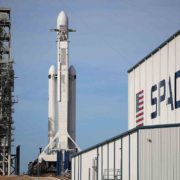
The changes come shortly after SpaceX announced plans to acquire xAI in a deal that would create a combined entity valued at approximately $1.25 trillion, with ambitions to pursue a public listing later this year. The merger is expected to support Musk’s broader strategy, including plans to deploy large-scale data centers in space.

Leadership shifts have also followed the restructuring. xAI co-founders Tony Wu and Jimmy Ba confirmed their resignations this week, bringing the number of original founders who have left the company to half of its initial twelve.

The reorganization signals a pivotal moment for xAI, which has been scaling its AI models and infrastructure amid intense global competition. The company’s next phase will likely focus on integrating operations with SpaceX while maintaining momentum in the fast-moving AI sector.

Inside SpaceX’s xAI Deal: Tax, Debt and Legal Advantages

The sale of xAI to SpaceX delivers significant tax, financial, and legal benefits for investors, according to people familiar with the transaction. The deal uses a triangular merger structure that allows SpaceX to acquire xAI as a wholly owned subsidiary—rather than fully merging operations—thereby avoiding immediate repayment of billions in debt and limiting legal exposure.

The structure keeps xAI’s liabilities, contracts, and debt ring-fenced from SpaceX, insulating the parent from potential litigation tied to xAI’s social media platform X and its Grok product. M&A attorneys say this approach is commonly used to preserve corporate insulation while enabling operational independence.

Financially, the transaction qualifies as a tax-free reorganization. xAI shareholders can defer taxes on the SpaceX shares they received until they sell. The deal also avoided triggering change-of-control provisions in xAI’s debt—critical as the company carries billions from prior financings—by routing the acquisition through intermediary entities. As a result, bondholders were not entitled to repayment, and xAI bonds rose following news of the deal.

The all-stock transaction values xAI at $250 billion and SpaceX at $1 trillion, making it the largest M&A deal on record, according to LSEG. Importantly, securities lawyers say the structure may help SpaceX avoid added disclosure hurdles ahead of a potential IPO later this year if xAI does not meet the SEC’s “significant subsidiary” threshold.

While some investors worry the added complexity could complicate valuation—combining rockets, satellites, defense contracts, AI, and social media—others say confidence in Elon Musk’s execution outweighs those concerns as SpaceX moves toward a historic public offering.

US space stocks rise after SpaceX merges with xAI at $1.25 trillion valuation

U.S. space-related stocks climbed after SpaceX announced a merger with xAI, valuing the combined entity at $1.25 trillion. The deal, unveiled by Elon Musk, signals a major push to expand artificial intelligence infrastructure beyond Earth and into orbit, a vision that has energized investors across the emerging space sector.

Shares of listed space companies rallied following the announcement. Rocket Lab, Planet Labs, AST SpaceMobile, Intuitive Machines and Redwire all posted gains, reflecting growing optimism that space-based infrastructure could play a central role in the next phase of AI development. Musk has said that within two to three years, generating AI computing power in space could become more cost-effective than on Earth, thanks to near-constant solar energy and reduced cooling constraints.

The merger brings together rocket launches, satellite networks, AI software and communications platforms under one umbrella, forming what Musk described as a vertically integrated innovation powerhouse. Analysts said the move strengthens SpaceX’s positioning ahead of a potential public offering later this year, which could value the company above $1.5 trillion. The announcement has also fueled expectations of increased investment in space technology, driven by both government defense spending and private-sector demand for AI-related infrastructure.