Yazılar

SpaceX Secures FAA Launch License for Starship Flight 7, Paving the Way for 2025 Test

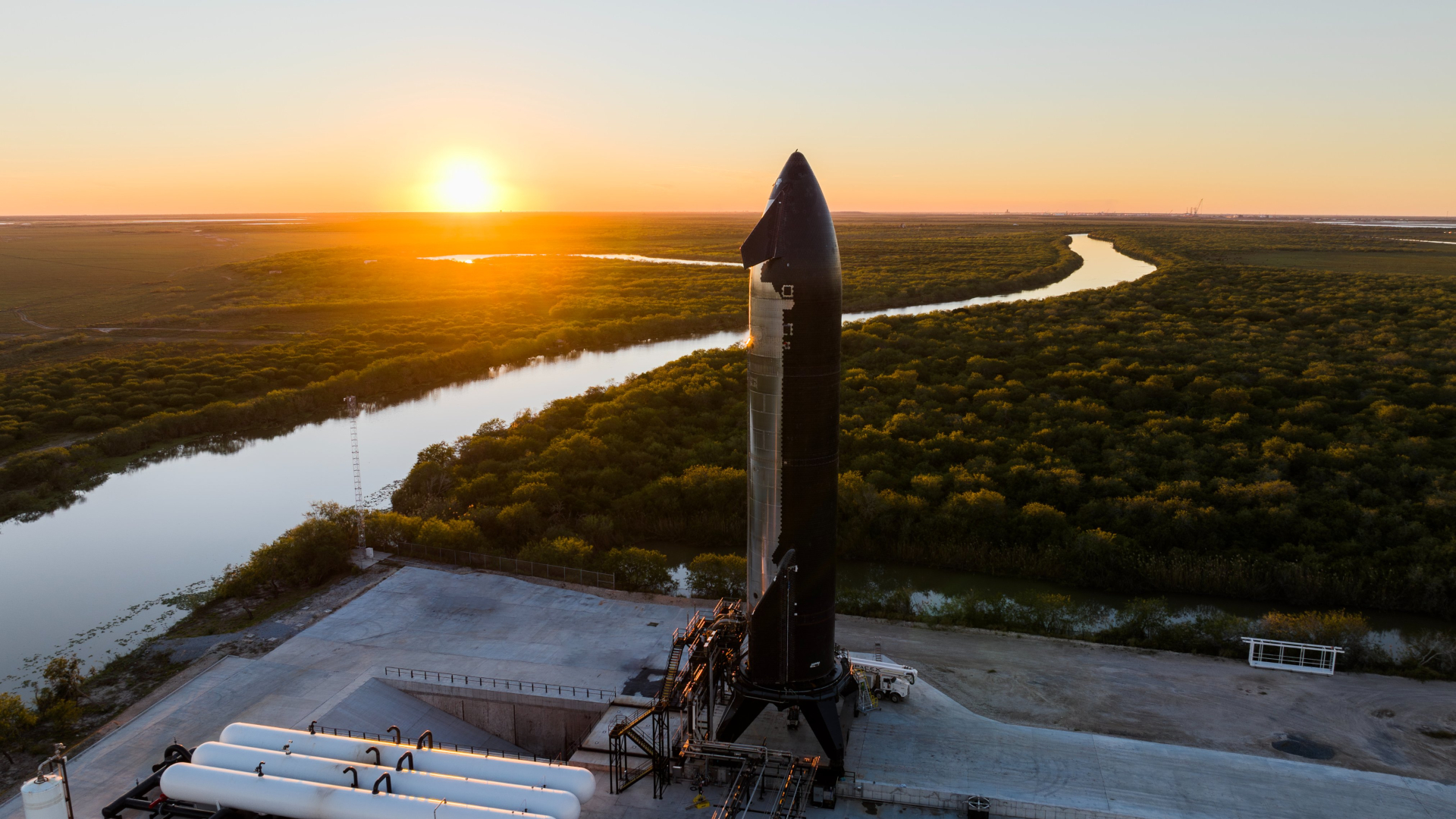
The Federal Aviation Administration (FAA) has officially granted SpaceX the launch license required for the Starship Flight 7 test, marking a crucial milestone for the development of the world’s most powerful rocket. Announced on December 17, this approval permits SpaceX to advance preparations at its Starbase facility in Boca Chica, Texas. The license follows an exhaustive series of engine tests on both the Starship spacecraft and its Super Heavy booster to validate their readiness for launch. Although SpaceX has not specified an exact date, industry insiders speculate that the test could take place in early to mid-January 2025.

Rigorous Preparations in Progress

Flight 7 will follow a trajectory similar to earlier tests, involving the launch of the fully stacked Starship and Super Heavy rocket, an attempted booster catch at the launch tower, and a controlled ocean landing of the Starship in the Indian Ocean near Australia. According to the FAA, stringent safety protocols are being enforced, with SpaceX working closely with regulatory bodies to ensure full compliance with operational standards. These measures underscore the agency’s commitment to balancing innovation with public and environmental safety.

Testing Critical Systems

The primary objectives of Flight 7 include demonstrating booster recovery and validating Starship’s capability to perform safe ocean landings. A prior test in November showcased a successful Starship splashdown in the Indian Ocean but encountered issues with the booster recovery system due to sensor malfunctions. Flight 7 seeks to refine and retest these systems, incorporating adjustments derived from previous data to enhance reliability and performance.

Significance for the Starship Program

As SpaceX prepares for this next milestone, the Flight 7 test represents a pivotal step in the Starship program’s long-term goals. These include supporting lunar missions for NASA’s Artemis program and enabling human exploration of Mars. The FAA’s licensing decision, combined with SpaceX’s engineering refinements, brings the company closer to achieving these ambitious objectives, making the Starship project a cornerstone of future space exploration.

Starlink to Introduce Direct-to-Cell Services in Ukraine Through Kyivstar Partnership

Kyivstar, Ukraine’s leading mobile operator, has entered into an agreement with SpaceX’s Starlink to roll out direct-to-cell satellite connectivity, enabling mobile devices to connect to satellites instead of traditional cell towers. The service will initially offer messaging functionality, with voice and data services to follow in later stages. Expected to be operational by the fourth quarter of 2025, this service will provide crucial communication capabilities in Ukraine, including for military purposes. Financial terms of the deal have not been disclosed. Starlink’s direct-to-cell satellites were launched earlier this year, and the technology has already been introduced in the U.S., Japan, and New Zealand. Ukraine will become the first conflict zone where the service is implemented, with Starlink aiming to overcome jamming efforts by Russia. This move follows Elon Musk’s continued support for Ukraine through satellite internet services, solidifying his involvement in the region’s communication infrastructure.


As Musk Gains Influence, Questions Hover Over U.S. Probes into His Empire

In the final days of the Biden administration, the U.S. Securities and Exchange Commission (SEC) gave Elon Musk a tight deadline to settle or face civil charges related to alleged securities violations during his $44 billion acquisition of Twitter in 2022. Musk broke the news on social media, posting a sarcastic comment aimed at SEC Chair Gary Gensler, questioning the motives behind the ultimatum and hinting at potential political influences.

The SEC is far from the only agency scrutinizing Musk’s business empire. Musk has long criticized government oversight, positioning himself as a victim of regulatory overreach hindering his companies’ innovations. With the imminent inauguration of Donald Trump, Musk’s influence over the U.S. government has raised concerns about how ongoing federal investigations into his companies—SpaceX, Tesla, and Neuralink—might be handled.

At least 20 investigations are reportedly ongoing into Musk’s companies, ranging from security violations related to Tesla’s Autopilot system to alleged animal-welfare violations at Neuralink. Despite these investigations, the approaching Trump administration has prompted questions about whether the probes might be dropped or sidelined due to Musk’s relationship with Trump.

Musk’s close ties with Trump are evident—he has called himself Trump’s “first buddy,” visited Trump’s Mar-a-Lago estate, and publicly supported his political appointments. Trump has even appointed Musk to co-lead a private advisory group on government efficiency, which Musk has said could help reshape national driverless-vehicle regulations to benefit Tesla.

Concerns Over Political Interference

The potential for political interference has become a topic of debate. While some experts suggest that prosecutors may still push forward with investigations if they have sufficient evidence, others argue that lower-level officials could avoid aggressive prosecution to appease the incoming administration. In particular, Trump’s DOJ appointments, many of whom have defended him in the past, could exercise discretion to protect Musk’s companies.

Tesla, SpaceX, and Neuralink have all faced their own legal hurdles. For Tesla, a DOJ investigation is looking into whether Musk and Tesla misled investors by exaggerating the self-driving capabilities of their vehicles. Meanwhile, SpaceX faces scrutiny over pollution and regulatory violations, with the Environmental Protection Agency (EPA) and the Federal Aviation Administration (FAA) taking action.

Despite this, SpaceX has largely avoided major regulatory challenges due to its extensive contracts with NASA and the U.S. government, which have outsourced much of the nation’s space exploration to Musk’s company.

Musk’s reported contacts with Russian President Vladimir Putin also raise concerns, but it is unlikely that the Trump administration will scrutinize these interactions, given Musk’s ties to the incoming administration and the fact that he has worked closely with Jared Isaacman, a tech entrepreneur who is now involved with NASA.

Ongoing Scrutiny and Potential Shifts

As Trump prepares to take office, the future of federal probes into Musk’s companies remains uncertain. While some experts downplay the risk of political interference, others warn that the shift in power could influence how aggressively the investigations move forward.