Yazılar

Space Exploration Milestones of 2024: Lunar Ventures, Mars Breakthroughs, and Beyond

The year 2024 saw incredible progress in space exploration, with significant missions targeting the moon, Mars, Mercury, and beyond. A variety of government agencies, private companies, and research teams achieved remarkable milestones, deepening humanity’s understanding of the solar system and advancing the frontiers of space exploration.

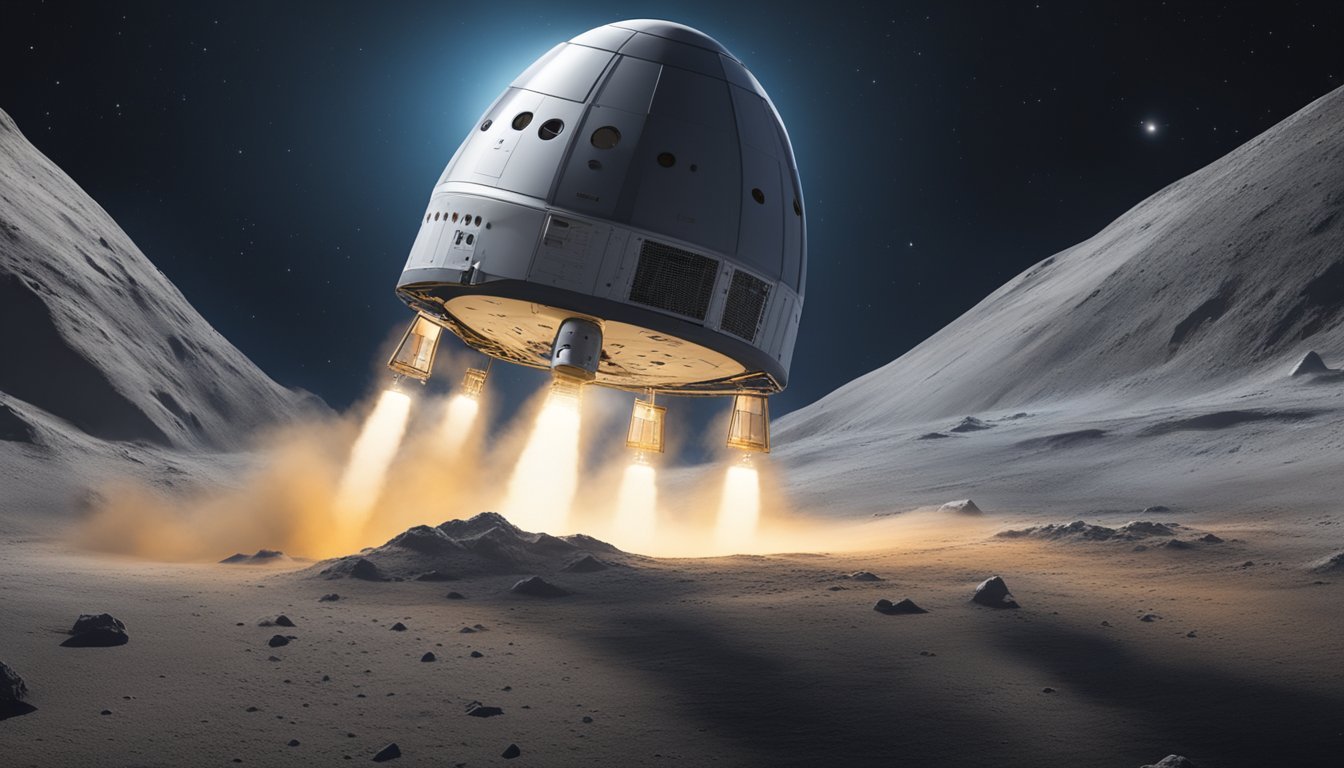
Among the most notable developments were several lunar missions that expanded our knowledge of Earth’s closest neighbor. Japan’s SLIM (Smart Lander for Investigating the Moon), which landed on the rim of a lunar crater in January, surpassed expectations by operating for three months rather than the planned two weeks. This extended mission provided invaluable data about the moon’s surface and topography. In February, the Odysseus spacecraft from Intuitive Machines, based in Houston, also made a noteworthy lunar achievement. Despite landing off-balance near the lunar south pole, the spacecraft completed its six-day mission successfully, providing important insights into the region.

China’s Chang’e 6 mission, launched by the China National Space Administration (CNSA), made headlines in June when it returned with soil samples from the moon’s far side. This was the first successful collection of samples from this previously unexplored region. Initial analysis of the samples suggested that the far side of the moon may have experienced volcanic activity as recently as 2.8 billion years ago, offering exciting new clues about the moon’s geological history.

Beyond lunar exploration, there were also significant strides made in the study of Mars and other celestial bodies. The year 2024 highlighted the increasing pace of discoveries, including new findings on Mars that could reshape our understanding of the planet’s potential to support life. As technology continues to advance, space agencies and private enterprises are rapidly pushing the boundaries of exploration, promising even more exciting developments in the years to come.

Jared Isaacman: Trump’s NASA Pick and a Crypto Billionaire with Space Ambitions

Jared Isaacman, President-elect Donald Trump’s pick to lead NASA, is not only a space enthusiast but also a crypto billionaire with significant influence in the fintech sector. At 41 years old, Isaacman made headlines earlier this year by commanding the world’s first all-civilian space mission, a remarkable feat in commercial space travel. He is also the founder and CEO of Shift4, a fintech company specializing in secure payment processing, which he founded at the age of 16 in 1999. The company, which went public in 2020, has seen its stock surge nearly 40% this year, bringing its market value to $9.3 billion.

Trump highlighted Isaacman’s leadership in a post on Truth Social, praising him for his success in building Shift4 into a global financial technology leader. Much of that success stems from Isaacman’s forward-thinking approach to cryptocurrency, particularly his investments in stablecoins—a less glamorous but growing sector of the digital asset market.

In early 2022, Isaacman and his team met with crypto entrepreneurs Alex Wilson and Pat Duffy, who were in the process of selling their crypto donation platform, The Giving Block, to Shift4. The group discussed the potential applications of blockchain technology across Shift4’s payment services. While the broader crypto market was booming, with digital assets like Bitcoin reaching record highs, Isaacman and his team focused on stablecoins—cryptocurrencies pegged to the value of real-world assets, typically the U.S. dollar.

Stablecoins, worth approximately $200 billion today, are seen as a more stable and practical option for cross-border payments, offering lower transaction costs and faster processing times compared to traditional financial systems. Isaacman, Wilson, and Duffy believed that stablecoins were more likely to become mainstream as a payment method than Bitcoin or Ethereum. This vision led to Shift4’s acquisition of The Giving Block for $54 million, along with a potential earnout of up to $246 million. In October 2023, Shift4 rolled out its “Pay with Crypto” service, allowing customers to use cryptocurrency at over 200,000 merchants.

Isaacman’s involvement in the crypto space aligns with the broader trend of digital currencies becoming increasingly mainstream. The crypto market has seen substantial growth since Trump’s election win in 2024, with Bitcoin reaching new highs and institutional investors jumping in, fueled by the popularity of spot bitcoin exchange-traded funds. Companies like Stripe, PayPal, Visa, and Mastercard are also embracing stablecoins, recognizing their potential for faster and cheaper transactions.

In addition to his achievements in fintech, Isaacman has also pursued a passion for space exploration. He has commanded two private SpaceX missions, one in 2021 and another in 2024, further cementing his ties with Elon Musk, a key ally of Trump. Isaacman views his appointment to lead NASA as an opportunity to advance human space exploration and contribute to humanity’s understanding of the universe.

Despite his new role, Isaacman will remain CEO of Shift4 until his Senate confirmation. He expressed that his choice to lead NASA is driven by his desire to give back to the country that enabled his success and to continue pushing the boundaries of space exploration. His leadership at both Shift4 and NASA is expected to shape the future of space technology and cryptocurrency as they continue to converge.


ULA Plans Vulcan Rocket Upgrade to Compete with SpaceX’s Starship

United Launch Alliance (ULA), the rocket venture between Boeing and Lockheed Martin, is planning an upgrade to its Vulcan rocket in a bid to compete with SpaceX’s Starship in the growing low Earth orbit (LEO) satellite launch market. According to ULA CEO Tory Bruno, the company aims to develop a version of the Vulcan rocket specifically designed to meet the demands of the LEO market, which has been largely dominated by SpaceX’s Starlink satellite deployments.

“We recently completed a major trade study for what we need to be competitive in the future LEO market,” Bruno told Reuters at a military space conference in Orlando. “We’ve selected a modification to Vulcan that gives us significantly more mass to LEO and puts us in a competitive range.”

The Vulcan rocket, powered by engines from Jeff Bezos’ Blue Origin, has already completed its first two launches this year. Initially designed for Pentagon missions, the Vulcan is now being reconfigured to cater to the commercial LEO satellite market. One potential upgrade is the “Vulcan Heavy,” a version with three core boosters for increased payload capacity. Bruno also mentioned other “unique” configurations, including propulsion placements in unconventional locations.

SpaceX’s Starship, which is primarily designed for crewed missions to the Moon and Mars, has turned its attention to accelerating its Starlink satellite launches into LEO. This has intensified competition for launch providers, as companies like Amazon also aim to deploy large satellite networks to challenge Starlink’s dominance. ULA aims to complete the Vulcan upgrade before SpaceX’s Starship becomes fully operational for LEO satellite launches, which Bruno suggests could take several years.

ULA has secured several Vulcan missions with Amazon, aimed at launching the company’s Kuiper satellite network. This makes the Vulcan an integral part of Amazon’s strategy to rival SpaceX’s Starlink. SpaceX has already conducted six test flights of Starship, demonstrating its commitment to testing and improving the rocket’s capabilities, while ULA plans to finalize the Vulcan design before launching it commercially.

In 2024, ULA is set to conduct eight Vulcan missions and 12 Atlas V missions, its predecessor. The Vulcan’s starting launch price is about $110 million, slightly above SpaceX’s Falcon 9, and ULA has a backlog of roughly 70 missions, including those for Amazon.

Although ULA has been considering a sale, drawing interest from companies such as Sierra Nevada Corp and Blue Origin, Bruno has declined to comment on any acquisition discussions.