Yazılar

Bezos’ Blue Origin Secures FAA License for First New Glenn Rocket Launch

The Federal Aviation Administration (FAA) announced on Friday that it has granted a commercial space launch license to Blue Origin, Jeff Bezos’ aerospace company, for its New Glenn rocket. This marks a significant milestone for Blue Origin as it enters a highly competitive sector, joining SpaceX and United Launch Alliance (ULA) in vying for national security space missions.

The New Glenn rocket, named after astronaut John Glenn, received a five-year license allowing orbital launches from Cape Canaveral Space Force Station in Florida. The rocket’s reusable first stage is designed to land on a barge in the Atlantic Ocean, showcasing a focus on sustainability similar to SpaceX’s Falcon 9.

The inaugural New Glenn mission will serve as a certification test for the U.S. Space Force, a prerequisite for launching national security satellites. Initially, the debut mission was slated to carry a pair of NASA spacecraft to Mars, but delays in New Glenn’s development led NASA to shift the payload to another rocket. Instead, the first mission will carry technology for Blue Origin’s Blue Ring program, which focuses on maneuverable spacecraft for the Department of Defense.

Blue Origin joins an industry dominated by SpaceX, which has successfully used its partially reusable Falcon 9 for numerous missions and is developing its fully reusable Starship rocket. SpaceX achieved a major milestone in October when Starship’s first-stage booster returned to its Texas launch pad during a flight test.

Blue Origin has faced challenges in bringing New Glenn to market. To accelerate progress, the company hired Amazon veteran Dave Limp in late 2022 to oversee the rocket’s development. The Pentagon’s selection of Blue Origin as one of the contenders for a $5.6 billion national security space program signals a vote of confidence in the company’s potential.

With this FAA approval, Blue Origin takes a critical step toward establishing itself as a competitor in the commercial and government launch markets.


China’s Satellite Megaprojects Challenge Elon Musk’s Starlink

China is aggressively pursuing satellite megaprojects to rival SpaceX’s Starlink, which has already established a formidable presence in low Earth orbit (LEO) with nearly 7,000 satellites. Starlink provides high-speed internet to millions in remote and underserved regions, with plans to expand its constellation to 42,000 satellites. However, China is aiming to launch a similar-scale network with around 38,000 satellites through its Qianfan, Guo Wang, and Honghu-3 projects.

While companies like Eutelsat OneWeb and Amazon’s Project Kuiper are also entering the satellite internet arena, China’s interest in these megaconstellations goes beyond just competition. Experts believe China’s motivations are partly driven by concerns over the potential influence of Starlink’s uncensored internet service, especially in regions under its geopolitical influence.

Steve Feldstein, a senior fellow at the Carnegie Endowment for International Peace, suggests that Starlink could undermine China’s strict internet censorship policies by providing uncensored access to websites and apps. As a result, China views this satellite-based connectivity as a potential threat to its control over information within its borders and in allied countries. To counter this, China is investing in its own satellite network that could offer a censored alternative to Starlink.

Blaine Curcio, founder of Orbital Gateway Consulting, adds that China’s satellite service could appeal to countries interested in a more controlled internet experience. While China may not prioritize Western markets like the U.S. or Europe, it sees opportunities in regions where Starlink has limited coverage, including Russia, Afghanistan, Syria, and parts of Africa.

In Africa, where Huawei already plays a dominant role in 4G infrastructure, China’s satellite service could further strengthen its influence. The Chinese satellite constellation might be seen as an extension of its technological and geopolitical presence, especially in regions where internet access is limited or censored.

National security is another crucial factor behind China’s satellite ambitions. Starlink’s role in providing satellite-based communication for military purposes, particularly in conflict zones like Ukraine, has demonstrated the strategic value of satellite internet. The ability to maintain internet connectivity during war, especially for military operations such as drone warfare, makes satellite constellations a key component of national security. China recognizes this, making its satellite internet projects a strategic necessity.

In conclusion, while China’s satellite services may not directly compete with Starlink in Western markets, they represent a significant geopolitical and security challenge. As China expands its satellite capabilities, it will likely target regions where Starlink has limited coverage, furthering its influence and maintaining control over digital infrastructures.


House Democrats Accuse GOP of Caving to Musk in Funding Bill

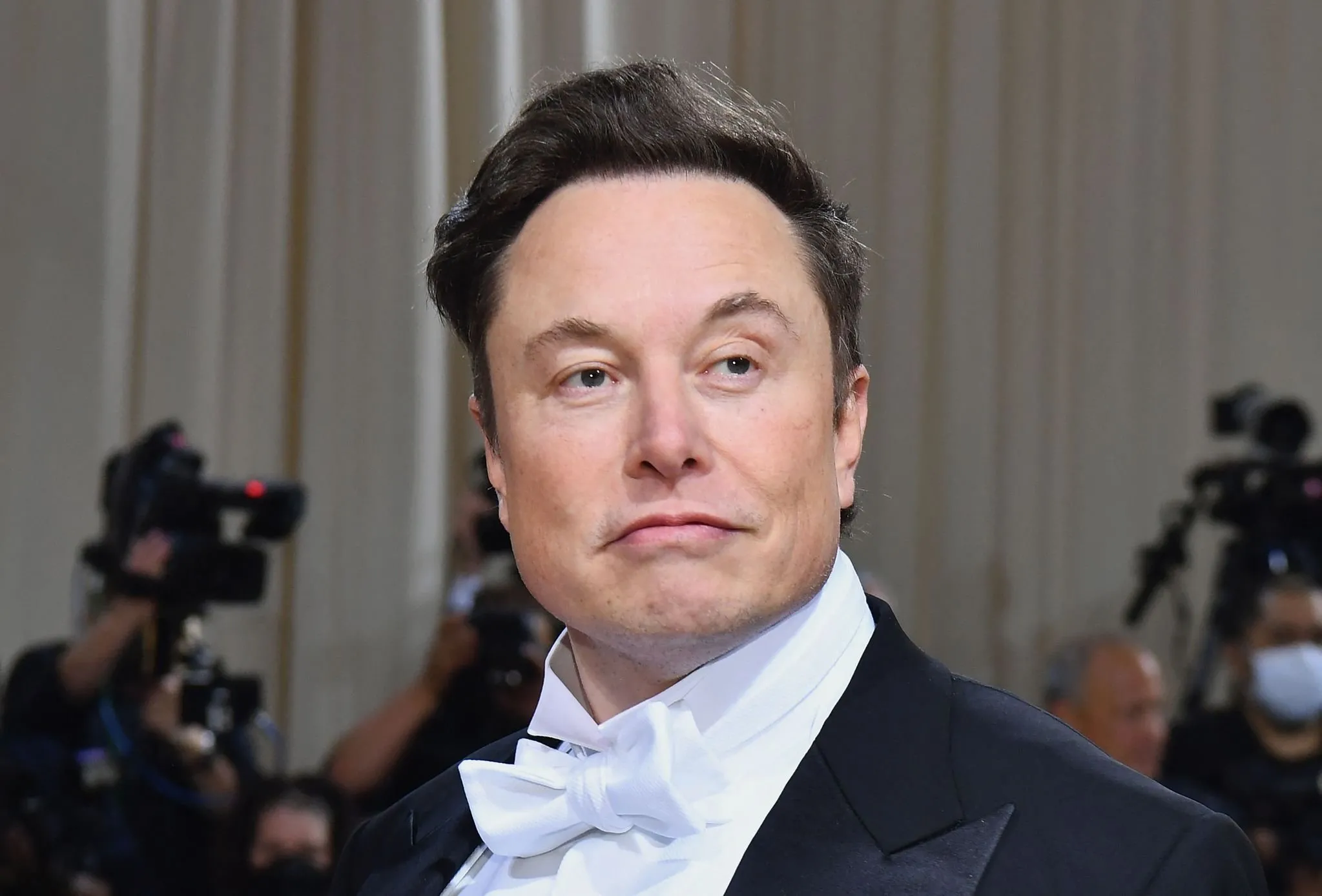
House Democrats Jim McGovern of Massachusetts and Rosa DeLauro of Connecticut criticized their Republican colleagues for allegedly bowing to Elon Musk’s demands, which they claim led to the removal of a provision from a bipartisan government funding bill aimed at regulating U.S. investments in China.

In the aftermath of a separate stopgap funding bill passed over the weekend to prevent a government shutdown, McGovern took to X (formerly Twitter) to express his disappointment, stating that more could have been accomplished. He argued that the scrapped provision would have helped keep cutting-edge technologies like AI and quantum computing in the U.S. and preserved American jobs. However, he contended that Musk’s influence was a significant obstacle to this progress.

Musk’s companies, including Tesla and SpaceX, have extensive business dealings in China. Tesla operates a factory in Shanghai without a local joint venture, and it recently built a battery plant near the city. Musk is also pursuing self-driving vehicle technology development in China, which Democrats like McGovern claim could jeopardize U.S. security.

McGovern pointed out that Musk’s business interests depend on maintaining favorable relations with the Chinese government, writing that Musk is “bending over backwards to ingratiate himself with Chinese leaders.” Furthermore, Musk’s SpaceX has been reported to have withheld its Starlink satellite internet service over Taiwan at the request of Chinese and Russian authorities.

DeLauro, the top Democrat on the House Appropriations Committee, echoed concerns in a letter to Congress, criticizing Musk’s close ties with the Chinese Communist Party. She expressed alarm over Musk’s need for Chinese government approvals for his projects in the country and emphasized the potential risks of his growing influence.

Musk responded on X by calling DeLauro an “awful creature.”

The dispute unfolded as former President Donald Trump had expressed opposition to the original funding bill, instead seeking a new bill to raise the debt ceiling and avoid a financial showdown during the early months of his potential second term. Although Trump’s influence was felt in the discussions, the stopgap funding bill signed by President Joe Biden on Saturday did not include the debt ceiling suspension Trump had sought.

Musk, who acquired Twitter in 2022 and rebranded it as X, has since become a key supporter and adviser to Trump, contributing heavily to the 2024 campaign cycle.