SpaceX Achieves Major Milestone: Starship Booster Successfully Caught in Fifth Test Flight
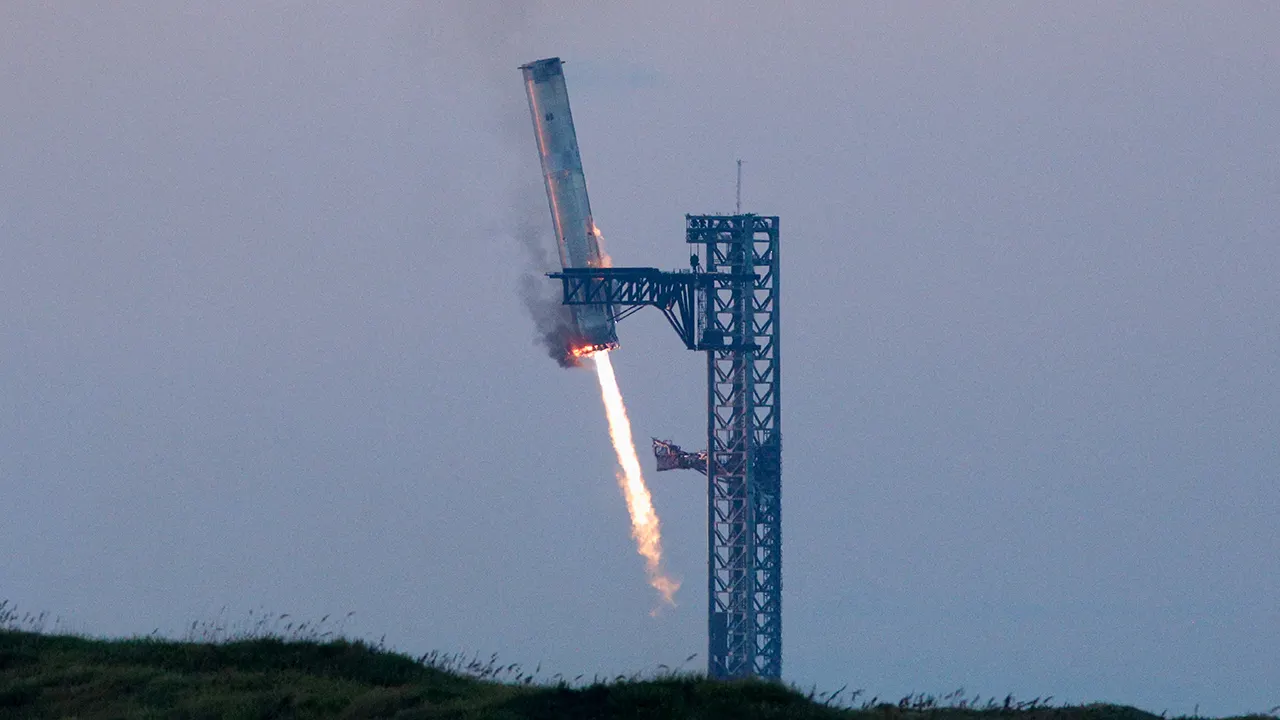
SpaceX achieved a groundbreaking engineering feat on Sunday during its fifth test flight of the Starship rocket, successfully returning the Super Heavy booster to its Texas launch pad using giant mechanical arms. This marks a critical advancement in SpaceX’s efforts to develop a fully reusable rocket system designed for missions to the moon, Mars, and beyond.
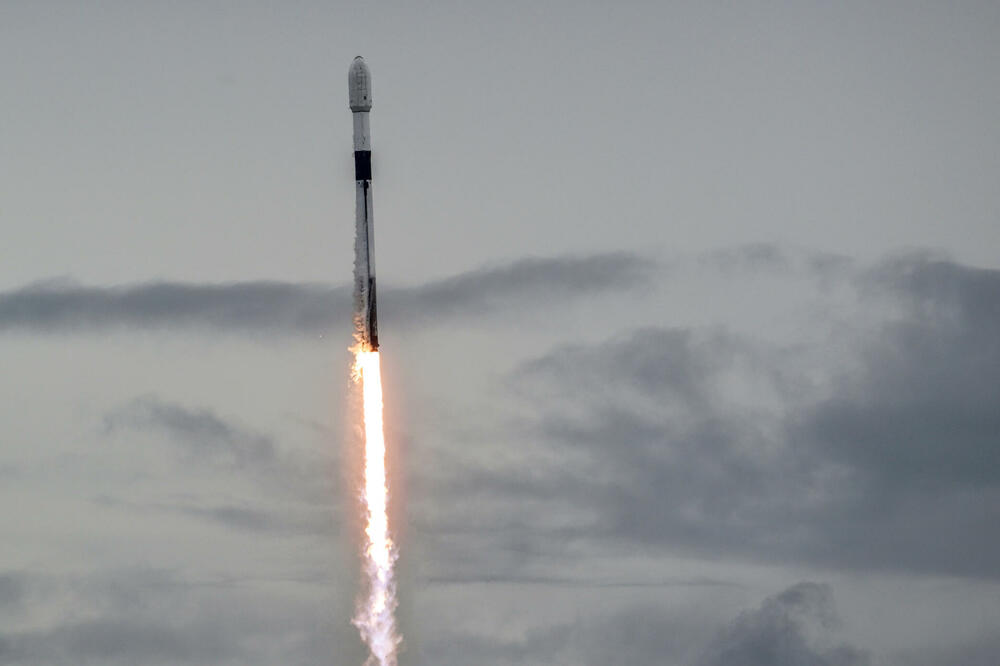
The mission began at 7:25 a.m. CT (1225 GMT) when the Super Heavy booster lifted off from SpaceX’s Boca Chica facility in Texas, propelling the Starship second stage toward space. After separation at an altitude of approximately 70 kilometers (40 miles), the Super Heavy booster initiated its descent back to the launch site in a dramatic sequence. As it neared the pad, the booster reignited three of its 33 Raptor engines to control its descent, targeting the 400-foot launch tower equipped with large metal arms designed to “catch” the rocket.
In a first for SpaceX, the booster hooked itself into place using tiny protruding bars under its four grid fins, which had steered the rocket during its descent. Elon Musk, SpaceX’s CEO, celebrated the success by posting, “The tower has caught the rocket!!” on X (formerly Twitter). Engineers at SpaceX were seen cheering on the company’s live stream as the novel landing method succeeded.
Pushing the Limits of Reusability
This successful catch-landing is part of SpaceX’s ambitious mission to develop fully reusable rockets, an essential feature for deep-space exploration and reducing the costs of space missions. Starship, the rocket system’s second stage, also played a key role in the test flight, accelerating to speeds of 17,000 miles per hour at an altitude of 89 miles before heading toward a targeted splashdown in the Indian Ocean.
Upon reentry, Starship encountered superheated plasma, with onboard cameras capturing the spectacular display as it streaked through Earth’s atmosphere. The heat shields, now made up of 18,000 improved tiles, were enhanced following the previous test flight in June, when the Starship’s heat shields sustained damage, complicating its reentry.
Controlled Splashdown and Explosion
The test flight concluded with Starship re-igniting one of its six Raptor engines to reorient itself for a simulated landing in the ocean near Western Australia. While the ship successfully landed on target in the waters, it toppled onto its side soon after, and moments later, a fireball explosion illuminated the area. Although it remains unclear whether the explosion was a controlled detonation or due to a fuel leak, SpaceX engineers were heard celebrating the mission’s outcome, confirming that the Starship landed “precisely on target.”
Regulatory Approvals and Tensions
SpaceX’s fifth test flight was cleared for launch just a day before by the U.S. Federal Aviation Administration (FAA), ending a period of tension between the company and the regulatory body over the pace of launch approvals. The FAA had previously fined SpaceX over its Falcon 9 rocket, which is the company’s workhorse for launching satellites and crew missions. Despite these regulatory hurdles, the successful test highlights SpaceX’s commitment to advancing its spaceflight technology and achieving its long-term vision of interplanetary travel.
Conclusion
This latest test is a significant step in SpaceX’s test-to-failure development strategy for creating reusable rocket technology capable of supporting NASA’s lunar missions and Musk’s vision of human colonization of Mars. Though setbacks like the Starship’s post-landing explosion remain, the key achievements of this mission—such as the booster catch—bring SpaceX closer to its ambitious goal of developing a rocket system that can be reused for multiple deep-space missions, drastically cutting costs and paving the way for the future of space exploration.