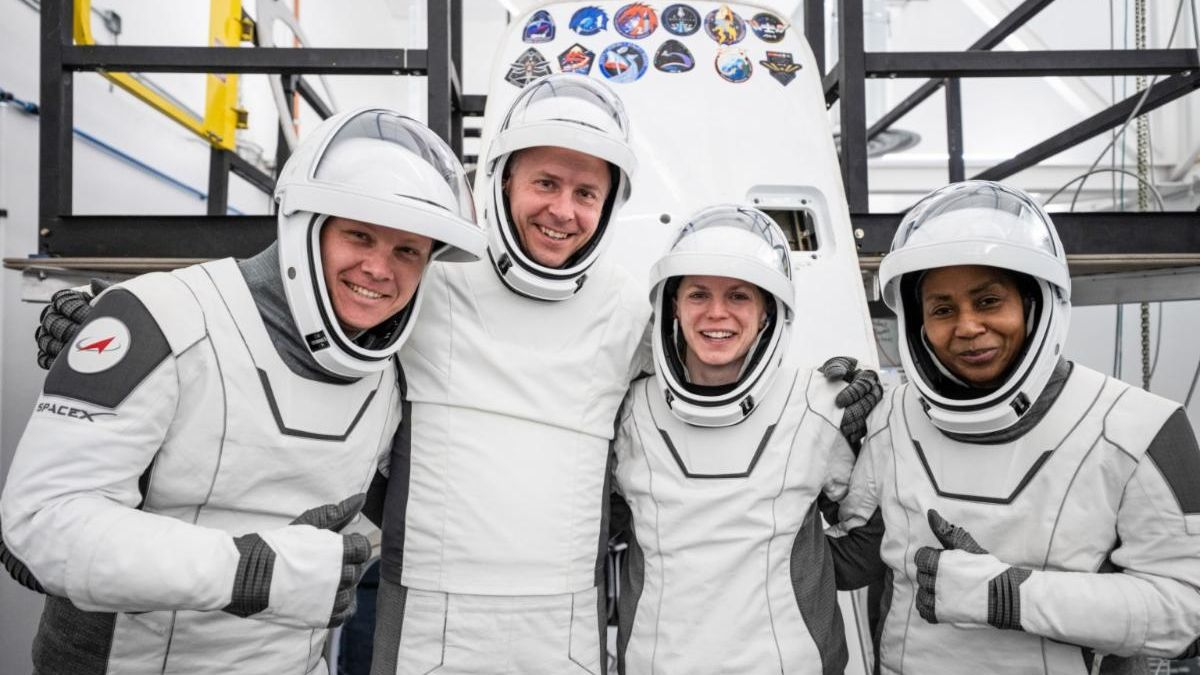
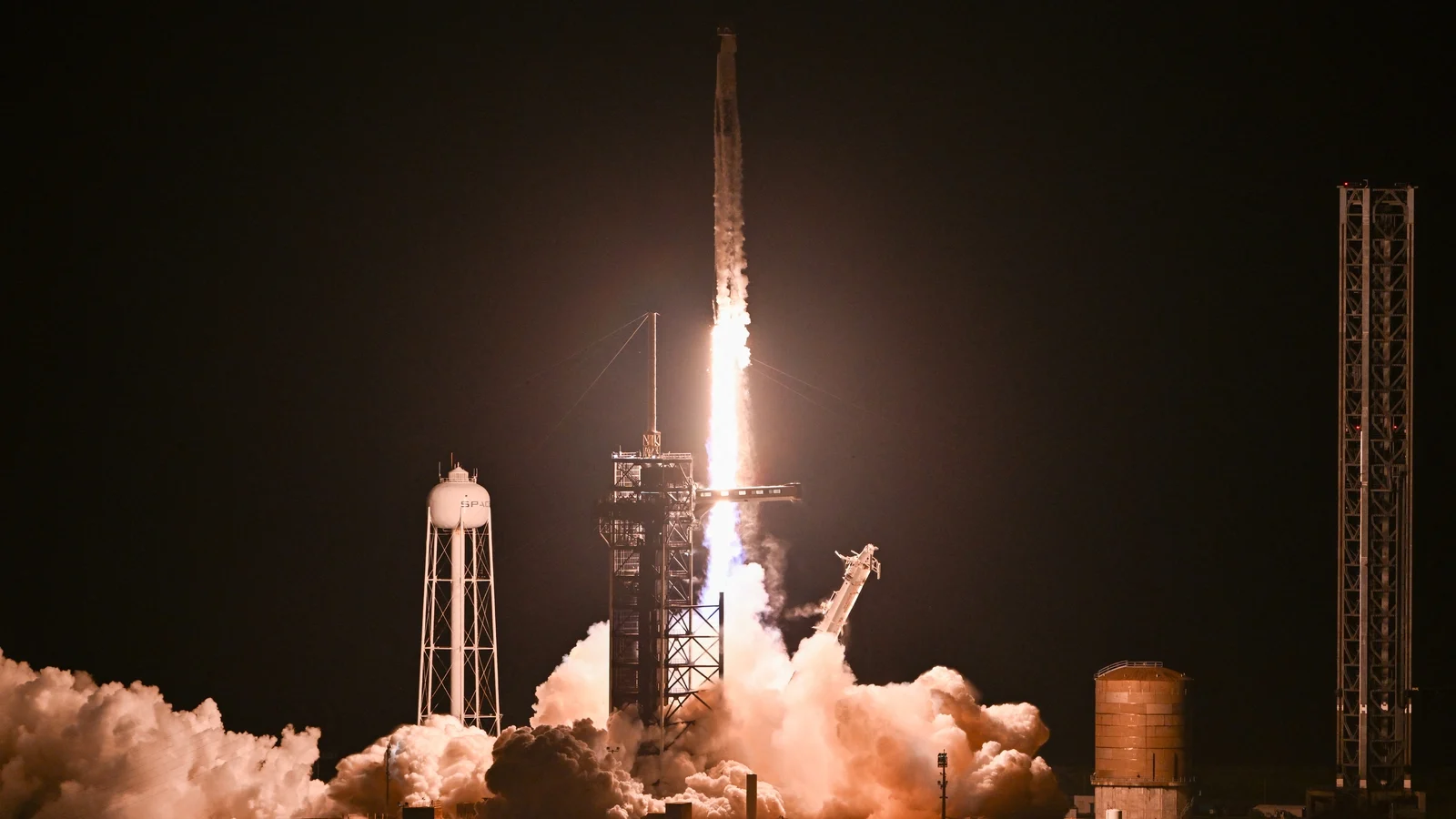
A crew of four civilians aboard SpaceX’s Polaris Dawn mission achieved a groundbreaking milestone by completing the first-ever commercial spacewalk. At 6:12 a.m. ET, the crew unlocked the hatch of their Crew Dragon capsule and exposed themselves to the vacuum of space for the historic event, also known as extravehicular activity (EVA). This event marks a significant step forward in the realm of private space exploration, as it’s the first time non-government astronauts have conducted a spacewalk.
The five-day mission, which had already set records by traveling farther into space than any human has since NASA’s Apollo program, saw the Crew Dragon vehicle depressurized, exposing the entire crew to space. The team included Shift4 Payments CEO Jared Isaacman, who funded the Polaris Dawn mission, former US Air Force pilot Scott “Kidd” Poteet, and SpaceX engineers Anna Menon and Sarah Gillis. They had been training for this moment since their launch at 5:23 a.m. ET on Tuesday.
Before exiting the spacecraft, the crew underwent a “pre-breathe” process to purge their blood of nitrogen, preventing potentially fatal gas bubbles from forming in their bodies. Isaacman was the first to leave the capsule, stepping onto a mobility aid, dubbed “skywalker,” to venture into the vastness of space. “Back at home we all have a lot of work to do, but from here — looks like a perfect world,” Isaacman commented as he took in the breathtaking views.
Historic EVA and Spacesuit Testing
Although the spacewalk was brief, with Isaacman and Gillis spending a combined 20 minutes outside the spacecraft, it was an essential demonstration of SpaceX’s newly designed EVA suits. These suits, developed in just two and a half years, are designed to be more flexible and functional than traditional spacesuits, which are often bulky and expensive. SpaceX’s goal is to create spacesuits that are mass-produced and affordable for the future of space travel, which could one day involve large numbers of people living in space.
The new EVA suits do not include a Primary Life Support System (PLSS) like those used by astronauts on the International Space Station. Instead, life support is provided by long hoses connected to the Crew Dragon capsule. This technology could represent a step toward making space exploration more accessible and cost-effective. SpaceX founder Elon Musk has previously discussed the importance of affordable space suits for large-scale space settlement, and this mission plays a key role in that vision.
Isaacman and Gillis’s spacewalk also tested the mobility of the new suits, with Gillis noting the experience of “wiggling around” to assess their flexibility in the weightlessness of space. While the other crew members remained inside the capsule, they still enjoyed stunning views of Earth from their windows, witnessing sunrises and sunsets every 106 minutes.

Scientific Research and Future Space Exploration
In addition to the historic spacewalk, the Polaris Dawn crew is conducting nearly 40 scientific experiments during their time in orbit. These studies focus on various challenges faced by humans in space, including space adaptation syndrome, which affects about half of all astronauts. The crew will also use special contact lenses equipped with pressure sensors to study how the eyeballs respond to pressure changes in microgravity, a project affectionately known as “the cyborg experiment.”
The crew’s mission is expected to last five or six days, with their return to Earth potentially occurring early Sunday morning. They have been communicating with Earth via SpaceX’s Starlink satellite system, sharing breathtaking images of their journey and expressing gratitude for the support they’ve received.
The Future of Commercial Space Travel
This mission represents a significant leap forward for the commercial space industry. As NASA Administrator Bill Nelson remarked after the spacewalk, “Today’s success represents a giant leap forward for the commercial space industry and NASA’s long-term goal to build a vibrant U.S. space economy.”
The mission’s success highlights the growing role of private companies like SpaceX in pushing the boundaries of human space exploration, paving the way for future missions that may involve civilians traveling even deeper into space.