Yazılar

CATL Reports Slowest Profit Growth in Six Years Amid Price War in China’s EV Market

Contemporary Amperex Technology Co. Ltd. (CATL), China’s leading electric vehicle (EV) battery manufacturer, has reported a 15% increase in net profit for 2024, marking its slowest growth in six years. The company’s net profit reached 50.7 billion yuan ($7.01 billion), falling short of its projected growth range of 11.1%-20.1%. Meanwhile, revenue decreased by 9.7%, marking its first revenue decline since it began releasing operating figures in 2015.

CATL attributed the revenue drop to declining battery prices prompted by a price war in China’s EV market, which pressured EV makers to reduce component costs. Despite rising sales volumes, lower prices of raw materials like lithium carbonate resulted in a fall in operating income.

For the fourth quarter, CATL reported a 13.6% increase in net profit to 14.7 billion yuan, down from the 26% growth seen in the previous quarter. Revenue for Q4 shrank by 3.1% to 103 billion yuan, marking the fifth consecutive quarterly decline.

The price war in China’s EV market has forced CATL to adjust its battery prices to defend market share. However, the company benefitted from a 17.6% reduction in the cost of its power battery business, outpacing an 11.3% drop in revenue from this segment.

Globally, CATL solidified its position as the dominant player in the EV battery market, extending its market share to 38% in 2024, up from 36% in 2023, according to SNE Research. BYD followed with 15%, while LGES saw its share fall to 10% from 13%.

CATL experienced faster growth in the energy storage system battery market, which accounted for 22.4% of total shipments, up from 19.4% in 2023. The company has also expanded beyond batteries, unveiling a new EV chassis in December and seeking to enter the power grid sector.

Additionally, CATL is investing internationally, with a 7.3 billion euro battery plant in Hungary to supply automakers such as Mercedes-Benz and BMW, along with a jointly-owned battery plant with Stellantis in Spain. The company is also pursuing a listing in Hong Kong to raise funds for its Hungarian plant, aiming to secure at least $5 billion.
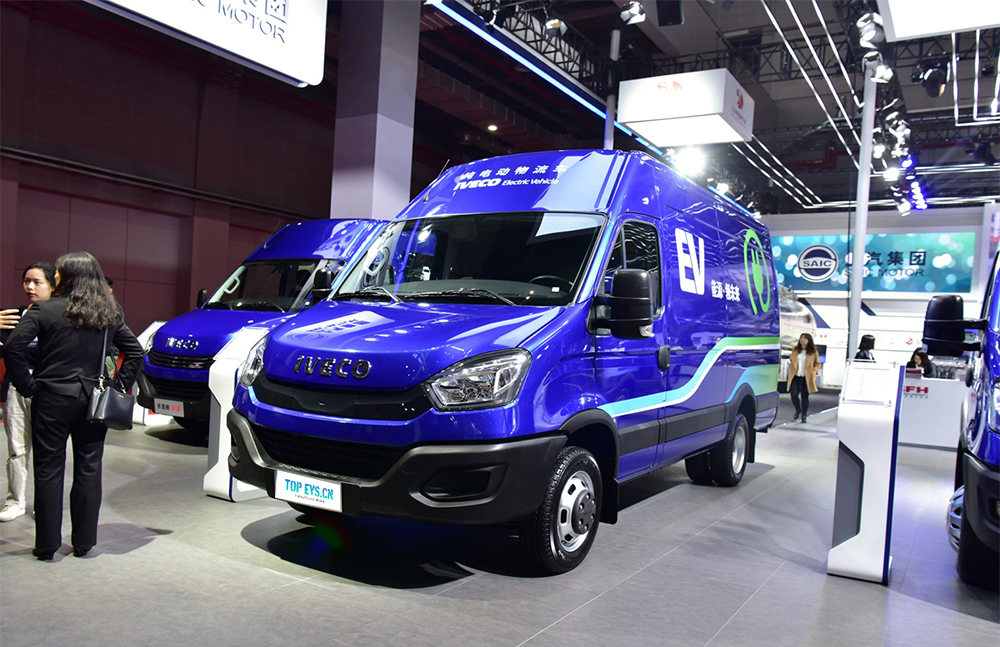
Stellantis to Provide Two EV Vans to Iveco for European Market Expansion

Stellantis and Iveco announced a new agreement on Friday in which Stellantis will supply Iveco with two fully-electric (EV) van models, marking a significant step in Iveco’s expansion of its electric vehicle lineup in Europe. The vans, produced by Stellantis, are expected to go on sale by mid-2026, under a ten-year supply agreement. Financial terms of the deal were not disclosed.

The new EV vans will be based on Stellantis’ mid- and large-sized EV van platforms, and will be manufactured at Stellantis’ plants in Atessa (Italy), Gliwice (Poland), and Hordain (France). Once produced, the vans will be distributed across Europe, including the United Kingdom, through Iveco’s established channels.

The two upcoming vans, with gross vehicle weights ranging from 2.8 to 3.1 tons and 3.5 to 4.25 tons, are designed to complement Iveco’s existing battery electric vehicle (BEV) offerings. These vans will help extend the brand’s footprint in the lighter weight segment of the European EV market.

This new partnership follows a similar agreement that Iveco reached last year with Hyundai Motor for the supply of a mid-sized electric van in the 2.5-3.5 ton weight range, further expanding its EV portfolio. Iveco Group, controlled by Exor, the investment arm of Italy’s Agnelli family, is also the largest shareholder in Stellantis.

French Battery Maker ACC Welcomes EU Auto Sector Support, but Expresses Concern Over Timeliness

Automotive Cells Company (ACC), a French battery manufacturer, expressed its support for the European Union’s action plan to bolster the auto sector, but also voiced concerns that the measures may arrive too late to address current challenges.

The European Commission recently introduced an action plan aimed at helping the auto industry achieve zero carbon emissions from cars and vans by 2035. A key element of this plan is the allocation of 1.8 billion euros ($1.94 billion) to help secure the supply chains for battery raw materials.

While ACC, a joint venture between Stellantis, Mercedes, and TotalEnergies, welcomed the medium-term support outlined in the plan, the company raised concerns about the urgency of the situation. In a LinkedIn post, ACC noted, “Nevertheless, we fear that the urgency of the situation we are currently going through is not being considered. To benefit from it, we will have to have managed to survive until then.”

ACC has been forced to scale back its battery production ambitions amid uncertainties surrounding electric vehicle demand in Europe and the rise of more affordable battery technologies. The company initially planned to build nine production blocks by 2030 across France, Germany, and Italy, supported by a 7.3 billion euro investment. However, the projects in Germany and Italy have been put on hold, and currently, only one block in France is operational, producing batteries for Stellantis. A second block is expected to begin operations by the end of the year.