Yazılar

Stellantis Expands AI Partnership with Mistral to Accelerate Industry Data Analysis

Stellantis, the world’s fourth-largest carmaker, has announced the expansion of its strategic partnership with French AI firm Mistral. The move aims to enhance Stellantis’ capabilities in industry data analysis, which is crucial as automakers increasingly turn to AI to optimize processes such as customer feedback analysis, manufacturing quality control, and the rapid development of new products.

Ned Curic, Stellantis’ Chief Engineering and Technology Officer, emphasized the efficiency boost AI brings, saying, “Instead of waiting for analysis for weeks, we can do that in minutes and make a decision in the afternoon.” This AI-powered speed could revolutionize decision-making in the automotive industry, improving operational efficiency and time-to-market for new innovations.

Earlier this month, Stellantis also undertook management changes, following the surprising exit of CEO Carlos Tavares in December. These organizational shifts are part of a broader strategy to strengthen the company’s position in the fast-evolving automotive sector.

Stellantis Reverses Ohio Layoffs Weeks After CEO Carlos Tavares’ Resignation

Stellantis has reversed its decision to lay off approximately 1,100 workers at its Jeep plant in Toledo, Ohio, less than three weeks after the sudden resignation of CEO Carlos Tavares. The Franco-Italian automaker announced late Saturday that it will not proceed with the indefinite layoffs scheduled to begin on January 5, citing an extension of worker adjustment and retraining notices instead.

In a statement, Stellantis confirmed that employees will resume work as planned after the New Year. The company had initially announced the layoffs as part of a shift reduction at the Toledo South Assembly Plant, which manufactures the Jeep Gladiator, aiming to streamline operations and manage inventory more effectively in its North American market.

CEO Resignation and Strategic Challenges

The decision comes in the wake of Tavares’ abrupt departure, reportedly spurred by disagreements with board members over targets deemed unrealistic or harmful to the company. Tavares had been instrumental in driving cost-cutting measures at Stellantis, including significant workforce reductions across its U.S. operations.

Under his leadership, Stellantis announced several high-profile layoffs in 2023, including 400 workers at a Detroit automotive parts facility and up to 2,450 employees at a Michigan factory where production of the Ram 1500 Classic truck was being phased out.

Pressures in the U.S. Market

Stellantis has faced declining sales in North America, a historically profitable region due to the popularity of Jeep and Ram vehicles. The company’s cost-reduction efforts, while aimed at boosting efficiency, have drawn criticism from union leaders and sparked tensions with the United Auto Workers (UAW).

UAW President Shawn Fain has accused Stellantis of failing to honor commitments to the union and has threatened nationwide strikes in response to workforce reductions. While Stellantis maintains it is adhering to contractual obligations, the layoffs have become a focal point of labor disputes.

Broader Implications

The reversal of layoffs at the Ohio plant marks a notable shift in Stellantis’ approach, suggesting potential reevaluation of its North American operations strategy in the post-Tavares era. Whether this signals a broader change in the company’s cost-cutting measures remains to be seen.


European Carmakers Raise Petrol Prices, Discount EVs Amid Stricter Emissions Rules

Europe’s automakers are adjusting pricing strategies ahead of stricter EU emissions rules set to take effect on January 1, raising prices on petrol cars while offering discounts on electric vehicles (EVs) to close the sales gap and avoid significant fines.

Looming Challenges: New Emission Targets

The European Union will impose lower carbon dioxide (CO₂) emission caps next year, requiring at least 20% of automakers’ sales to be EVs. This marks a sharp increase, as EVs currently account for just 13% of all vehicle sales in the region, according to data from the European Automobile Manufacturers’ Association (ACEA).

The stricter rules arrive at a difficult time for the industry, with carmakers battling overcapacity, stagnant demand, and rising competition from Chinese automakers. Executives have raised alarms over the impact on profits. Stellantis CEO Carlos Tavares‘s recent resignation partially stemmed from disagreements about managing these challenges.

Automaker Response: Price Hikes and Discounts

Volkswagen, Stellantis, and Renault have increased the prices of petrol engine vehicles in recent months while keeping electric models stable or discounted. Analysts suggest this move aims to nudge consumers toward EVs to meet CO₂ targets and avoid billions in potential fines.

For instance:

  • Stellantis’s Peugeot raised prices on non-EV models in France by up to 500 euros.
  • Renault added 300 euros to some petrol models, such as the Clio SCE 65, while keeping hybrid prices unchanged.
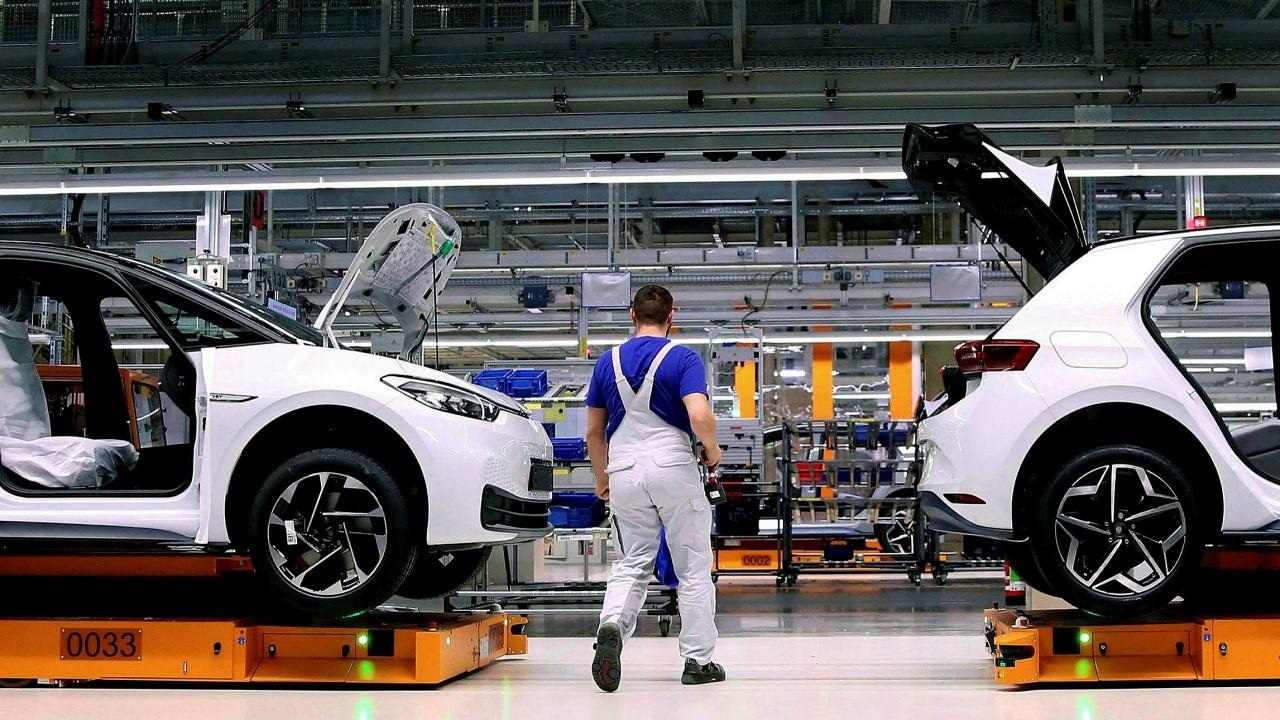
  • Volkswagen lowered the price of its ID.3 compact EV in multiple markets, bringing it below 30,000 euros in Germany.

While this strategy may steer demand, industry insiders warn it could backfire. Raising petrol car prices could reduce production volumes, further straining suppliers and the value chain without guaranteeing sufficient EV sales growth.

Profit Pressure and Discounts

The price hikes are expected to indirectly fund EV discounts, which are seen as critical to boosting adoption but will erode automaker margins. Analysts at S&P Global note that combustion-engine buyers effectively subsidize EV buyers through these pricing shifts.

In the UK alone, automakers anticipate EV-related targets will cost around £6 billion this year, with £4 billion attributed to discounts alone.

Pooling Emissions to Avoid Fines

To sidestep fines, some carmakers are turning to “pooling” strategies, where companies with high emissions buy credits from brands with stronger EV portfolios.

  • For example, Japan’s Suzuki partnered with Geely-owned Volvo to meet 2025 targets, significantly lowering Suzuki’s exposure to penalties.

This approach, while less costly than heavy discounts, remains another strain on profits.

Industry Pushback

Amid these mounting pressures, automakers are urging EU policymakers to reconsider the aggressive targets. Luc Chatel, president of French car lobby PFA, expressed frustration: “I can’t sell enough electric vehicles and I’m going to be penalized on my thermal vehicles. What do they want me to make, horse-drawn carriages?”

Looking Ahead

While EU regulators show little sign of easing rules, EV sales are forecast to climb significantly. GlobalData projects a 41% jump in EV sales across Europe next year, reaching 3.1 million units in 2025. Still, automakers face a balancing act of steering consumer demand, protecting margins, and avoiding fines.