Yazılar

Google Asks U.S. Supreme Court to Halt App Store Ruling in Epic Games Case

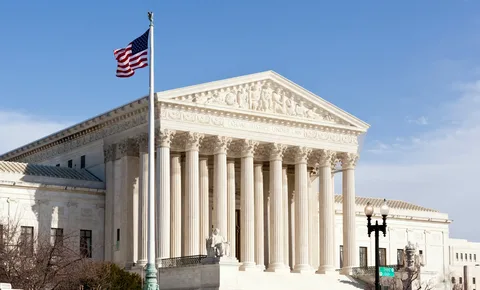
Google has asked the U.S. Supreme Court to block parts of an injunction that would force sweeping changes to its Play Store, as it prepares to appeal its antitrust loss to “Fortnite” maker Epic Games.

In a filing submitted late Wednesday, Google argued that the lower court order is “unprecedented” and would cause reputational harm, safety and security risks, while putting it at a competitive disadvantage.

Epic sued Google in 2020, claiming it monopolized app distribution and in-app payments on Android devices in violation of U.S. antitrust law. A jury sided with Epic in 2023, and Judge James Donato issued an injunction requiring Google to:

  • allow rival app stores inside the Play Store,

  • make its app catalog available to competitors, and

  • let developers add external links in apps so users can bypass Google’s billing system.

Google said the changes would affect over 100 million U.S. Android users and 500,000 developers, asking the Supreme Court to decide by October 17 whether to pause the order. The company plans to file its full appeal by October 27, setting up the possibility for the justices to review the case in their new term beginning October 6.

Epic dismissed Google’s arguments, saying it was using “flawed security claims” to maintain control over Android. “The court’s injunction should go into effect as ordered so consumers and developers can benefit from competition, choices and lower prices,” Epic said.

Earlier this year, the 9th U.S. Circuit Court of Appeals upheld the injunction, noting evidence that Google’s conduct had entrenched its dominance. The full 9th Circuit later declined to revisit the case.

Epic CEO Tim Sweeney praised the ruling, saying developers and users would benefit from more openness in the Android ecosystem.

Meanwhile, Google continues to face other lawsuits from regulators, consumers, and businesses over its search and advertising practices, further intensifying its antitrust battles.

Trump to Hit Semiconductor Imports with Tariffs Unless Firms Build in U.S.

President Donald Trump announced Thursday that his administration will impose tariffs on semiconductor imports from companies that do not move production to the United States. Speaking ahead of a dinner with top tech CEOs, Trump said the tariffs would be “fairly substantial” but would not apply to companies already investing in U.S. manufacturing.

Trump framed the move as part of his broader strategy of using tariffs to pressure foreign companies and governments to shift production and jobs into the U.S. “If they are not coming in, there is a tariff,” he said. He singled out Apple CEO Tim Cook, noting that Apple’s $600 billion commitment to domestic investment puts it “in pretty good shape.”

The policy comes as global chipmakers respond to U.S. pressure. Taiwan’s TSMC, South Korea’s Samsung, and SK Hynix have all announced major U.S. semiconductor plant investments. Trump had previously floated a 100% tariff on imported chips but said exemptions would apply for companies producing or planning facilities inside the country.

The announcement underscores Trump’s second-term emphasis on tariffs as a cornerstone of economic and foreign policy, a tool he has wielded to renegotiate trade terms and gain leverage in geopolitical disputes. However, legal challenges loom: lower courts have invalidated parts of his earlier tariff regime, and the administration has asked the Supreme Court to uphold the sweeping emergency powers used to justify them.

U.S. Supreme Court Lets Mississippi Social Media Age-Check Law Stand for Now

The U.S. Supreme Court on Thursday declined to temporarily block a Mississippi law requiring social media users to verify their age and obtain parental consent for minors, in a challenge filed by NetChoice, a trade group representing companies including Meta (META.O), Alphabet’s YouTube (GOOGL.O), and Snapchat (SNAP.N). The law remains in effect while NetChoice’s broader legal challenge, which argues it violates the First Amendment, continues in lower courts.

Justice Brett Kavanaugh noted in a statement that the Mississippi law is likely unconstitutional but said NetChoice had not met the high standard needed to halt enforcement at this stage. Paul Taske, co-director of the NetChoice Litigation Center, described the Supreme Court’s decision as “an unfortunate procedural delay” but expressed confidence that the challenge would ultimately succeed.

Mississippi’s attorney general welcomed the order, saying it allows “thoughtful consideration” of the law. The legislation, passed unanimously by the state legislature, requires platforms to obtain “express consent” from a parent or guardian before a minor can open an account and mandates “commercially reasonable” age verification. Violations can carry civil penalties of up to $10,000 per incident and potential criminal penalties under state deceptive trade practices laws.

The case comes after U.S. District Judge Halil Suleyman Ozerden initially blocked enforcement for some NetChoice members, but the 5th U.S. Circuit Court of Appeals allowed the law to take effect. Similar measures have been blocked in courts in seven other states. Technology companies maintain that their platforms already include extensive content moderation and parental controls to protect minors.

Mississippi defended the law as a “common” method to safeguard children online, emphasizing parental consent and age verification as key protective measures.