Yazılar

Tesla’s Sales Rise in Parts of Europe but Pressure Mounts From Rivals

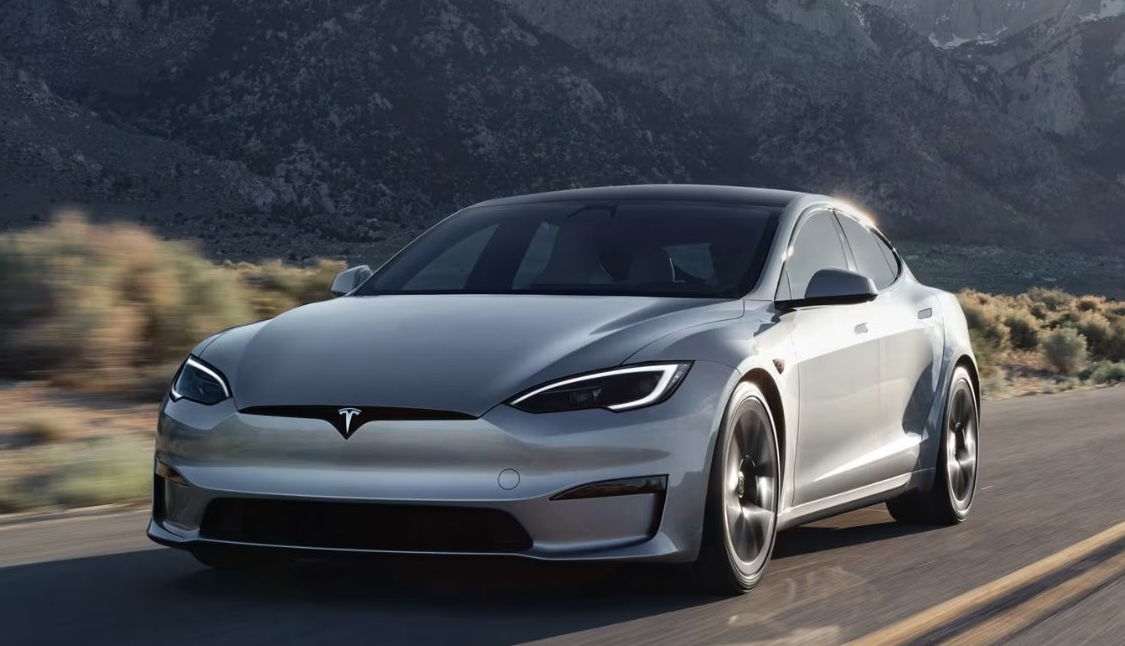
Tesla recorded a modest rebound in several European markets in September, buoyed by sales of its updated Model Y, but analysts warn the U.S. automaker faces mounting challenges from both European and Chinese competitors amid an ageing product lineup.

According to local industry data released Wednesday, Tesla’s sales rose in France, Denmark, Norway, and Spain, with the Model Y emerging as Denmark’s best-selling vehicle. However, new car registrations fell in Sweden and the Netherlands—the latter marking its ninth consecutive monthly decline.

Despite recent gains, Tesla’s broader European performance remains weak. Between January and August, Tesla’s sales fell 42.9% year-on-year in the European Union and 32.6% across Europe overall, even as the region’s total EV sales jumped 24.8%.

Matthias Schmidt of Schmidt Automotive Research described the September uptick as “a bottoming out of the downward trend rather than any real signs of an expected uplift.” He said an affordable Model Y variant, expected in 2026, could help, but Tesla’s prospects remain “tough in a more competitive market environment.”

Once dominant in Europe, Tesla now faces an influx of new EVs from Volkswagen, BMW, Renault, and Chinese players like BYD, which outsold Tesla in the EU in August for the second time this year.

The automaker’s reputation has also been affected by political backlash against CEO Elon Musk, whose support for Donald Trump’s re-election campaign and European far-right parties has alienated some consumers.

Andy Palmer, chairman of Electric Vehicles UK, said Tesla is still “a big fish, but the pond is now full of serious competitors.” Unless it refreshes its range soon, he warned, “it will keep losing market share.”

Performance varied sharply across Europe in September:

  • France: +2.74% year-on-year

  • Denmark: +20.5%, with the Model Y leading sales

  • Norway: +14.7%, with Model Y and Model 3 ranking top two

  • Spain: +3.4%, boosted by a 60% surge in Model Y registrations

  • Sweden: –64% year-on-year, though higher than August levels

  • Netherlands: –48%

Analyst Andy Leyland of SC Insights said Tesla’s biggest challenge lies ahead: “Chinese automakers are rapidly building distribution networks in Germany, the UK, and France. It will be critical to see whether Tesla can still compete.”


Sweden Introduces World’s First AI Music Licence to Protect Songwriters

Sweden’s music rights organisation STIM has launched a new licence that allows AI companies to legally train on copyrighted songs while ensuring that songwriters, composers, and publishers receive royalties. The move addresses growing disputes between creators and tech firms over the unauthorized use of copyrighted works in AI training.

STIM, which represents over 100,000 music creators, said the licence is designed to strike a balance between technological innovation and fair compensation.

How the licence works

  • AI firms can train their systems on copyrighted songs under the licence.

  • Creators receive royalties for the use of their works.

  • The licence includes mandatory tracking technology to monitor AI-generated outputs and ensure transparent payments.

Why it matters

  • The International Confederation of Societies of Authors and Composers (CISAC) warns that generative AI could reduce music creators’ income by up to 24% by 2028.

  • CISAC also projects that AI-generated music outputs could reach $17 billion annually by 2028, underscoring the economic stakes.

  • STIM’s acting CEO Lina Heyman said:

    “We show that it is possible to embrace disruption without undermining human creativity. This is not just a commercial initiative but a blueprint for fair compensation and legal certainty for AI firms.”

First adopter: Songfox

Stockholm-based startup Songfox is the first to operate under the new licence. The company allows users to create AI-generated songs and covers legally, with royalties flowing back to original creators.

Sweden’s leadership in digital music

Sweden has a history of setting industry standards in the digital music space, having previously played a central role in shaping platforms like Spotify and TikTok. The AI music licence could similarly become a global benchmark for balancing innovation and rights protection.

EcoDataCenter Secures €600 Million to Expand AI Data Centres

Swedish digital infrastructure firm EcoDataCenter announced on Tuesday that it has secured €600 million ($703.5 million) in debt financing from Deutsche Bank’s Private Credit and Infrastructure unit to accelerate its AI-focused data centre expansion.

The funding will be used to build large-scale facilities in Falun and Borlänge, north of Stockholm, aimed at handling compute-intensive AI workloads and next-generation high-performance computing.

CEO Peter Michelson, a former Ericsson executive, said the new financing provides a two-year runway, but suggested additional capital may be needed as demand for AI infrastructure accelerates.

“If we were to stop building tomorrow, we would be a highly profitable company… but we obviously have ambitions for much more than that,” Michelson told Reuters.

The deal follows €450 million raised earlier this year by EcoDataCenter’s owner Areim, bringing total financing since 2023 to €1.8 billion.

Sweden is becoming a European hub for AI data centres, with major expansions from Microsoft, Meta, and Alphabet driven by the country’s stable power grid and connectivity advantages.

EcoDataCenter, which opened its first site in 2019, counts clients such as DeepL and BMW. Last year, it partnered with CoreWeave to build one of Europe’s largest AI training clusters and now hosts a Nvidia Blackwell SuperPod for DeepL, underscoring its growing role in Europe’s AI infrastructure race.