
Yazılar

Manufacturers Turn to AI to Manage Supply Chains Amid Tariff Volatility

U.S. manufacturers like The Toro Company are using artificial intelligence to maintain lean “just-in-time” inventories despite ongoing global trade uncertainties and fluctuating tariffs. Toro’s supply chain chief, Kevin Carpenter, says AI helps the company process daily news—from policy updates to commodity prices—into actionable insights, guiding purchasing and inventory decisions.

Generative AI is being increasingly adopted in supply chains, capable of analyzing massive datasets and suggesting optimal actions. Industry research firm Gartner predicts AI software spending for supply chains could rise from $2.7 billion today to $55 billion by 2029. Leading providers include SAP, Oracle, Coupa, Microsoft, and Blue Yonder.

While AI improves efficiency and helps manage cost pressures, experts caution it is not a “silver bullet.” Human oversight remains essential for strategic decisions, with AI handling routine tasks like scheduling and ordering. Companies using AI can better react to uncertainty, reduce excess inventory, and protect profit margins amid rising costs and global disruptions.

Trade Desk Shares Plunge After CEO Flags Tariff-Driven Pressure on Large Advertisers

Trade Desk (TTD.O), the cloud-based advertising technology firm, faced its largest single-day stock drop on record Friday after CEO Jeff Green warned that ongoing tariff uncertainties are causing some of the world’s biggest advertisers to hold back on ad spending. The sharp decline threatened to erase nearly $16 billion from the company’s market value if losses hold.

Green highlighted that Trade Desk’s focus on large global advertisers makes it particularly vulnerable to economic pressures related to trade policies, contrasting with competitors that rely more on small and medium-sized businesses. The tariff-driven caution has led to a slowdown in launching new ad campaigns, especially in sectors most impacted by trade tensions.

Rosenblatt Securities analyst Barton Crockett noted that Trade Desk’s growth decelerated and underperformed Meta’s 22% growth, raising concerns that “closed gardens” like Meta’s platforms may be outpacing the open internet ad ecosystem that Trade Desk serves. Additionally, Trade Desk’s heavy exposure to large brands facing tariff pressures has added to investor concerns.

Despite the headwinds, the company projects current-quarter revenue of at least $717 million, roughly in line with analyst expectations. Still, at least 11 analysts have lowered their price targets on Trade Desk stock, bringing the median target down to $84.

Analysts at MoffettNathanson pointed out that as Trade Desk signs more brands to joint business plans, agencies might increasingly bring media buying in-house, posing another challenge.

On a leadership note, Trade Desk appointed Alex Kayyal as its new chief financial officer, effective August 21, succeeding Laura Schenkein.

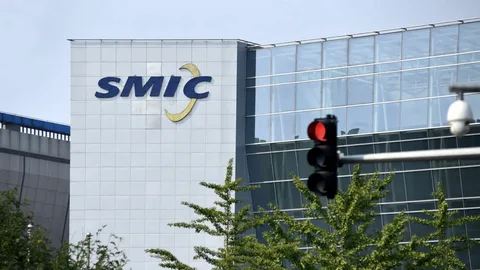
China’s SMIC Reports Resilience Despite U.S. Tariffs, Expects Tight Capacity Through October

China’s leading semiconductor foundry, Semiconductor Manufacturing International Corp (SMIC), stated on Friday that U.S. tariff measures have not caused the “hard landing” initially feared. The company cited strong domestic demand that will keep its production capacity tight until October.

Co-CEO Zhao Haijun said during a post-earnings call that customers have largely mitigated the impact of U.S. President Donald Trump’s tariff plans—such as the proposed 100% tariff on chip imports—through inventory stockpiling and sourcing from alternative suppliers. He noted that previous tariff rounds increased costs by less than 10% for overseas customers.

China’s additional tariffs on U.S. goods reached 125% in April, following Trump’s tariffs effectively pushing the rate on Chinese goods to 145%. However, the latest semiconductor tariffs exclude companies manufacturing in the U.S. or committed to doing so. SMIC, blacklisted by the U.S. in 2020, has no U.S.-based manufacturing.

SMIC’s revenue for Q2 grew 16.2% year-on-year to $2.2 billion, though its profit declined 19.5% to $132.5 million, missing analyst expectations. The company shipped 2.4 million eight-inch equivalent wafers in the quarter, a 4.3% increase from Q1.

Capacity utilization rose to 92.5%, and monthly production capacity expanded modestly by 1.85% quarter-on-quarter to 991,000 wafers. Zhao forecasted continued tight capacity driven by strong domestic demand, especially for analog, WiFi, Ethernet, and memory controller chips.

SMIC expects Q3 revenue growth of 5% to 7% over Q2 but anticipates the industry’s typical seasonal slowdown in Q4, with rush orders and early shipments likely to taper.

SMIC’s shares in Hong Kong dropped over 5% following the report.