Yazılar

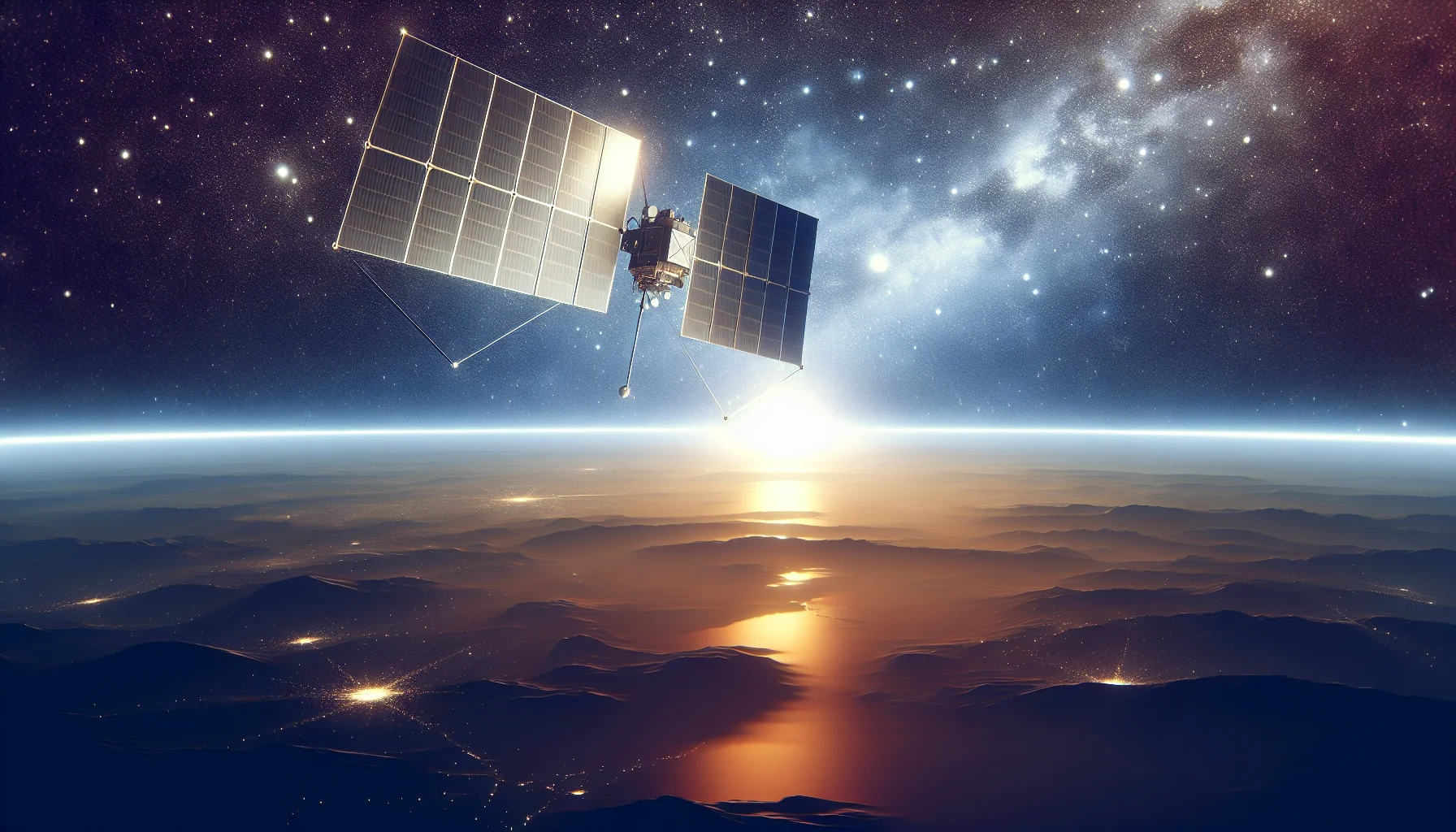
Solar Sail Satellites May Revolutionize Space Weather Forecasting and Early Alerts

Satellites equipped with solar sails could significantly improve space weather forecasting, offering early warnings for events like geomagnetic storms that can damage critical infrastructure on Earth. Solar sails, which use sunlight for propulsion, are being explored as a more cost-effective and efficient alternative to traditional propulsion systems. Researchers believe that these sails could enhance the monitoring of solar activity, providing quicker and more accurate alerts for space weather events that affect power grids, satellite operations, GPS systems, and even air traffic. Unlike current space weather forecasting systems, which rely on fixed observation points, solar sail technology could offer more flexible positioning for improved data collection.

The potential for solar sail-equipped satellites to revolutionize space weather forecasting lies in their ability to travel beyond traditional locations in space. As reported by Space.com, solar sails could allow spacecraft to venture past the Earth-sun Lagrange Point One (L1), a stable region approximately 1.5 million kilometers from Earth where most solar observation satellites are currently stationed. The National Oceanic and Atmospheric Administration’s (NOAA) Office of Space Weather Observations, which manages these satellite systems, recognizes the advantages of solar sail technology in expanding the range and flexibility of space weather monitoring.

Irfan Azeem, Division Chief at NOAA’s Research to Operations and Project Planning Division, highlighted the key benefit of solar sails in improving space weather forecasts. Solar sails can enable satellites to travel upstream of L1, allowing them to gather data more efficiently than traditional chemical propulsion systems. This improvement in satellite movement would result in faster retrieval of data and the potential to increase the lead time for geomagnetic storm alerts by up to 50 percent, giving industries and agencies more time to prepare for potential disruptions.

As space weather events become an increasing concern due to their potential impact on modern technology, the development of solar sail technology for satellites represents a significant leap forward in our ability to predict and respond to these phenomena. By providing more precise and timely alerts, solar sail-powered satellites could help mitigate risks and safeguard Earth’s technological infrastructure from the damaging effects of space weather.

Key Quotes from EU Chief Ursula von der Leyen’s AI Speech at Paris Summit

European Commission President Ursula von der Leyen highlighted the EU’s ambitious vision for artificial intelligence (AI) during her speech at the Paris AI Summit. Below are some of the key quotes from her address:

  1. “This summit is on action, and that is exactly what we need right now. The time has come for us to formulate a vision of where we want AI to take us as a society and as humanity, and then we need to act and accelerate Europe in getting there.”

  2. “We want Europe to be one of the leading AI continents, and this means embracing a way of life where AI is everywhere.”

  3. “Too often I hear that Europe is late to the race where the United States or China have already gotten ahead. I disagree, because the AI race is far from being over. We’re only at the beginning. The frontier is constantly moving. Global leadership is still up for grabs.”

  4. “Too often I have heard that we should replicate what others are doing and run after their strengths. I think that instead, we should invest in what we can do best and build our own strengths here in Europe. Our own strengths are our science and technology mastery that we have given to the world … There’s a distinct European brand of AI. It is already driving innovation and adaptation, and it is picking up speed.”

  5. “We want to accelerate innovation. Europe has some of the world’s fastest public supercomputers. We are now putting them at the service of our best startups and our best scientists, so they can forge the AI we need. They can test their models, they can train their models on our supercomputers.”

  6. “We want to replicate the success story of CERN in Geneva. As you all know, CERN holds the largest particle accelerator in the world, and it allows the best and the brightest minds in the world to work together. And we want the same to happen in our AI Gigafactory.”

  7. “AI needs competition, but AI also needs collaboration, and AI needs the confidence of the people, and has to be safe.”

  8. “I know that we have to make it easier, and we have to cut red tape, and we will.”

  9. “We aim to mobilize a total of 200 billion euros ($206.38 billion) for AI investment in Europe.”

  10. “AI can be a gift to humanity, but we must make sure that its benefits are widespread and that its benefits are accessible to all.”

  11. “We want AI to be a force for good. We want an AI where everyone collaborates and everyone benefits. This is our path. This is our European path.”

Cybersecurity Firm SailPoint Sets Sights on $12.6 Billion Valuation in US IPO

Cybersecurity firm SailPoint has raised its target valuation to as much as $12.57 billion in its U.S. initial public offering (IPO), reflecting strong investor interest as it becomes the first major tech stock IPO of the year. This move signals a potential comeback for U.S. IPOs, which have been sluggish for nearly three years, as established companies with proven revenue are poised to lead the charge.

SailPoint, along with its parent company Thoma Bravo, is offering 50 million shares priced between $21 and $23 each, with the goal of raising up to $1.15 billion. This revised price range represents an increase from the previous proposed range of $19 to $21, aimed at raising up to $1.05 billion for a target valuation of around $11.5 billion.

Josef Schuster, CEO of IPO-focused investment indexes IPOX, commented that raising the price range indicates strong demand for high-quality deals. He views this as a promising sign for future IPOs in growth sectors like technology.

Founded in 2005, SailPoint specializes in identity and access management software, helping businesses mitigate the risk of data leaks. The surge in cyberattacks, partially fueled by artificial intelligence, has increased demand for such security solutions.

SailPoint’s IPO is expected to be a key moment in the tech IPO pipeline, which includes several high-profile startups like Chime, Genesys, and Cerebras Systems. These companies are expected to play a pivotal role in the anticipated market rebound, which follows a difficult period for high-growth technology companies.

For Thoma Bravo, SailPoint’s IPO represents a significant success. After acquiring SailPoint in 2014 and taking it public in 2017, Thoma Bravo took the company private again in 2022 in a $6.9 billion deal. Following the IPO, the firm will retain an 88% stake in SailPoint.

The IPO will be led by Morgan Stanley and Goldman Sachs, with SailPoint set to list on the Nasdaq under the ticker symbol “SAIL.”