Yazılar

China and Indonesia Ink $10 Billion Deals Focusing on Green Energy and Technology

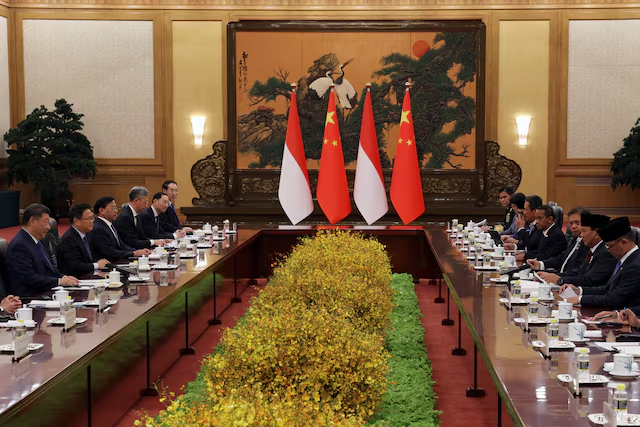
China and Indonesia signed agreements worth $10 billion during the Indonesia-China Business Forum held in Beijing on Sunday, marking a significant step in their growing bilateral relationship. The deals cover a wide range of sectors, including green energy, technology, food, and biotechnology. This event followed a key meeting between Chinese President Xi Jinping and Indonesian President Prabowo Subianto, who is visiting China for the first time since assuming office in October. Notably, Prabowo’s choice of China as his first official visit as president emphasizes Indonesia’s commitment to strengthening its strategic ties with Beijing.

In a joint statement released after the leaders’ discussions, China and Indonesia outlined plans to enhance cooperation in emerging sectors such as new energy vehicles, lithium batteries, photovoltaics, and the digital economy. They also agreed to work together to ensure the security of global mineral supply chains and support the global energy transition. These agreements align with both countries’ broader efforts to address climate change and secure sustainable growth.

One of the key deals signed during the forum was between Chinese battery materials producer GEM and PT Vale Indonesia. The agreement, witnessed by President Prabowo, involves the construction of a high-pressure acid leaching plant in Central Sulawesi, a crucial step in securing nickel resources. Indonesia, as the world’s largest nickel producer, plays a pivotal role in the global electric vehicle supply chain, with Chinese companies such as Tsingshan Holding Group and Zhejiang Huayou Cobalt dominating the sector.

In the technology space, Indonesian tech giant GoTo Gojek Tokopedia formed partnerships with China’s Tencent and Alibaba to advance cloud infrastructure and foster digital talent development in Indonesia. These collaborations are expected to boost Indonesia’s digital economy and increase its technological capabilities.

The two countries also agreed on several measures to improve connectivity, including the introduction of multi-entry long-term visas and the expansion of direct flights between the two nations. Additionally, the agreements included cooperation in the housing sector and initiatives to increase exports of fresh coconuts from Indonesia to China.

These developments reflect the deepening ties between China and Indonesia, positioning them as key partners in the global push for green energy solutions and digital innovation.
 

Up Close with the 300-Tonne Driverless Trucks: The Future of Mining Automation in Remote Australia

At Rio Tinto’s Greater Nammuldi iron ore mine, located in inland Western Australia, automation is at the forefront of operations. The mine, situated in the Pilbara region, is so remote that workers are flown in for shifts, spending four to eight days on-site before returning home. With over 400 workers present at any given time, their task is to manage an expansive operation where massive, driverless trucks navigate the red-earth roads.

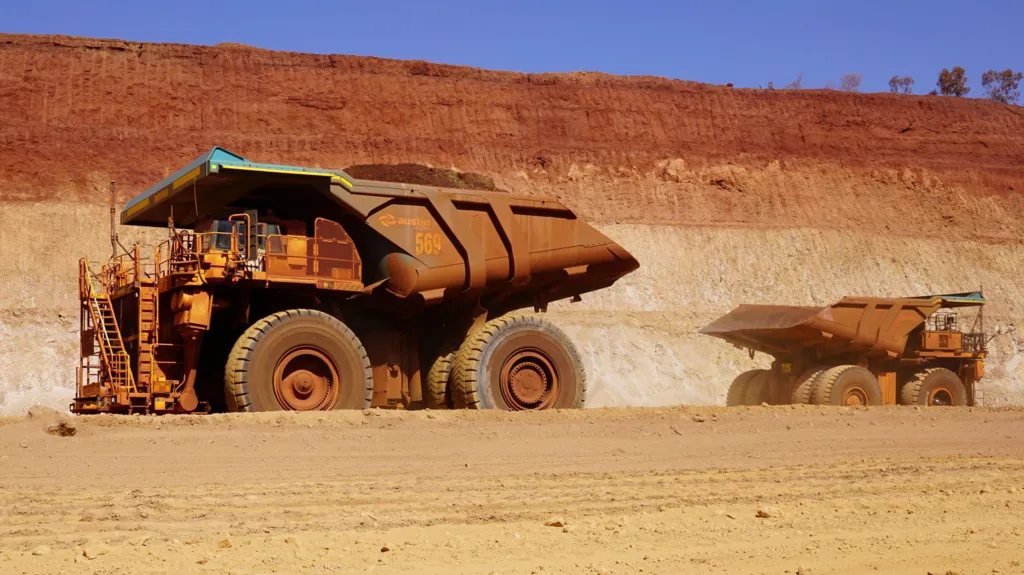
These autonomous trucks, some of the largest on earth, weigh up to 300 tonnes and crisscross the open-pit mine without human drivers. For someone unfamiliar with such technology, the sheer size of these trucks is daunting, especially when they operate without a driver at the wheel. During a site tour, the sight of one of these self-driving giants approaching from a side road is enough to raise the question: can they really be trusted?

Greater Nammuldi boasts a fleet of over 50 autonomous trucks, with several other vehicles, such as the self-driving water cart “Henry,” also operating to maintain the mine’s roads. While a few trucks still rely on manual drivers, most of the operations are automated. The autonomous trucks follow predefined routes and are monitored remotely from Rio Tinto’s Operations Centre (OC) in Perth, over 1,500 kilometers south. Here, controllers ensure the smooth functioning of the fleet, as well as other automated systems like drills and a long-distance rail network transporting mined ore.

The safety benefits of these self-driving trucks are clear. Mining is a dangerous industry, and by removing human drivers from the trucks, Rio Tinto aims to reduce accidents caused by fatigue or unpredictable behavior. According to the company’s Pilbara managing director, Matthew Holcz, automation has significantly improved safety and increased productivity by about 15%. The trucks operate continuously, without the downtime associated with shift changes, and can travel faster when fewer human-operated vehicles are in the mix.

Despite the cost – which Rio Tinto estimates at billions of dollars – automation has not led to mass job losses. Instead, former truck drivers are being retrained as controllers or reassigned to operate manual vehicles at different sites. At the OC, I meet Jess Cowie, a former manual driller who now remotely operates autonomous drills. She reflects on the benefits of automation, such as fewer environmental hazards and more time spent at home with her family.

However, the shift to automation isn’t without its challenges. Professor Robin Burgess-Limerick, an expert on human factors in mining, acknowledges the progress made but points out that improvements are still needed. For instance, the interfaces that staff use to monitor autonomous vehicles can be confusing, and there have been instances where human operators lost situational awareness. Additionally, some autonomous vehicles have had trouble detecting moisture on wet roads, which can lead to traction issues.

Labor representatives, such as Shane Roulstone from the Western Mine Workers Alliance, also raise concerns. He cites a recent incident where an autonomous train collided with a stationary vehicle on the tracks, though he recognizes that Rio Tinto has developed robust safety strategies for automated operations. Still, Roulstone believes that as automation increases, the potential for job losses will grow.

Despite these issues, Rio Tinto’s investment in automation continues, with further expansion of its autonomous truck fleet and the introduction of new technologies like self-driving excavators and dozers. While automation continues to change the landscape of mining, it’s clear that humans and robots will have to coexist, each adapting to a future where technology plays a central role.

Nvidia to Replace Intel in Dow Jones Industrial Average Amid AI Boom

In a significant change to the Dow Jones Industrial Average, Nvidia will replace longtime rival Intel in the prestigious index, reflecting the rapid growth in artificial intelligence and shifting dynamics within the semiconductor sector. The switch will take effect on November 8. Additionally, Sherwin Williams will replace Dow Inc. in the index, according to S&P Dow Jones.

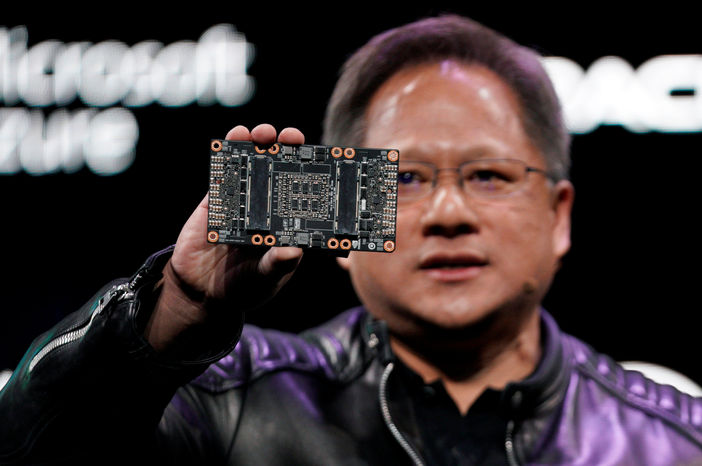
This change comes as Nvidia continues to see record-breaking gains in 2024, with its stock surging by over 170% following a 240% increase last year. The AI chipmaker’s market valuation has reached a staggering $3.3 trillion, trailing only Apple in terms of publicly traded company value. Nvidia’s advanced graphics processing units (GPUs) like the H100 have become essential components for tech giants including Microsoft, Meta, Google, and Amazon, which are purchasing these GPUs in bulk for AI and machine learning projects. Demand for Nvidia’s forthcoming AI GPU, Blackwell, has been described as “insane,” further emphasizing its dominance in the field.

Nvidia’s ascent brings four of the six trillion-dollar technology firms into the Dow, with Alphabet and Meta being the only exceptions. The company’s impressive stock rally was helped by a 10-for-1 stock split announced in May, which reduced its share price by 90%, facilitating its addition to the Dow without disproportionately influencing the index’s price-weighted structure.

In contrast, Intel has faced significant setbacks, with its stock declining over 50% this year. Once a leader in PC chip production, Intel has lost considerable ground to competitors like AMD and struggled to penetrate the AI sector. These challenges have been compounded by manufacturing issues and increased competition. Intel recently revealed plans to cut 16,500 jobs and reduce its real estate holdings, a part of cost-saving measures approved by the board’s audit and finance committee.

This change marks the Dow’s first adjustment since Amazon replaced Walgreens Boots Alliance in February. Historically, the index has lagged in adding the largest technology firms, but the inclusion of Nvidia underscores its commitment to capturing the growing influence of the tech industry.