Yazılar

Uber and Momenta to Launch Level 4 Self-Driving Tests in Munich in 2026

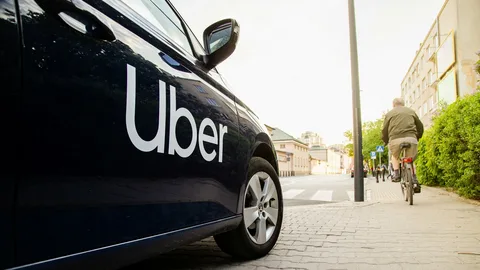
Uber and Chinese autonomous driving firm Momenta announced Monday that they will begin testing Level 4 self-driving vehicles in Munich, Germany, starting next year. The move marks Uber’s latest push to expand its robotaxi business beyond the U.S. and China.

Level 4 autonomy refers to vehicles capable of fully automated driving within defined conditions, though regulators still require safety oversight. Germany has emerged as a key testbed for autonomous mobility, with favorable legal frameworks and major automakers advancing the technology.

Uber has sought to secure its place in the robotaxi race through partnerships with Waymo (Alphabet), Lucid, and WeRide, while rivals like Tesla are also scaling their autonomous taxi services.

For its part, Momenta brings significant real-world experience. Its driver-assistance technology is already deployed in 400,000 vehicles globally through automaker partnerships. The collaboration with Uber, first announced in May, aims to accelerate deployment in international markets outside the U.S. and China.

The launch in Munich underscores the intensifying global competition in autonomous mobility, even as regulators maintain tight scrutiny following high-profile accidents in the sector.

Tesla’s $1 Trillion Musk Pay Package Faces Criticism but Likely to Win Shareholder Backing

Tesla’s board has approved a record-breaking $1 trillion compensation plan for CEO Elon Musk, designed to lock him into the company for the next decade as it pivots toward AI and robotics. Despite the staggering figure, analysts and pay experts say the plan will likely secure shareholder approval at November’s annual meeting, given Musk’s track record and Tesla’s reliance on him.

The package grants Musk 96 million restricted shares worth $31 billion upfront, vesting over two years, plus 12 additional tranches tied to ambitious earnings and market-cap milestones. If all targets are met, Musk’s stake could rise from 13% to 25%, positioning Tesla for a potential $8.5 trillion valuation—larger than Microsoft, Alphabet, and Meta combined today.

Tesla’s board defended the deal, saying Musk is “the only person on the planet” capable of unlocking the company’s potential. Negotiations reportedly involved 37 meetings with lawyers and 10 with Musk, during which Musk insisted on significant control, partial repayment for his voided $56 billion 2018 package, and assurances he wouldn’t be sidelined.

Supporters argue the plan gives Musk incentive to stay and aligns payouts with extraordinary growth. Critics call it excessive corporate governance failure, with unions and pension funds urging rejection. “This is investor money that could go into R&D or acquisitions,” said Kristin Hull of Nia Impact Capital, who signaled a possible shareholder challenge.

Large funds—Vanguard, BlackRock, and State Street—have yet to reveal their votes, though history suggests at least two may back Musk. Meanwhile, Tesla’s stock closed 3.6% higher at $350.84 Friday but remains down 13% in 2025, reflecting weak EV demand and rising competition.

The deal’s sheer scale, combining AI ambition, governance controversy, and Musk’s polarizing persona, ensures it will dominate investor debates well beyond November’s vote.

Qualcomm and BMW Unveil Automated Driving System With Hands-Free Features

Qualcomm and BMW announced Friday the launch of Snapdragon Ride Pilot, a new automated driving system aimed at boosting competitiveness in the fast-growing driver-assistance market. The technology, debuting in BMW’s electric iX3, offers hands-free highway driving, automatic lane changes, and parking assistance.

While advanced, the system does not qualify as fully autonomous “Level 5” driving. The driver remains responsible for supervising the vehicle. Qualcomm said Ride Pilot has been validated in over 60 countries and will expand to more than 100 by 2026, giving it one of the broadest global footprints for such systems.

The collaboration underscores Qualcomm’s aggressive push beyond smartphones into automotive electronics. The company posted 21% growth in automotive revenue in the third quarter, reaching $984 million, and projects $8 billion annually by 2029.

Competition is intensifying, with Nvidia and Mobileye both pitching their platforms to automakers, while Tesla and General Motors continue developing proprietary driver-assistance stacks. By making Ride Pilot available not just to BMW but also to global automakers and Tier-1 suppliers, Qualcomm is positioning itself as a key supplier for the industry’s shift toward automation.