Yazılar

Tesla’s cheaper Model Y faces stiff competition in crowded European EV market

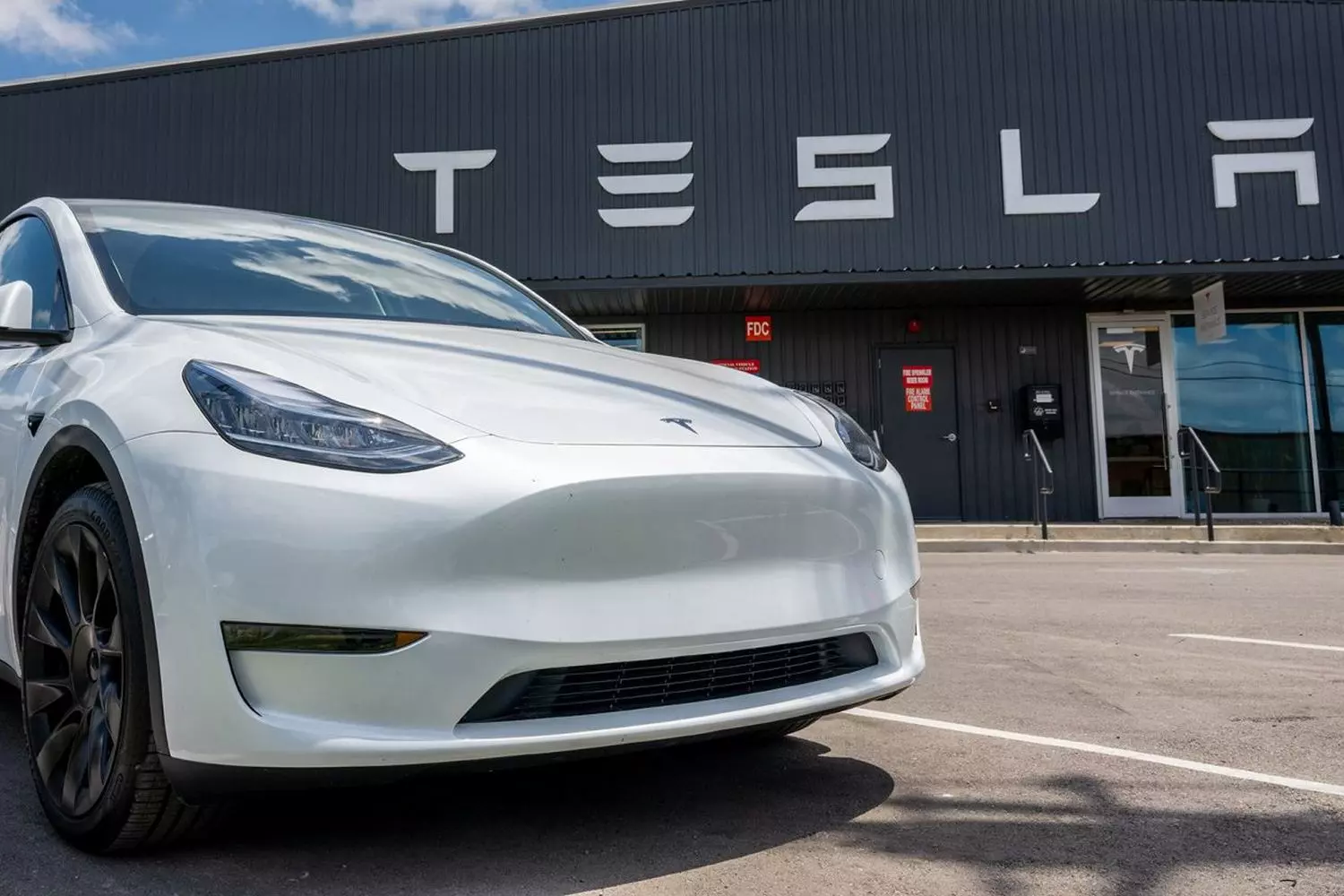
Tesla’s new lower-cost Model Y and Model 3 may struggle to gain traction in Europe, where affordable electric vehicles from Chinese and European automakers already dominate. The newly launched $39,990 Model Y Standard and $36,990 Model 3 enter a segment crowded with more than a dozen models priced below $30,000.

Analysts say the competition could blunt Tesla’s recovery in a region where its market share has halved to around 1.5% since 2023. “The competition in this market is fierce,” said Sam Fiorani of AutoForecast Solutions. Budget EVs such as the BYD Dolphin, Dacia Spring, and Citroën e-C3 are undercutting Tesla’s new releases by thousands of euros, while Volkswagen’s ID.Polo will join the field next year at under €25,000.

Tesla’s European sales drop has been fueled by an aging product lineup and consumer backlash against CEO Elon Musk’s politics. The company hopes the cheaper models will revive demand after its first global sales decline in 2024, with deliveries projected to fall another 10% this year.

Despite interior updates to the Model Y, analysts argue the price cut doesn’t go far enough. “It isn’t going to break the market open in a way that a €30,000 vehicle would,” said Matthias Schmidt of Schmidt Automotive.

With over 25 new EVs set to hit European showrooms next year, Tesla faces its toughest challenge yet in keeping its once-dominant position in the region’s fast-evolving EV market.
Tesla launches “affordable” Model Y and 3, but buyers call prices too high

Tesla has unveiled lower-cost versions of its Model Y SUV and Model 3 sedan, but their starting prices of $39,990 and $36,990 have left some customers and analysts questioning how “affordable” they truly are. CEO Elon Musk had previously suggested a sub-$30,000 model was key to attracting mass-market buyers.

The move comes as Tesla faces declining sales, growing competition from Chinese and European automakers, and the loss of the $7,500 U.S. EV tax credit. The new “Standard” trims cut luxury features such as heated rear seats and automated steering, though both still offer over 300 miles (480 km) of driving range.

Despite the announcement, Tesla shares fell 4.5%, with analysts saying the $5,000 price cut from premium trims is unlikely to drive major new demand. “It’s basically a pricing lever, not a product catalyst,” said Shay Boloor of Futurum Equities.

Musk canceled a separate $25,000 EV project last year, opting instead for cheaper versions of existing models — a move critics say could cannibalize Tesla’s lineup rather than expand its market.

In the U.S., Tesla now faces fresh competition from Chevrolet’s Equinox, Hyundai’s Ioniq 5, and Kia’s EV4, all targeting the under-$30,000 range. In Europe, Musk’s politics have also eroded loyalty amid rising low-cost alternatives.

Deliveries for the new models are set to begin between December 2025 and January 2026, as Tesla bets affordability — even at a premium — can revive its flagging momentum.

Judge Rejects Elon Musk’s Bid to Move SEC Lawsuit From Washington to Texas

A U.S. federal judge has denied Elon Musk’s request to move a Securities and Exchange Commission (SEC) lawsuit from Washington, D.C. to Texas, rejecting his claim that the capital’s court location was overly burdensome given his packed schedule.

Judge Sparkle Sooknanan ruled on Thursday that while she acknowledges Musk’s demanding workload, his “considerable means” and frequent travel make Washington an appropriate venue. She also noted that Musk spends at least 40% of his time outside Texas, including significant periods in the capital, where he recently led the Department of Government Efficiency.

The judge emphasized that Texas courts face heavier caseloads, while her court could handle the matter with “reasonable alacrity.” Musk’s argument centered on his claim that he works 80 or more hours per week, often sleeping at his office or factories, and that defending himself in Washington would cause “substantial burdens.”

The SEC lawsuit, filed in January, accuses Musk of failing to timely disclose his acquisition of a 5% stake in Twitter (now X) in early 2022. The 11-day delay, according to the SEC, allowed him to buy over $500 million worth of shares at artificially low prices, saving him an estimated $150 million. The agency seeks a civil fine and the forfeiture of those gains, while Musk is attempting to have the case dismissed.

Musk, whose fortune reportedly surpassed $500 billion this week, resides in Austin, Texas, where his major companies—Tesla, SpaceX, and The Boring Company—are headquartered. He had also proposed moving the case to Manhattan, where former Twitter shareholders have filed a related lawsuit, but that request was likewise denied.

The case, titled SEC v. Musk, will proceed in the U.S. District Court for the District of Columbia under docket number 25-00105, setting the stage for another high-profile courtroom battle involving one of the world’s most controversial billionaires.